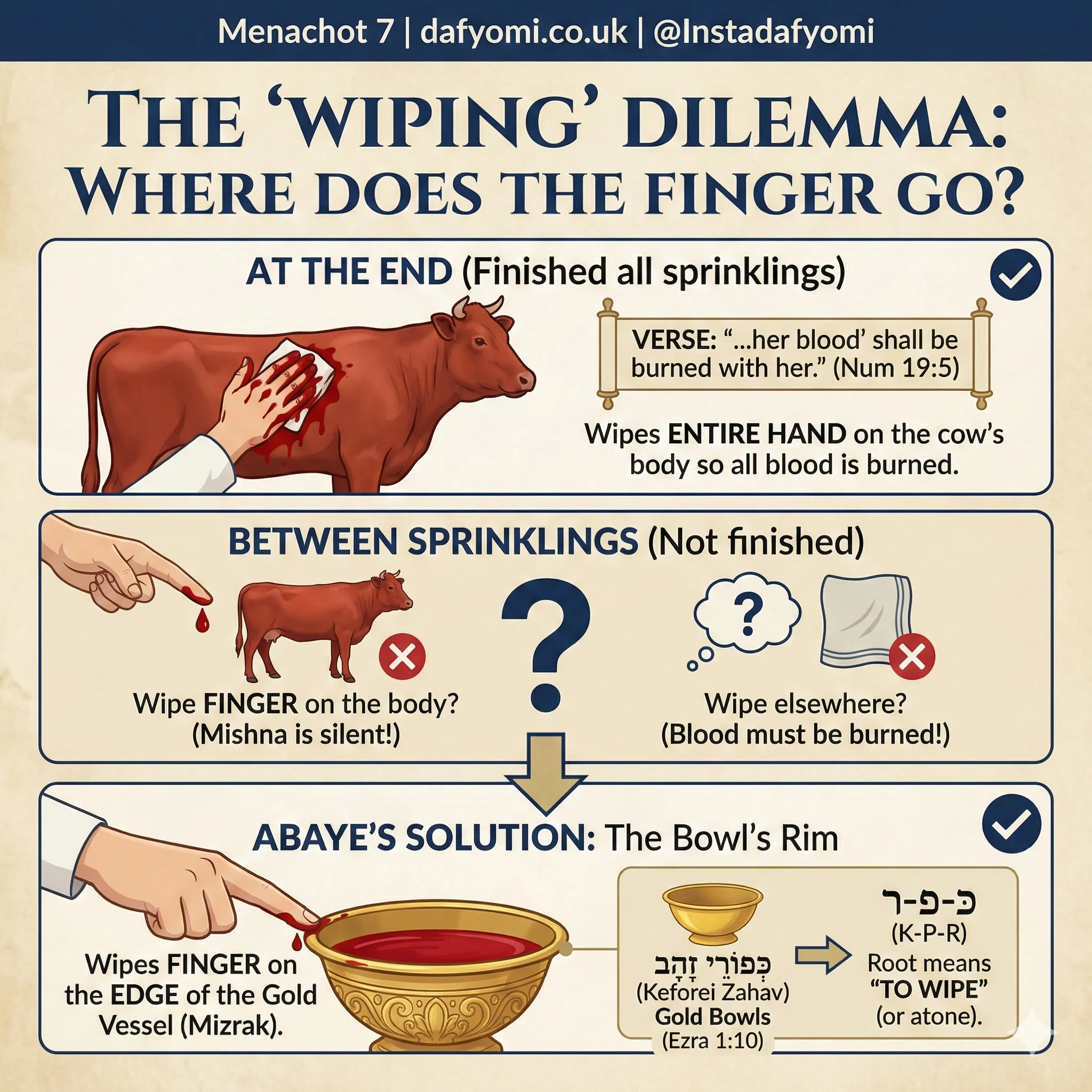
Menachot Daf 7 (מנחות דף ז׳)
Daf: 7 | Amudim: 7a – 7b | Date: 20 Tevet 5785 (January 20, 2025)
📖 Breakdown
Amud Aleph (7a)
Segment 1
TYPE: גמרא
Continuation of discussion about returning the handful to its place
Hebrew/Aramaic:
וְכִי מַהְדַּר לֵיהּ לְקוֹמֶץ לְדוּכְתֵּיהּ, לִקְדּוֹשׁ וְלִפְסוֹל.
English Translation:
When he returns the handful to its former place in the service vessel that contains the meal offering it should become sanctified, as it is now placed inside a service vessel, and it should therefore become disqualified.
קלאוד על הדף:
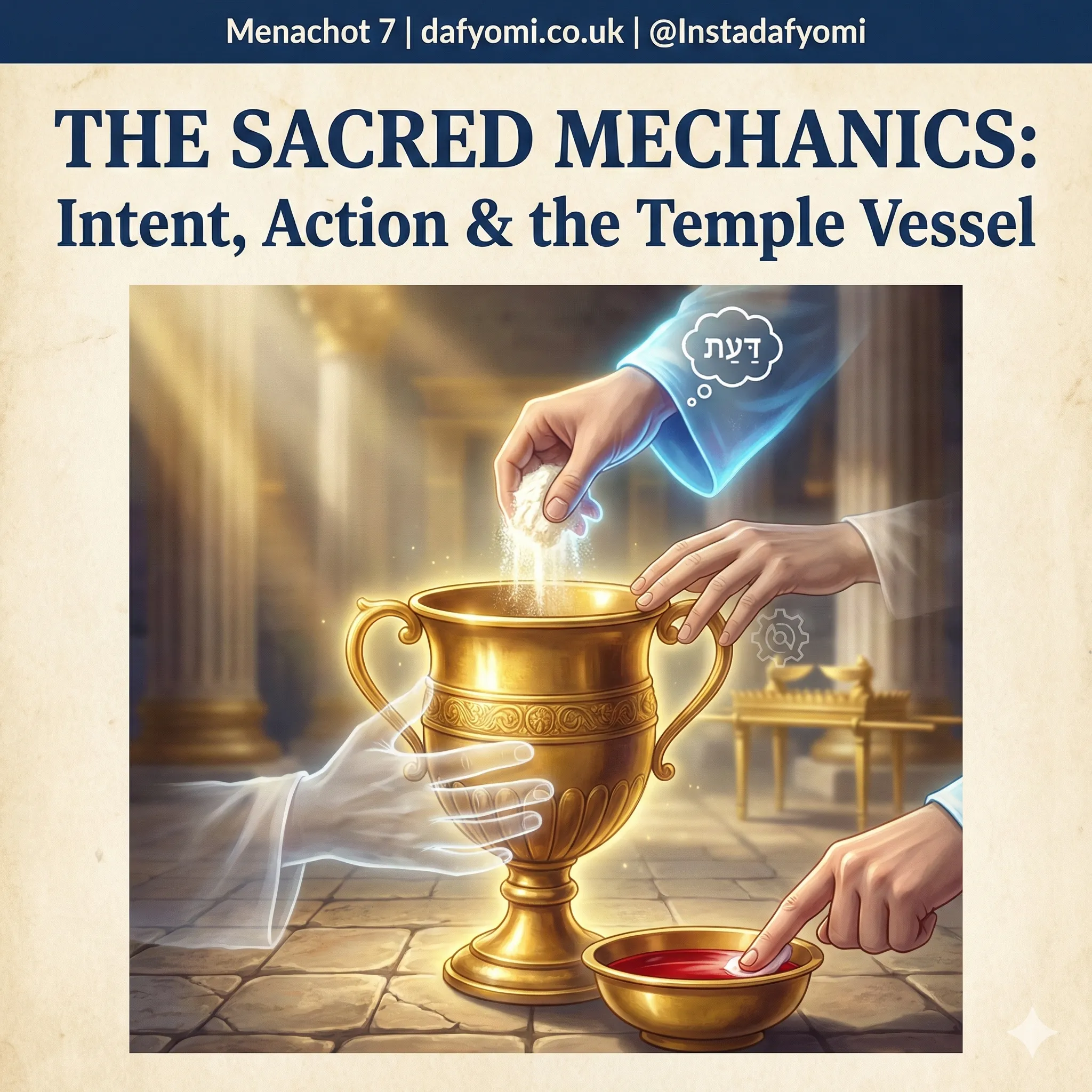
The Gemara raises a difficulty with the previous discussion: if a priest removes a handful (kometz) from a meal offering and then returns it to the vessel, the handful should become re-sanctified by the vessel. This would disqualify the offering because once the handful is removed, it has completed its role and should not be sanctified again. This question sets up the key principle of the sugya: do service vessels sanctify automatically or only with intent?
Key Terms:
- קוֹמֶץ (kometz) = The handful of flour removed from a meal offering
- כְּלֵי שָׁרֵת (klei sharet) = Service vessels used in the Temple
Segment 2
TYPE: מימרא
Rabbi Yochanan’s principle about sanctification
Hebrew/Aramaic:
אָמַר רַבִּי יוֹחָנָן, זֹאת אוֹמֶרֶת: כְּלֵי שָׁרֵת אֵין מְקַדְּשִׁין אֶלָּא מִדַּעַת.
English Translation:
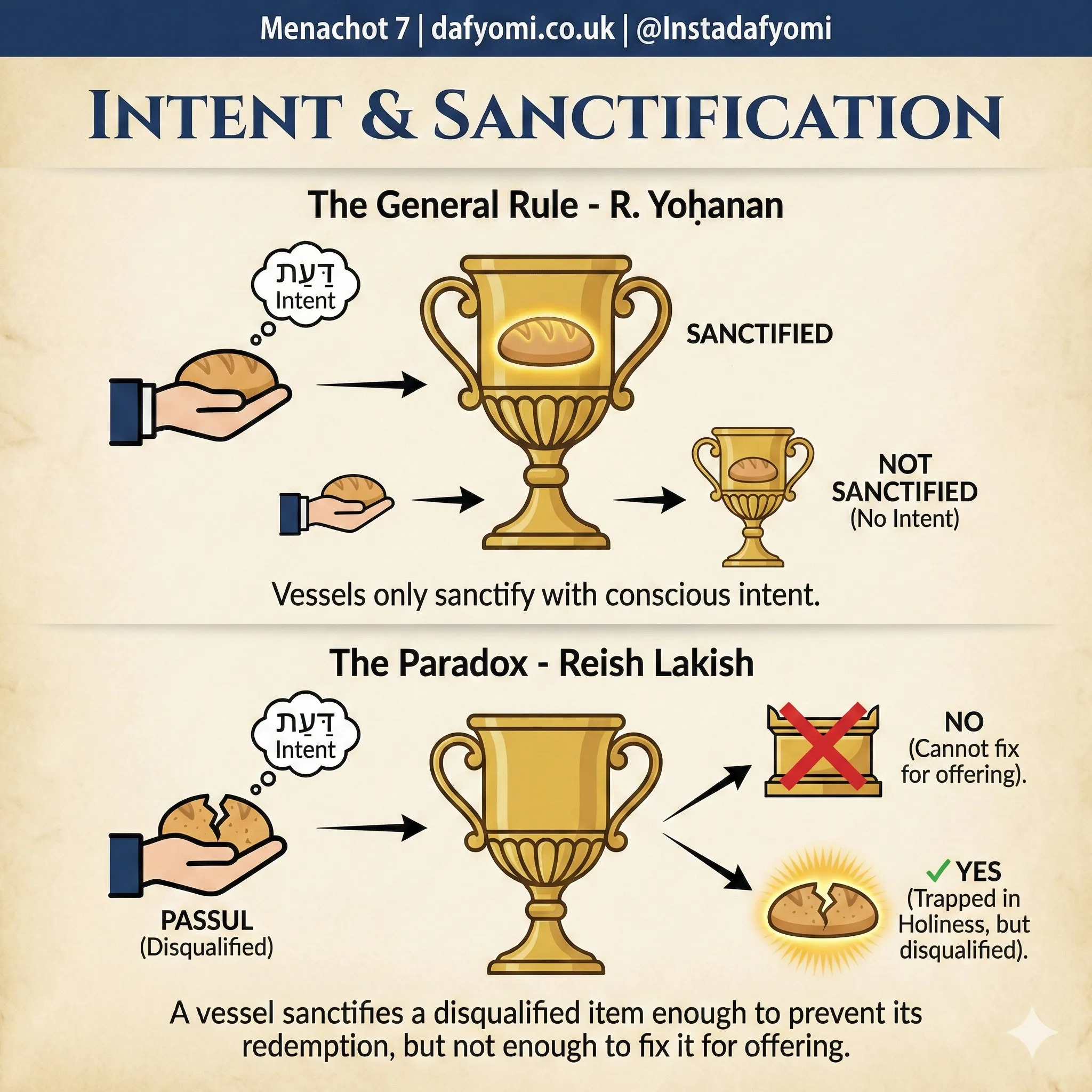
Concerning this challenge, Rabbi Yoḥanan said: That is to say that service vessels sanctify items placed in them only when they are placed there with specific intent that they be sanctified by that vessel.
קלאוד על הדף:
Rabbi Yochanan derives an important principle: service vessels do not automatically sanctify everything placed in them. Sanctification requires כוונה (intent). This explains why returning the handful to the vessel doesn’t disqualify it—there’s no intent to sanctify it at that moment. This principle has broad implications for Temple service.
Key Terms:
- מִדַּעַת (mida’at) = With intent/knowledge
Segment 3
TYPE: קושיא ותירוץ
Challenge from Reish Lakish’s question
Hebrew/Aramaic:
הָא מִדַּעַת מְקַדְּשִׁין? וְהָא בְּעָא מִינֵּיהּ רֵישׁ לָקִישׁ מֵרַבִּי יוֹחָנָן: כְּלֵי שָׁרֵת מַהוּ שֶׁיְּקַדְּשׁוּ פְּסוּלִין לְכַתְּחִילָּה לִיקְרַב? וַאֲמַר לֵיהּ: אֵין מְקַדְּשִׁין! אֲמַר לֵיהּ: אֵין מְקַדְּשִׁין לִיקְרַב, אֲבָל מִקַּדְּשִׁין לִיפָּסֵל.
English Translation:
The Gemara asks: It may be inferred from this statement that if items are placed into service vessels with intent, the service vessels sanctify them. But didn’t Reish Lakish raise a dilemma before Rabbi Yoḥanan: What is the halakha with regard to service vessels, i.e., do they sanctify disqualified items to the extent that they may be sacrificed upon the altar ab initio? And Rabbi Yochanan said to him: They do not sanctify! He said to him: They do not sanctify to allow sacrifice, but they do sanctify to disqualify.
קלאוד על הדף:
The Gemara probes Rabbi Yochanan’s statement. If vessels sanctify with intent, then even disqualified items should become sanctified. But Reish Lakish asked this very question! The resolution distinguishes between two types of sanctification: vessels cannot sanctify invalid items to make them fit for the altar, but they can sanctify items enough that they become disqualified for ordinary use. This nuanced distinction is crucial for Temple law.
Key Terms:
- לְכַתְּחִילָּה (lechatchila) = Ab initio, ideally
- לִיפָּסֵל (lipaseil) = To become disqualified
Segment 4
TYPE: תירוץ
Rav Amram’s alternative explanation
Hebrew/Aramaic:
רַב עַמְרָם אָמַר: כְּגוֹן שֶׁהֶחְזִירוֹ לְבִיסָא גְּדוּשָׁה.
English Translation:
Rav Amram says: Even if service vessels sanctify items without specific intent, it is possible to return the handful to the meal offering without the vessel sanctifying the handful, such as in a case where he returned it to a heaped bowl [levisa].
קלאוד על הדף:
Rav Amram offers an alternative solution. The handful can be returned without being sanctified if it sits atop a heaped bowl (levisa gedosha). In this case, the handful rests on top of the flour, not touching the vessel’s walls, so no sanctification occurs. This practical solution avoids the theoretical question of intent altogether.
Key Terms:
- בִּיסָא גְּדוּשָׁה (bisa gedusha) = A heaped bowl
Segment 5
TYPE: קושיא
Challenge to Rav Amram
Hebrew/Aramaic:
וּמִקְמָץ הֵיכִי קְמַץ? אֶלָּא, כְּגוֹן שֶׁהֶחְזִירוֹ לְבִיסָא טְפוּפָה.
English Translation:
The Gemara asks: But if the meal offering was heaped, how was he initially able to remove a handful from it? Rather, such as in a case where he returned it to a shallow bowl [bisa tefufa].
קלאוד על הדף:
The Gemara objects: if the bowl was heaped high, how could the priest have removed a handful properly in the first place? The kemitza (handful removal) requires scooping from the flour. The Gemara modifies Rav Amram’s answer: perhaps the bowl was shallow (tefufa), allowing both proper kemitza and return of the handful without it touching the vessel walls.
Key Terms:
- טְפוּפָה (tefufa) = Shallow, spread out
Segment 6
TYPE: קושיא ותירוץ
Further refinement of the scenario
Hebrew/Aramaic:
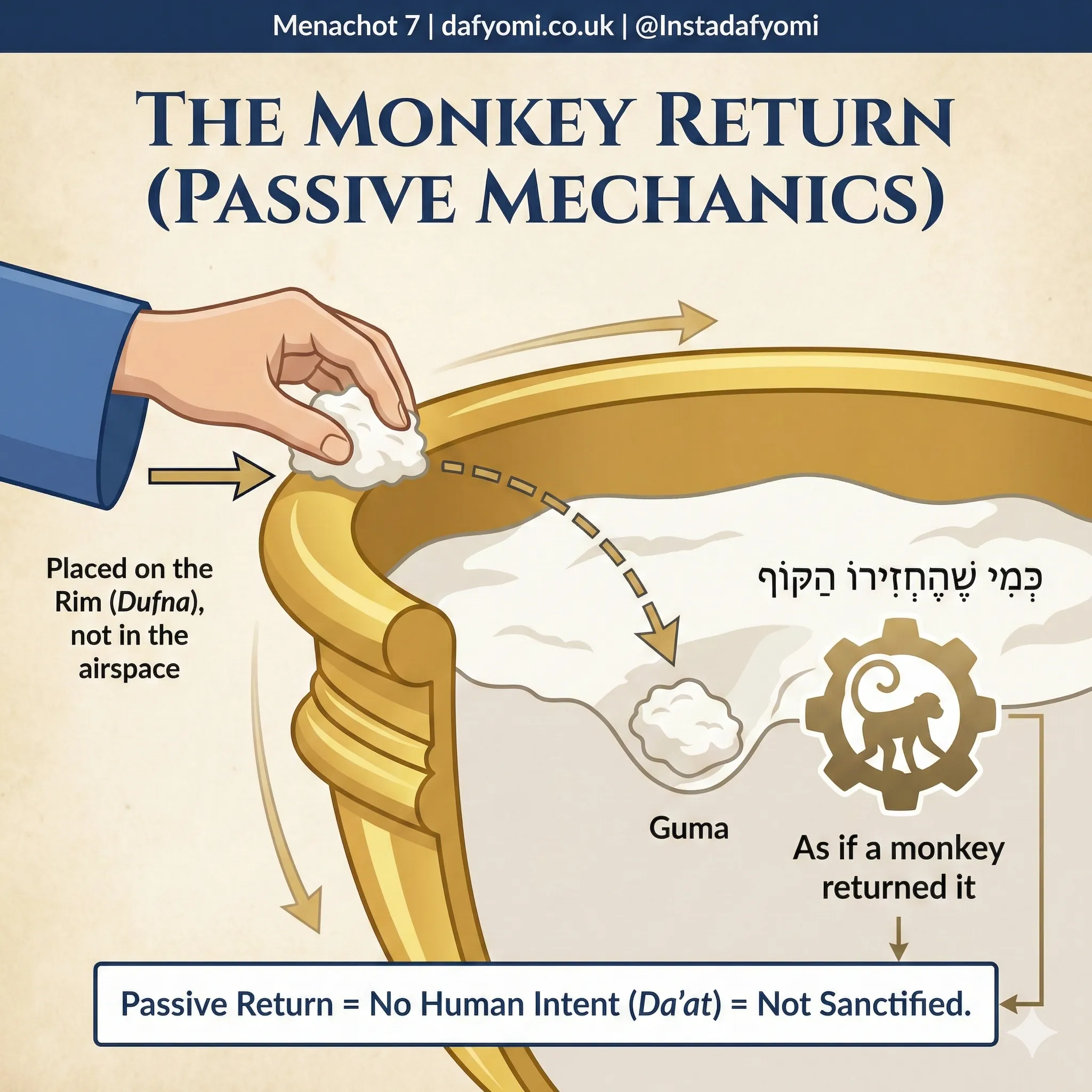
וְכֵיוָן דִּקְמַץ לֵיהּ עֲבַד לֵיהּ גּוּמָּא, כִּי מַהְדַּר לְגַוֵּויהּ דְּמָנָא קָא מַהְדַּר לֵיהּ! מִכִּי מַהְדַּר לֵיהּ, מַנַּח לֵיהּ אַדֻּפְנָא דְּמָנָא, וּמְנִיד לֵיהּ וְנָפֵל מִמֵּילָא, דְּנַעֲשָׂה כְּמִי שֶׁהֶחְזִירוֹ הַקּוֹף.
English Translation:
The Gemara asks: But once he removed a handful, he formed a furrow in the surface of the meal offering, and therefore when he returns the handful to its previous place inside the vessel, he is in fact returning it to a spot within the vessel, i.e., the furrow. The Gemara answers: When he returns it, he places it on the side of the vessel, and shakes it and it falls on its own, so it is as if a monkey returned it.
קלאוד על הדף:
The Gemara raises another objection: removing a handful creates a depression in the flour. Returning the handful to that spot means it contacts the vessel! The creative solution: place the handful on the vessel’s rim and shake it off. It falls into the flour without human agency placing it there—“as if a monkey returned it.” Without human intent in the actual placement, no sanctification occurs.
Key Terms:
- גּוּמָּא (guma) = A furrow or depression
- קוֹף (kof) = Monkey (representing non-intentional action)
Segment 7
TYPE: שקלא וטריא
Rabbi Yirmiya’s alternative interpretation
Hebrew/Aramaic:
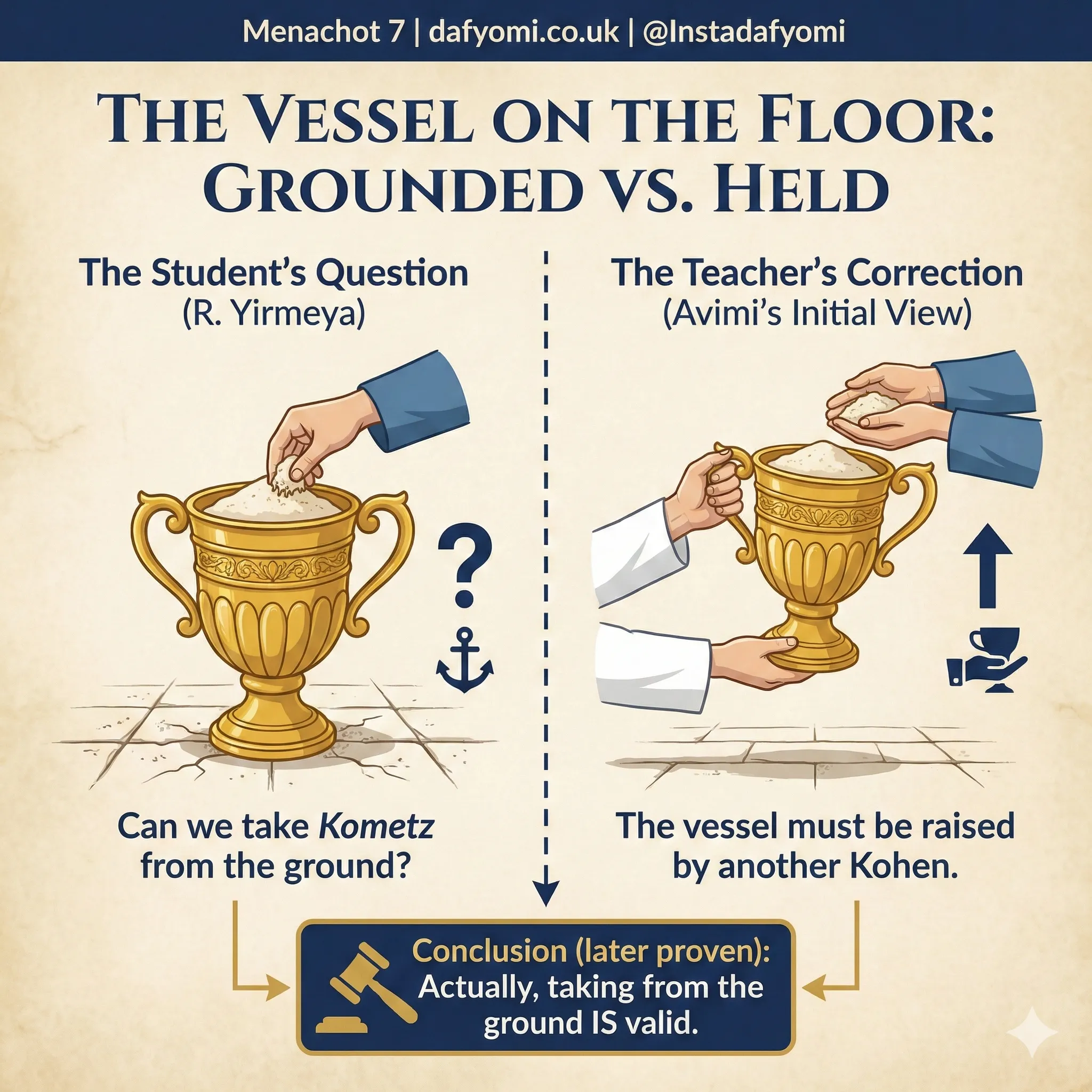
אֲמַר לֵיהּ רַבִּי יִרְמְיָה לְרַבִּי זֵירָא: וְלוֹקְמַהּ כְּגוֹן שֶׁהֶחְזִירוֹ לִכְלִי הַמּוּנָּח עַל גַּבֵּי קַרְקַע! אֶלָּא, שְׁמַע מִינַּהּ קוֹמְצִין מִכְּלִי שֶׁעַל גַּבֵּי קַרְקַע? אֲמַר לֵיהּ: קָא נָגְעַתְּ בְּבַעְיָא דְּאִיבַּעְיָא לַן, דְּרַבִּי אֲבִימִי תָּנֵי מְנָחוֹת בֵּי רַב חִסְדָּא.
English Translation:
Rabbi Yirmeya said to Rabbi Zeira: And let one interpret ben Beteira’s ruling as speaking of a case in which the handful is not sanctified by the vessel containing the meal offering because it is a vessel resting upon the ground! Rather, conclude from this that one may remove a handful from a vessel resting upon the ground? He said to him: You have touched upon a dilemma that was raised before us, as Rabbi Avimi studied tractate Menachot in the study hall of Rav Chisda.
קלאוד על הדף:
Rabbi Yirmiya suggests another approach: perhaps the vessel was resting on the ground, which might affect its ability to sanctify. This leads to a major question: can kemitza (removing the handful) be performed from a vessel on the ground, or must the priest hold it? Rabbi Zeira notes this is precisely the question studied by Rabbi Avimi in Rav Chisda’s academy.
Key Terms:
- כְּלִי הַמּוּנָּח עַל גַּבֵּי קַרְקַע = A vessel resting upon the ground
Segment 8
TYPE: מעשה
Story about Avimi and Rav Chisda
Hebrew/Aramaic:
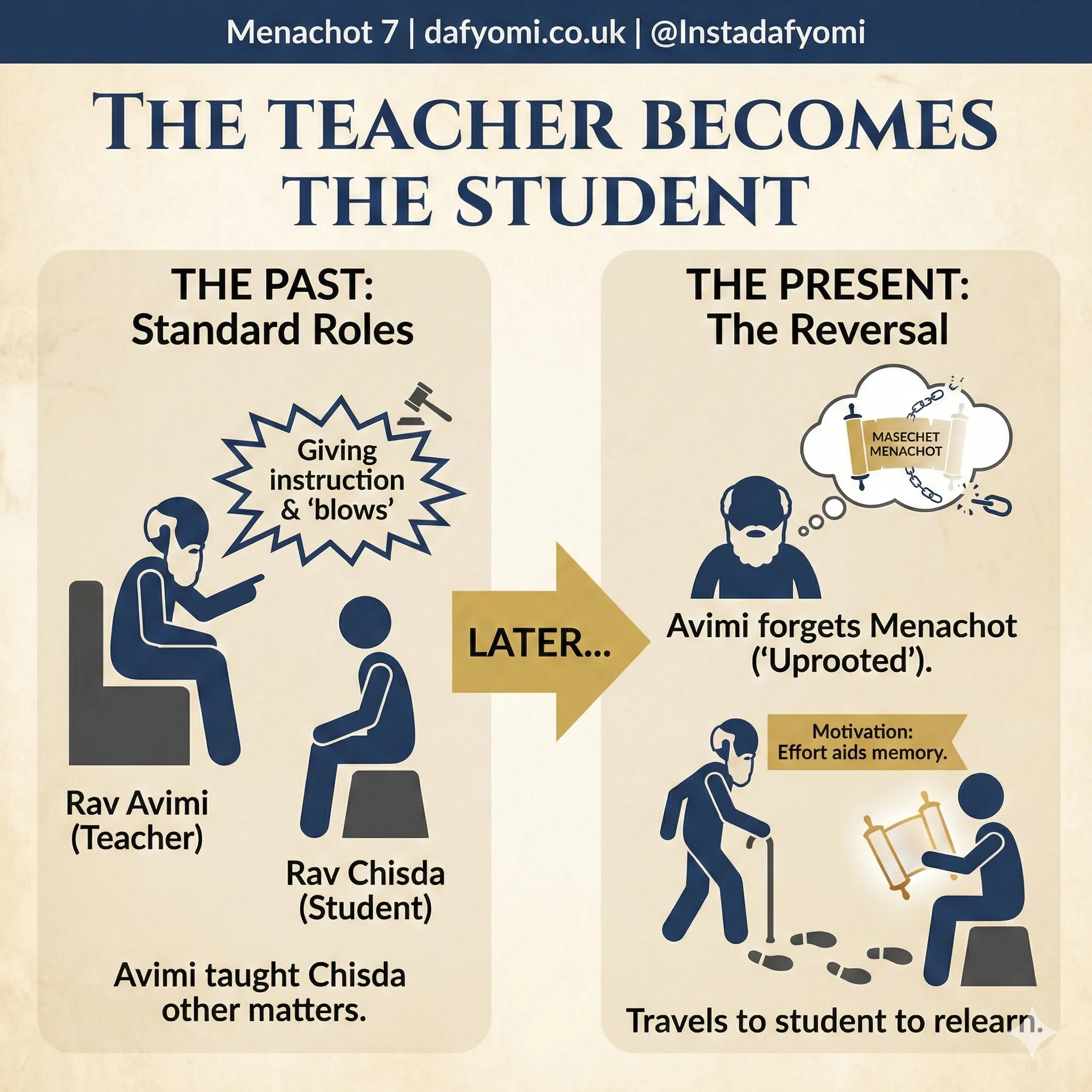
וַאֲבִימִי בֵּי רַב חִסְדָּא תָּנֵי? וְהָאָמַר רַב חִסְדָּא: קוּלְפֵי טָאבֵי בְּלַעִי מֵאֲבִימִי עֲלַהּ דְּהָא שְׁמַעְתָּא, בָּא לְהַכְרִיז רְצוּפִין – שְׁלֹשִׁים יוֹם, שֵׁנִי וַחֲמִישִׁי וְשֵׁנִי – שִׁשִּׁים יוֹם.
English Translation:
The Gemara interrupts this statement with a question: And did Rabbi Avimi really learn in the study hall of Rav Ḥisda? But didn’t Rav Ḥisda say: I absorbed many blows [kulfei] from Avimi as a result of that halakha concerning announcing found items for thirty consecutive days, or sixty days on Mondays and Thursdays.
קלאוד על הדף:
The Gemara digresses with a fascinating biographical note. How could Avimi study under Rav Chisda when Rav Chisda received teachings (and even “blows” for not understanding quickly) from Avimi? This reveals Avimi was originally Rav Chisda’s teacher, creating an apparent contradiction.
Key Terms:
- קוּלְפֵי (kulfei) = Blows (metaphorically, corrections or rebukes)
Segment 9
TYPE: תירוץ
Resolution of the apparent contradiction
Hebrew/Aramaic:
אֲבִימִי מַסֶּכְתָּא אִיתְעֲקַרָא לֵיהּ, וַאֲתָא קַמֵּיהּ דְּרַב חִסְדָּא לְאִדְּכוֹרֵי גְּמָרֵיהּ. וְלִישְׁלַח לֵיהּ וְלֵיתֵי לְגַבֵּיהּ? סְבַר: הָכִי מִסְתַּיְּיעָא מִילְּתָא טְפֵי.
English Translation:
The Gemara answers: Avimi was in fact the teacher, but tractate Menachot was uprooted for him, i.e., he forgot it, and Avimi came before his student Rav Ḥisda to help him recall his learning. And why didn’t Rav Chisda go to Avimi? He thought: This way the matter will be better assisted.
קלאוד על הדף:
Beautiful resolution: Avimi was indeed Rav Chisda’s teacher, but he forgot tractate Menachot. So the teacher went to his student to recover the lost material! Why not have the student come to the teacher? The change of environment helped Avimi recall better. This shows the humility of Torah scholars and the lengths they went to preserve their learning.
Key Terms:
- אִיתְעֲקַרָא (it’akra) = Was uprooted, forgotten
Segment 10
TYPE: שקלא וטריא
Rav Nachman questions Avimi
Hebrew/Aramaic:
פְּגַע בֵּיהּ רַב נַחְמָן, אֲמַר לֵיהּ: כֵּיצַד קוֹמְצִין? אֲמַר לֵיהּ: מִכְּלִי זֶה. אֲמַר לֵיהּ: וְכִי קוֹמְצִין מִכְּלִי שֶׁעַל גַּבֵּי קַרְקַע? אֲמַר לֵיהּ: דְּמַגְבַּהּ לֵיהּ כֹּהֵן.
English Translation:
The Gemara returns to the statement of Rabbi Zeira: Rav Naḥman encountered Avimi upon his return from the study hall of Rav Ḥisda. Rav Naḥman said to him: How does one properly remove a handful from a meal offering? Avimi pointed to a vessel that was resting on the ground and said: From this vessel. Rav Nachman asked: Can one remove a handful from a vessel resting on the ground? Avimi said: The priest lifts it.
קלאוד על הדף:
Rav Nachman tests Avimi’s recovered knowledge. When Avimi points to a vessel on the ground, Rav Nachman challenges: can kemitza be done from a grounded vessel? Avimi clarifies: the priest must first lift it. This begins a series of exchanges exploring the mechanics of meal offering service.
Segment 11
TYPE: שקלא וטריא
Continuing the questioning
Hebrew/Aramaic:
כֵּיצַד מְקַדְּשִׁין אֶת הַמְּנָחוֹת? אֲמַר לֵיהּ: נוֹתְנָהּ לִכְלִי זֶה. וְכִי מְקַדְּשִׁין בִּכְלִי שֶׁעַל גַּבֵּי קַרְקַע? אֲמַר לֵיהּ: דְּמַגְבַּהּ לֵיהּ כֹּהֵן.
English Translation:
Rav Naḥman proceeded to ask Avimi another question: How does one properly sanctify the meal offerings? Avimi pointed to a vessel that was resting on the ground and said to him: The priest places it into this vessel. Rav Nachman asked: Can one sanctify in a vessel on the ground? Avimi said: The priest lifts it.
קלאוד על הדף:
Same pattern: Avimi suggests using a grounded vessel for sanctification, and again clarifies that the priest lifts it first. Both kemitza and kiddush (sanctification) require the vessel to be elevated by the priest.
Segment 12
TYPE: קושיא
Rav Nachman’s objection
Hebrew/Aramaic:
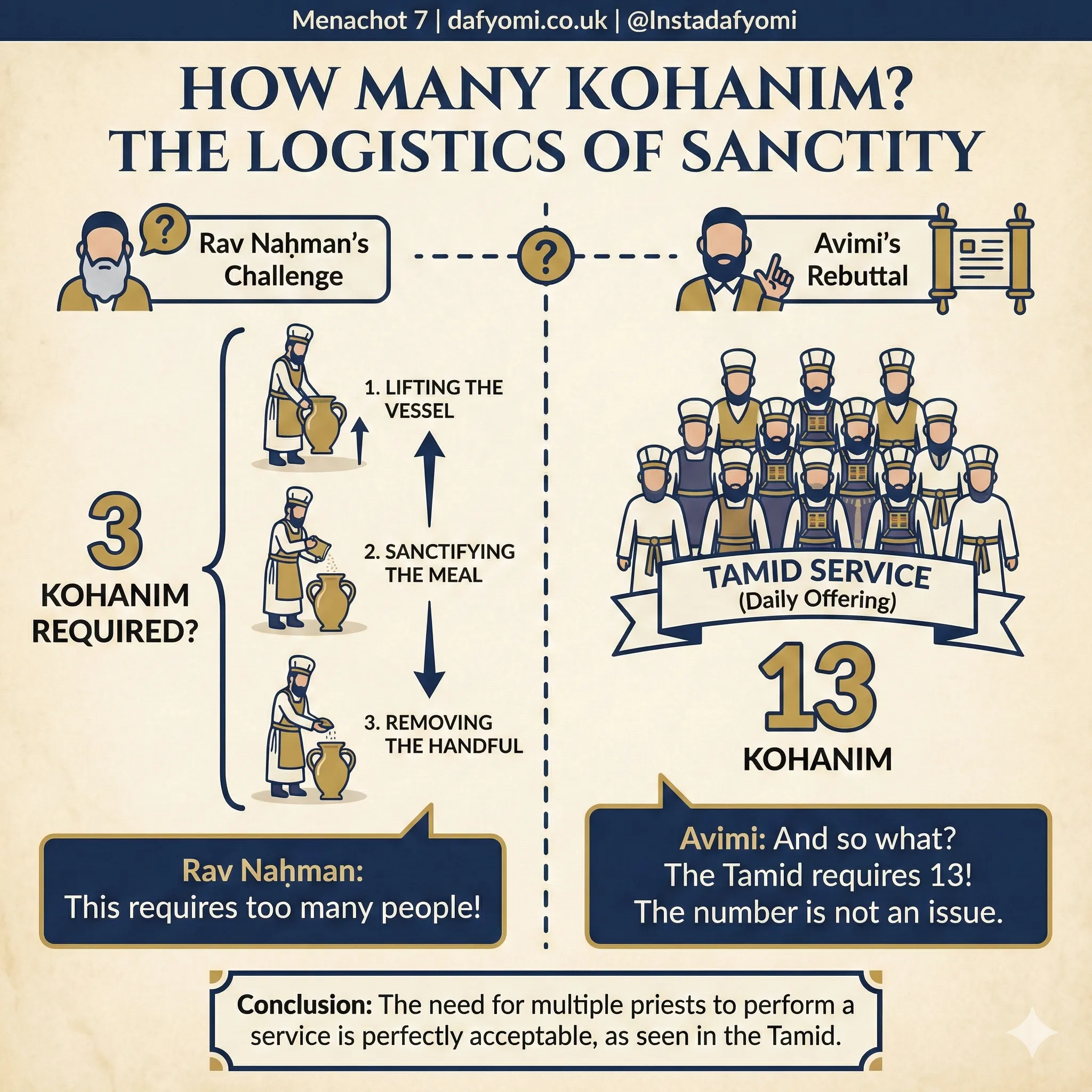
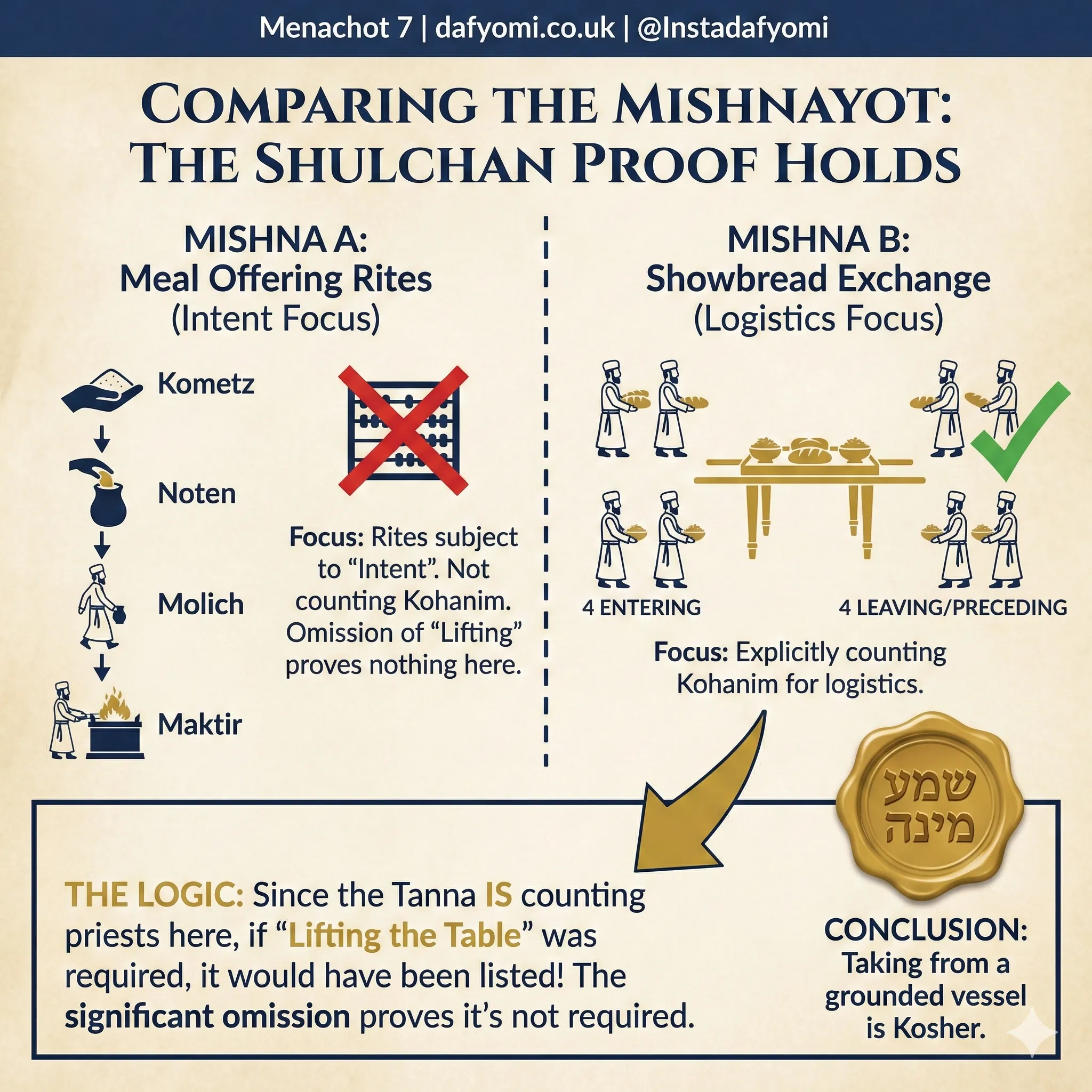
אֲמַר לֵיהּ: אִם כֵּן, הוּצְרַכְתָּה שְׁלֹשָׁה כֹּהֲנִים! אֲמַר לֵיהּ: וּתְהֵא צְרִיכָה שְׁלֹשָׁה עָשָׂר, כַּתָּמִיד.
English Translation:
Rav Naḥman said to Avimi: If so, then you require the involvement of three priests, i.e., one to raise the vessel, one to sanctify the meal offering, and one to remove the handful from the meal offering. Avimi replied: And let it require thirteen priests, like the daily offering (tamid)!
קלאוד על הדף:
Rav Nachman objects: requiring lifted vessels means needing extra priests—one to hold, one to sanctify, one to remove the handful. Avimi dismisses this concern: the tamid (daily offering) required thirteen priests! Multiple priests for complex services is normal in Temple practice.
Key Terms:
- תָּמִיד (tamid) = The daily offering, which required 13 priests
Segment 13
TYPE: קושיא
Objection from the Mishna
Hebrew/Aramaic:
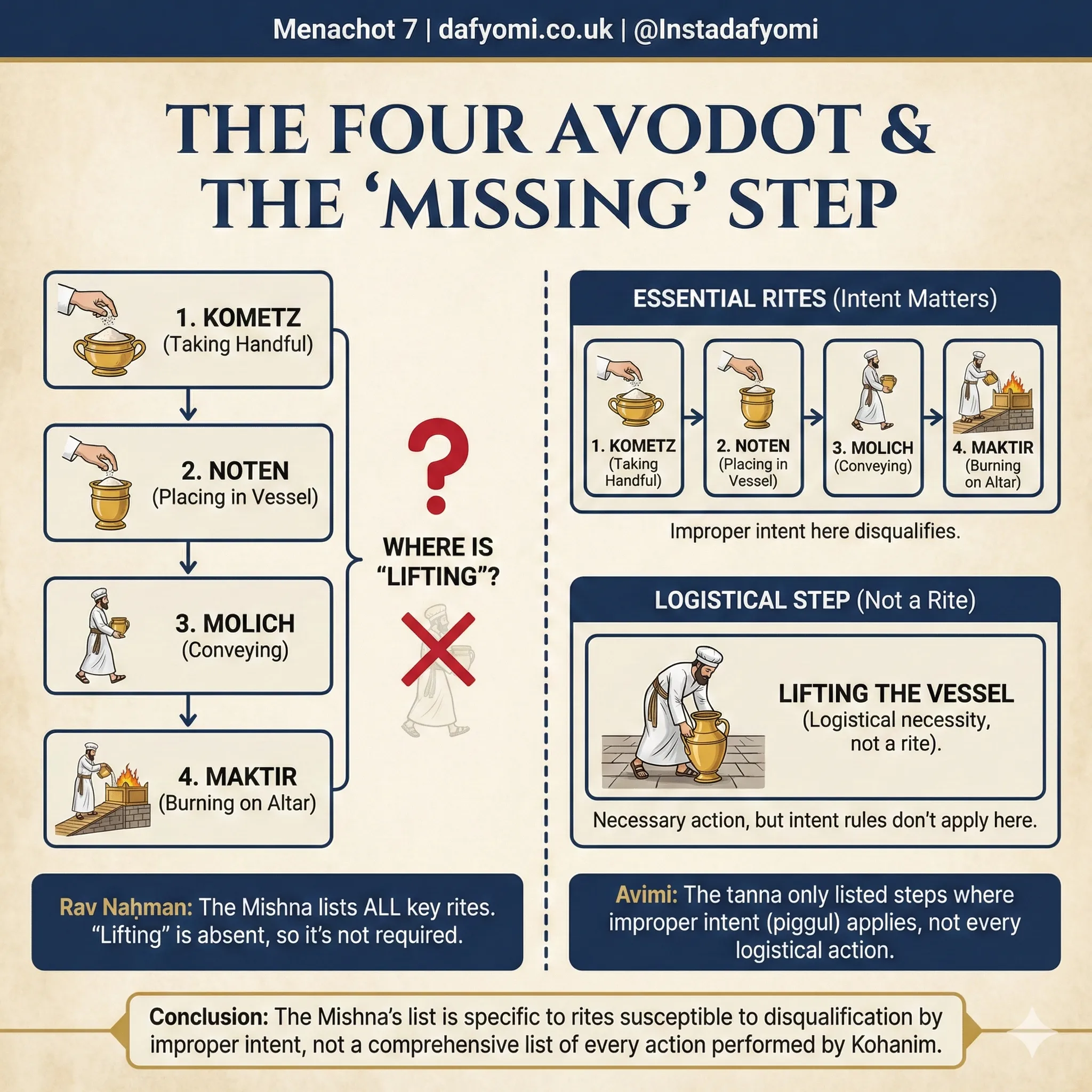
אֵיתִיבֵיהּ: זֶה הַכְּלָל, כׇּל הַקּוֹמֵץ וְנוֹתֵן בִּכְלִי, הַמּוֹלִיךְ וְהַמַּקְטִיר, לֶאֱכוֹל דָּבָר שֶׁדַּרְכּוֹ לֶאֱכוֹל וְכוּ׳.
English Translation:
Rav Naḥman raised another objection to the statement of Avimi from a mishna (12a) that discusses the halakha that improper intentions during the service of a meal offering disqualify it. This is the principle: In the case of anyone who removes the handful, or places the handful in the vessel, or carries it, or burns it, with intent to eat something normally eaten…
קלאוד על הדף:
Rav Nachman cites a Mishna listing the services of a meal offering: removing the handful, placing it in a vessel, carrying it, and burning it. The Mishna lists four actions—but if lifting the vessel were required, why isn’t it mentioned as a fifth action?
Segment 14
TYPE: תירוץ
Response to the objection
Hebrew/Aramaic:
וְאִילּוּ מַגְבִּיהַּ לָא קָתָנֵי? תַּנָּא סֵדֶר עֲבוֹדוֹת נָקֵיט, וְלָא סֵדֶר כֹּהֲנִים.
English Translation:
Rav Naḥman explained his objection: All the rites of a meal offering are taught in the mishna, and yet raising the vessel from the ground is not taught. This indicates that there is no requirement to raise a vessel from the ground. The response: The Tanna cited only the order of sacrificial rites, not the order of priests.
קלאוד על הדף:
The Gemara answers: the Mishna lists עבודות (service actions that can be invalidated by improper intent), not the roles of individual priests. Lifting a vessel is preparatory—not a service that can be disqualified by bad intention. Therefore its omission proves nothing about whether it’s required.
Segment 15
TYPE: בעיא
The question posed to Rav Sheshet
Hebrew/Aramaic:
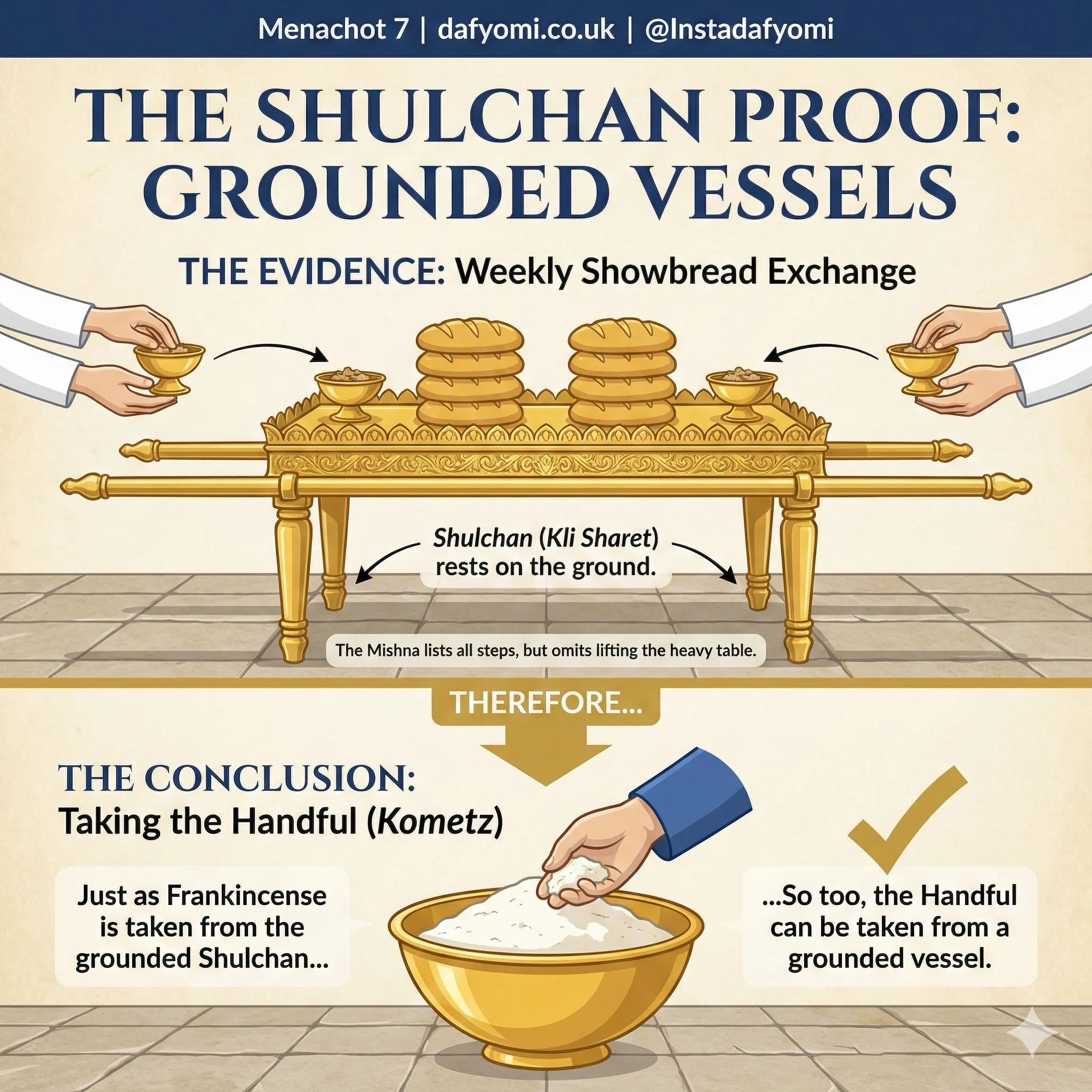
בְּעוֹ מִינֵּיהּ מִדְּרַב שֵׁשֶׁת: מַהוּ לִקְמוֹץ מִכְּלִי שֶׁעַל גַּבֵּי קַרְקַע? אֲמַר לֵיהּ: פּוֹק חֲזִי מָה עָבְדִין לְגָאו. אַרְבָּעָה כֹּהֲנִים נִכְנָסִין, שְׁנַיִם בְּיָדָם שְׁנֵי סְדָרִים, וּשְׁנַיִם בְּיָדָם שְׁנֵי בָּזִיכִין, וְאַרְבָּעָה מְקַדְּמִין לִפְנֵיהֶם, שְׁנַיִם לִיטּוֹל שְׁנֵי סְדָרִים, וּשְׁנַיִם לִיטּוֹל שְׁנֵי בָּזִיכִין.
English Translation:
On the same topic, the Sages raised a dilemma before Rav Sheshet: What is the halakha with regard to the permissibility of removing a handful from a vessel that is resting upon the ground? Is this removal valid? Rav Sheshet said to them: Go out and see what they do inside. Four priests enter, two holding two rows of showbread, and two holding two bowls of frankincense. And four others precede them, two to receive the old rows and two to receive the old bowls.
קלאוד על הדף:
The Sages ask Rav Sheshet the key question directly: can you do kemitza from a vessel on the ground? His answer is practical: observe the showbread service! The Mishna describes eight priests handling the showbread replacement—but no ninth priest to lift the Table. This suggests the bowls of frankincense are removed while the Table rests on the ground.
Key Terms:
- בָּזִיכִין (bazichin) = Bowls of frankincense placed on the showbread Table
- סְדָרִים (sedarim) = Rows of showbread
Amud Bet (7b)
Segment 1
TYPE: קושיא
Continuation of proof from showbread
Hebrew/Aramaic:
וְאִילּוּ מַגְבִּיהַּ אֶת הַשּׁוּלְחָן לָא קָתָנֵי.
English Translation:
Rav Sheshet notes: The entire process of the replacement of the shewbread is taught in the mishna, and yet the statement: A priest raises the Table above the ground so that the bowls of frankincense can be properly removed from them, is not taught.
קלאוד על הדף:
Rav Sheshet completes his proof: the Mishna details eight priests but never mentions one to lift the Table. If lifting were required before removing the frankincense bowls, it would be mentioned. Therefore, removing items from a vessel on the ground is valid.
Segment 2-3
TYPE: קושיא ותירוץ
Challenge and final resolution
Hebrew/Aramaic:
לָאו אָמְרַתְּ הָתָם, סֵדֶר עֲבוֹדוֹת נָקֵיט? הָכָא נָמֵי סֵדֶר עֲבוֹדוֹת נָקֵיט. מִי דָּמֵי? הָתָם לָא נָחֵית לְמִנְיָינָא דְּכֹהֲנִים, הָכָא נָחֵית לְמִנְיָינָא דְּכֹהֲנִים. אִם אִיתָא – לִיתְנֵי מַגְבִּיהַּ! אֶלָּא שְׁמַע מִינַּהּ: קוֹמְצִין מִכְּלִי שֶׁעַל גַּבֵּי קַרְקַע. שְׁמַע מִינַּהּ.
English Translation:
The Gemara challenges: Didn’t you say there, regarding the meal offering mishna, that the tanna only cited the order of rites? Here too, the tanna only cited the order of rites! The Gemara responds: Are these comparable? There, the tanna did not delve into the number of priests involved. Here, the tanna does count the priests. Therefore, if lifting were required, let it teach another priest who lifts! Rather, conclude: one may remove a handful from a vessel resting on the ground. Conclude from here.
קלאוד על הדף:
The Gemara distinguishes between the two Mishnayot. The meal offering Mishna lists services without counting priests. The showbread Mishna specifically counts eight priests. Since it counts them and doesn’t include a “lifter,” we can definitively conclude: kemitza from a grounded vessel is valid. שמע מינה—the matter is settled.
Segment 4
TYPE: מימרא
Rava’s statement
Hebrew/Aramaic:
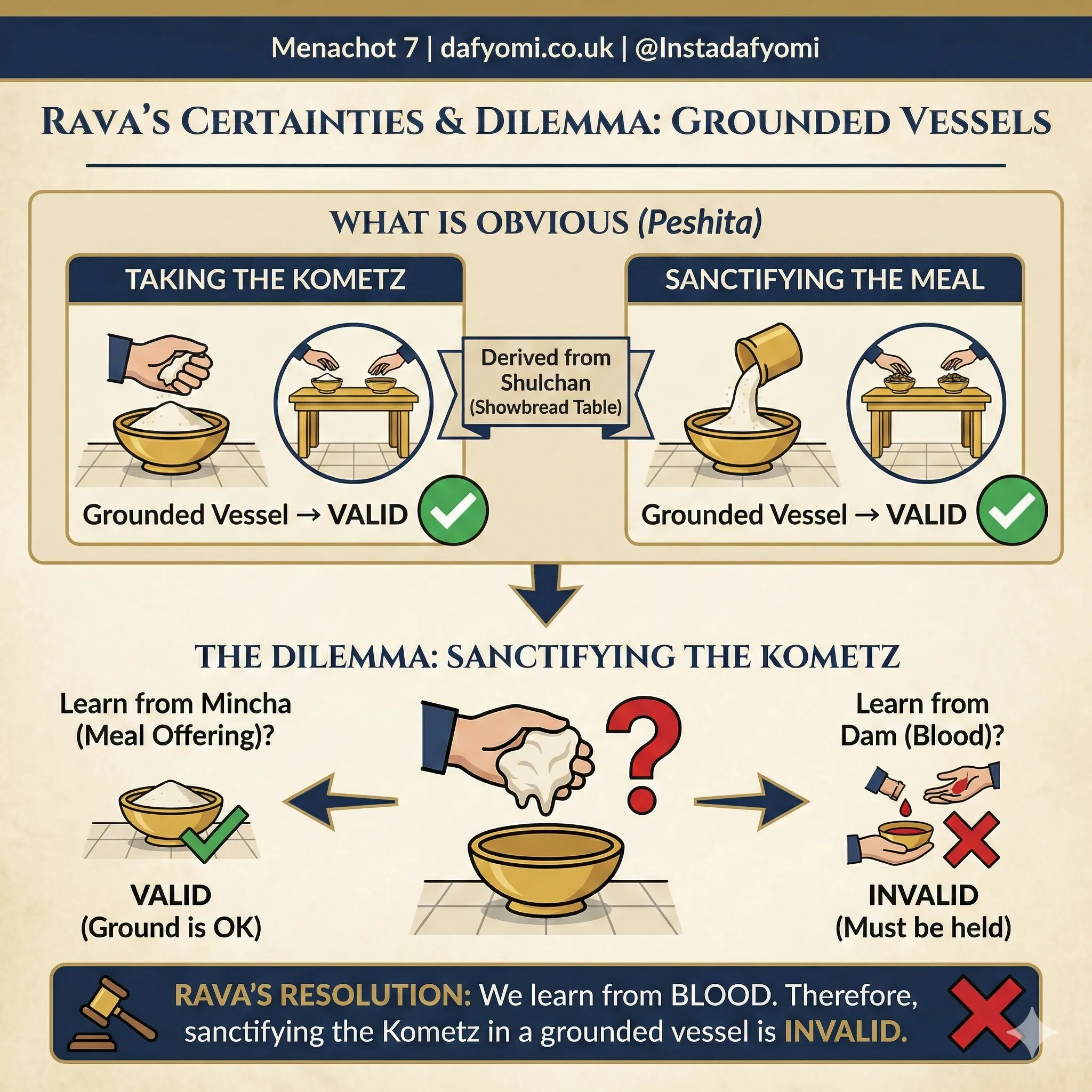
אָמַר רָבָא: פְּשִׁיטָא לִי, קוֹמֵץ מִכְּלִי שֶׁעַל גַּבֵּי קַרְקַע – שֶׁכֵּן מָצִינוּ בְּסִילּוּק בָּזִיכִין. מְקַדְּשִׁין מִנְחָה בִּכְלִי שֶׁעַל גַּבֵּי קַרְקַע – שֶׁכֵּן מָצִינוּ בְּסִידּוּר בָּזִיכִין.
English Translation:
Rava said: It is obvious to me that a priest may remove a handful from a vessel that is resting upon the ground, as we find such an instance in the case of the removal of the bowls of frankincense from the Table. Similarly, one can sanctify a meal offering in a vessel that is resting upon the ground, as we find such an instance in the case of the arrangement of the bowls of frankincense upon the Table.
קלאוד על הדף:
Rava summarizes what’s now clear: both kemitza and kiddush can be done with a grounded vessel, as proven from the showbread/frankincense service. The Table rests on the ground, and both removal (סילוק) and arrangement (סידור) are performed there.
Segment 5
TYPE: בעיא
Rava’s dilemma
Hebrew/Aramaic:
בָּעֵי רָבָא: קִידּוּשׁ קוֹמֶץ מַאי? מִמִּנְחָה יָלְפִינַן לַהּ, אוֹ מִדָּם יָלְפִינַן לַהּ? הֲדַר פַּשְׁטַהּ: מִדָּם יָלְפִינַן לַהּ.
English Translation:
Rava raises a dilemma: With regard to the sanctification of a handful by placing it in a vessel on the ground, what is the halakha? Do we derive it from the meal offering, allowing it like the meal offering itself, or do we derive it from the collection of blood, which must be held? He then resolved: We derive it from the collection of blood.
קלאוד על הדף:
A new question: the meal offering itself can be sanctified on the ground, but what about sanctifying the kometz (handful) specifically? Is it like the meal offering (grounded okay) or like blood collection (must be held)? Rava initially rules: derive from blood—the kometz must be sanctified in a held vessel.
Key Terms:
- קִידּוּשׁ קוֹמֶץ = Sanctification of the handful (after removal)
Segment 6
TYPE: קושיא
Challenge to Rava’s position
Hebrew/Aramaic:
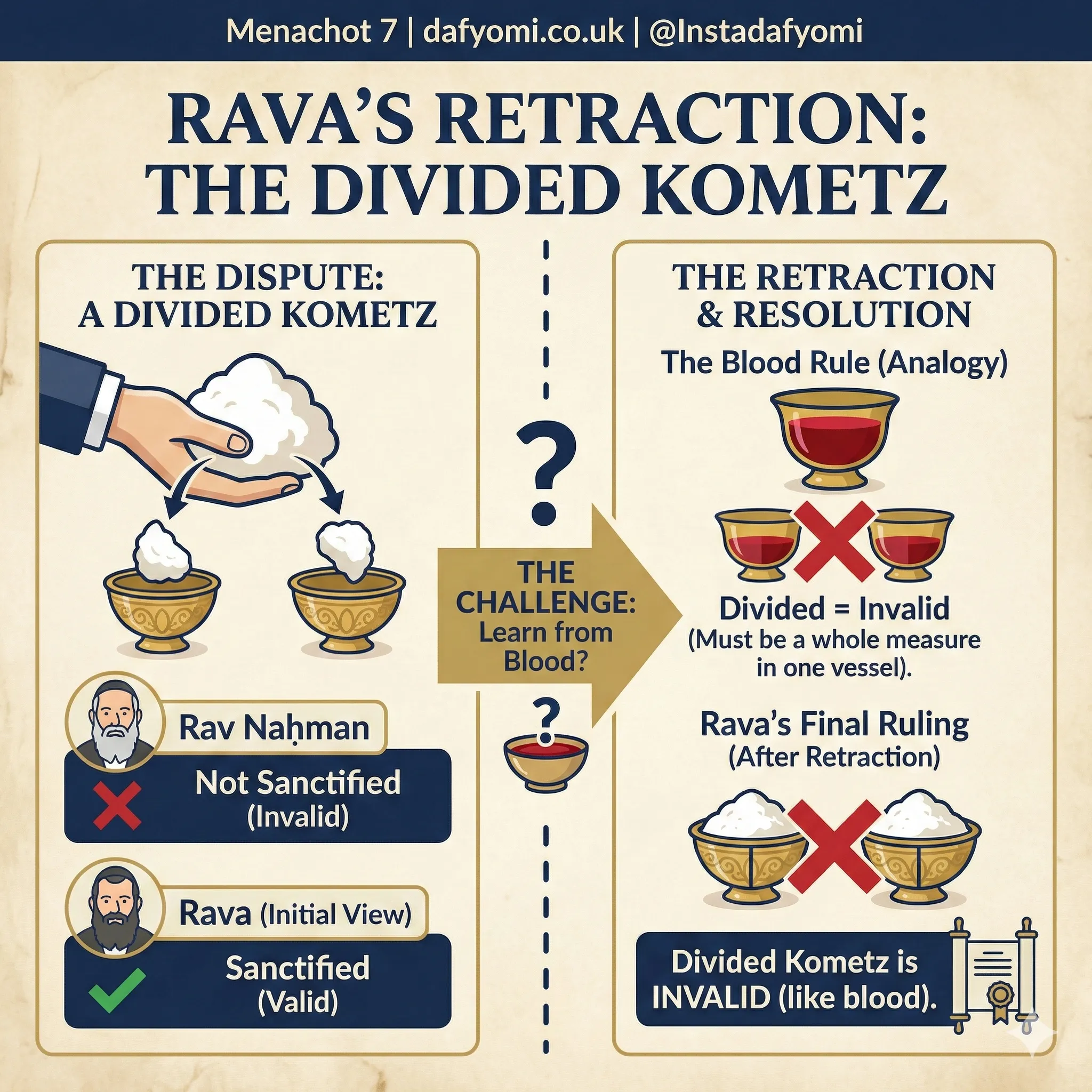
וּמִי אָמַר רָבָא הָכִי? וְהָא אִתְּמַר: קוֹמֶץ שֶׁחִלְּקוֹ בִּשְׁנֵי כֵּלִים, רַב נַחְמָן אָמַר: אֵינוֹ קָדוֹשׁ, וְרָבָא אָמַר: קָדוֹשׁ. וְאִם אִיתָא, לֵילַף מִדָּם! הֲדַר בֵּיהּ רָבָא מֵהַהִיא.
English Translation:
The Gemara asks: And did Rava really say this, that the halakha is derived from blood? But it was stated: With regard to a handful that a priest divided and placed in two vessels, Rav Naḥman says it is not sanctified, and Rava says it is sanctified. But if we derive from blood, the handful shouldn’t be sanctified when divided! The Gemara answers: Rava retracted that statement.
קלאוד על הדף:
The Gemara finds a contradiction. Rava elsewhere ruled that a handful divided into two vessels IS sanctified. But blood divided into two vessels is NOT sanctified. If we derive kometz from blood, Rava should rule it’s not sanctified! Resolution: Rava retracted his ruling—the kometz divided into two vessels is indeed not sanctified, consistent with deriving from blood.
Segment 7
TYPE: ברייתא
Source for blood not being sanctified in halves
Hebrew/Aramaic:
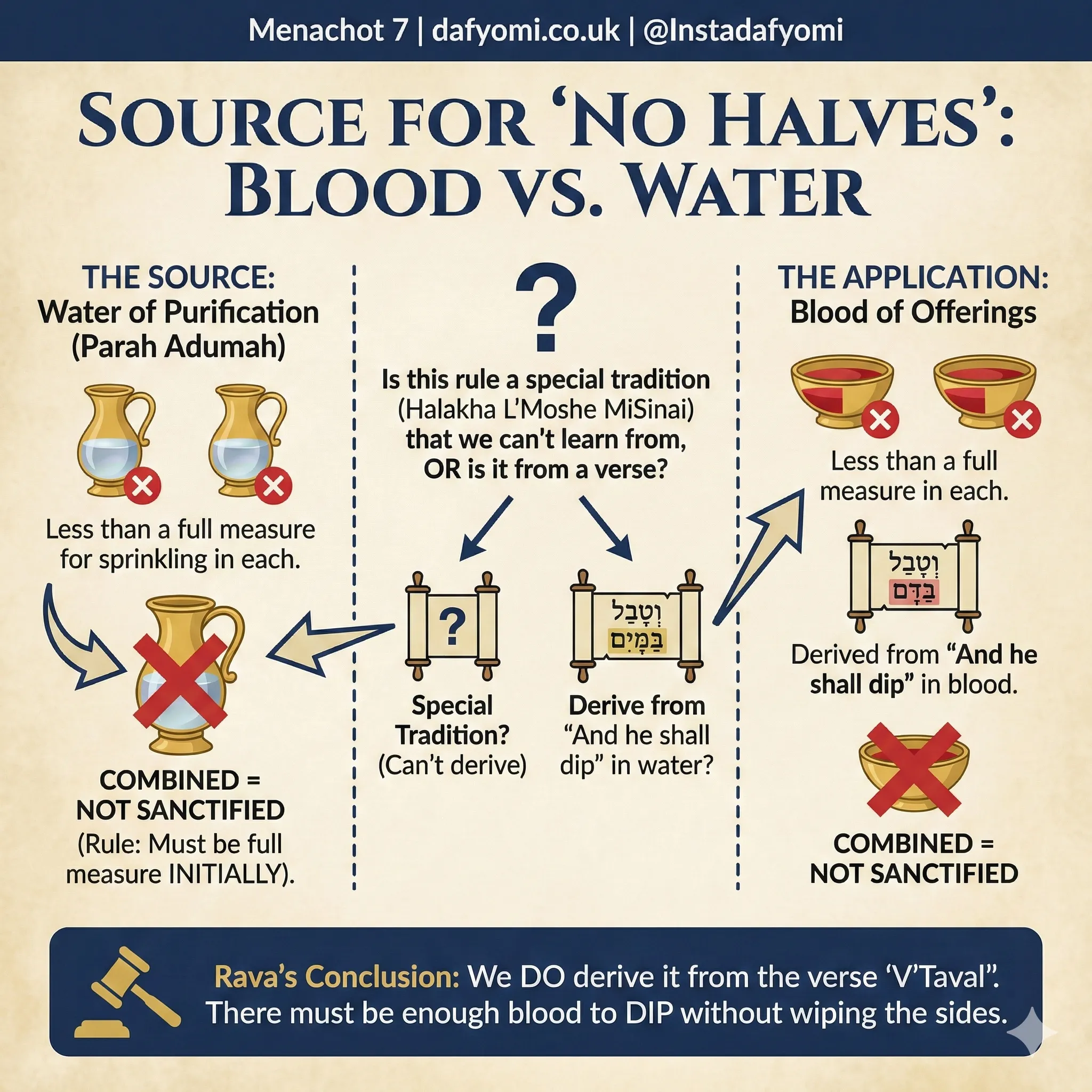
וָדָם מְנָלַן דְּלָא קָדוֹשׁ לַחֲצָאִין? דְּתָנֵי רַב תַּחְלִיפָא בֶּן שָׁאוּל: קִידֵּשׁ פָּחוֹת מִכְּדֵי הַזָּאָה בִּכְלִי זֶה, וּפָחוֹת מִכְּדֵי הַזָּאָה בִּכְלִי זֶה – לֹא קִידֵּשׁ.
English Translation:
The Gemara further asks: And with regard to blood, from where do we derive that it is not sanctified in halves? It is derived from that which Rav Taḥlifa ben Shaul teaches: If one sanctified less than the amount required for sprinkling in this vessel, and less than the amount required for sprinkling in that vessel—it is not sanctified.
קלאוד על הדף:
Where does the principle that blood can’t be sanctified in partial amounts come from? Rav Tachlifa ben Shaul teaches about the purification waters (mei chatat): if you put less than the required amount in each of two vessels, even combined they don’t become sanctified. This principle applies to blood as well.
Segments 8-14
TYPE: שקלא וטריא
Extended discussion about deriving from blood and water
Hebrew/Aramaic:
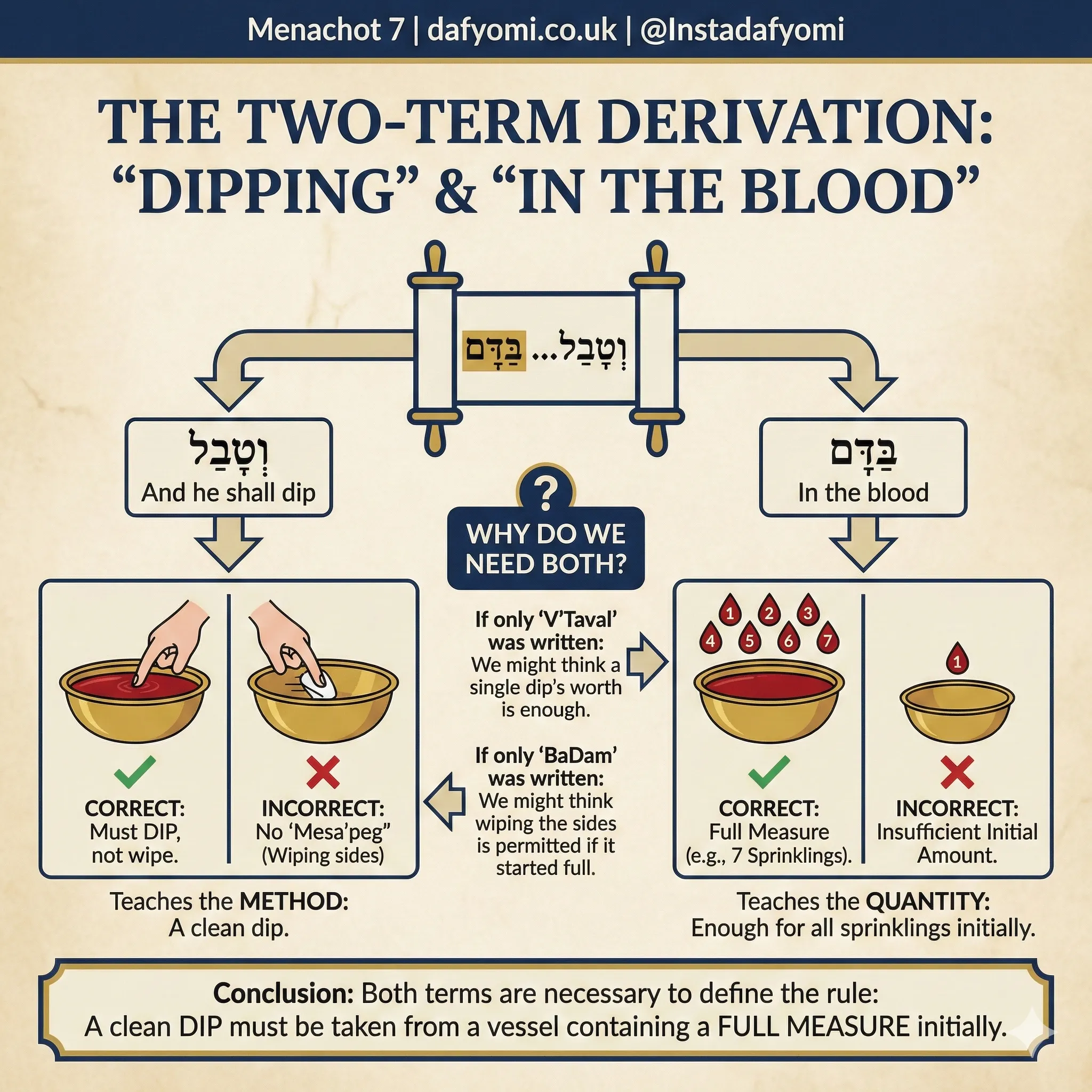
וְאִיבַּעְיָא לְהוּ: בְּדָם מַאי? הִלְכְתָא הִיא, וּמֵהִלְכְתָא לָא יָלְפִינַן. אוֹ דִלְמָא הָתָם מַאי טַעְמָא – דִּכְתִיב ״וְטָבַל בַּמַּיִם״, הָכָא נָמֵי הָכְתִיב ״וְטָבַל בַּדָּם״?
English Translation:
And a dilemma was raised: What about blood? Perhaps the water rule is just a halacha lemoshe misinai (tradition from Sinai) and we don’t derive from traditions? Or perhaps the reason there is the verse “and he shall dip in the water”—and here too it says “and he shall dip in the blood”?
קלאוד על הדף:
The Gemara explores whether the water rule can be applied to blood. Maybe the water rule is a special tradition that can’t be extended? Or maybe both derive from similar verses about “dipping”? The conclusion, stated by Rabbi Zerika in the name of Rabbi Elazar: blood also is not sanctified in partial amounts.
Segments 15-21
TYPE: שקלא וטריא
Discussion about remnants on the finger
Hebrew/Aramaic:
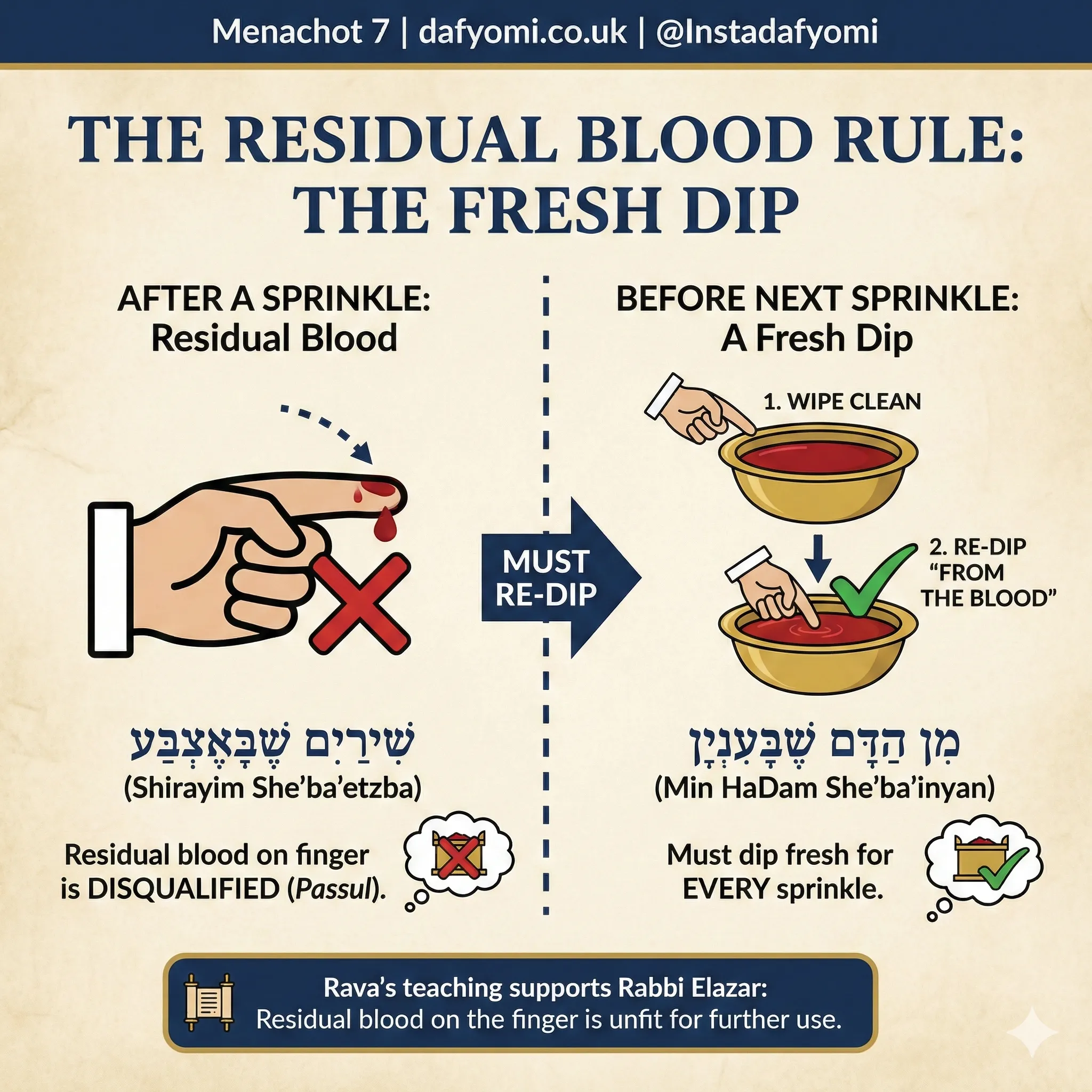
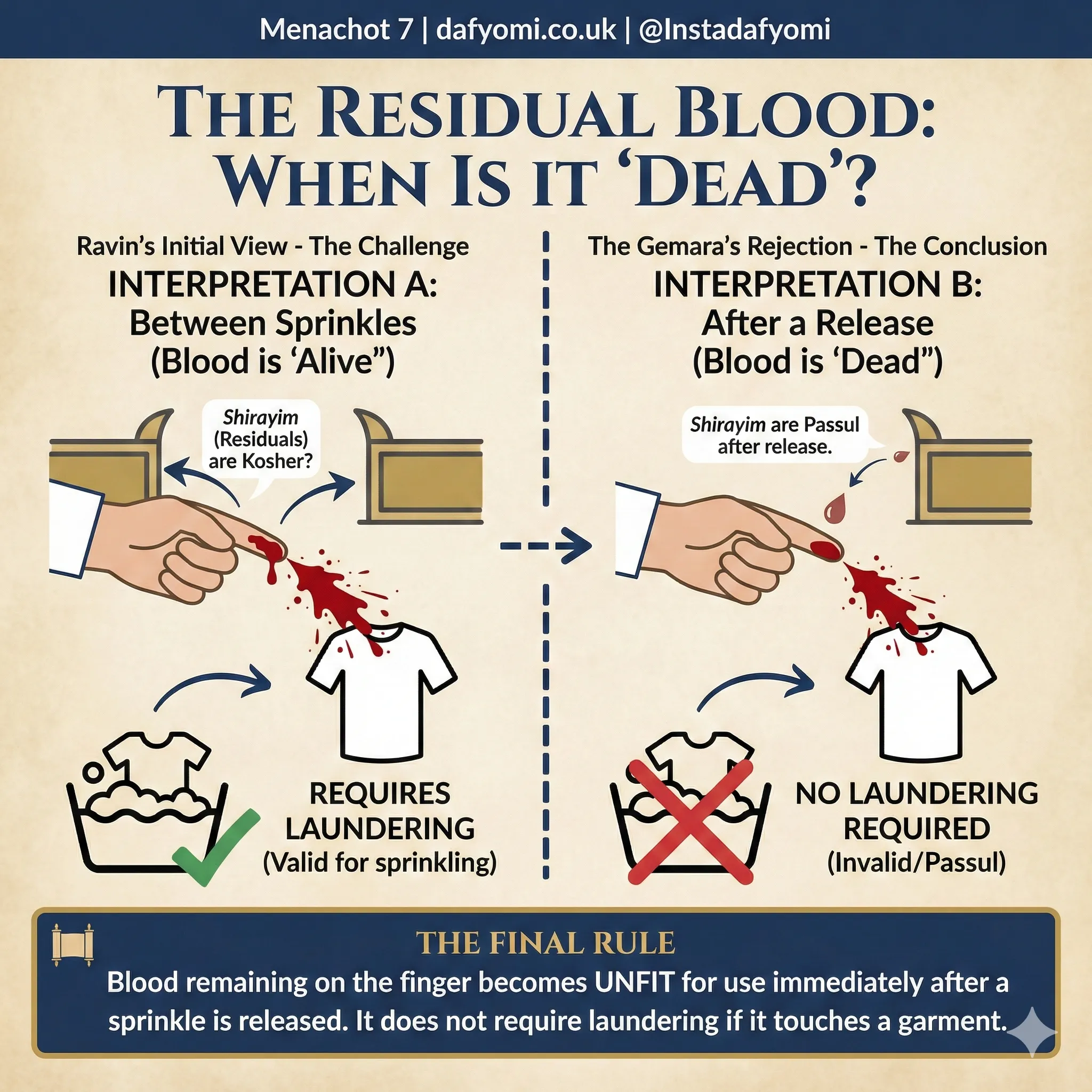
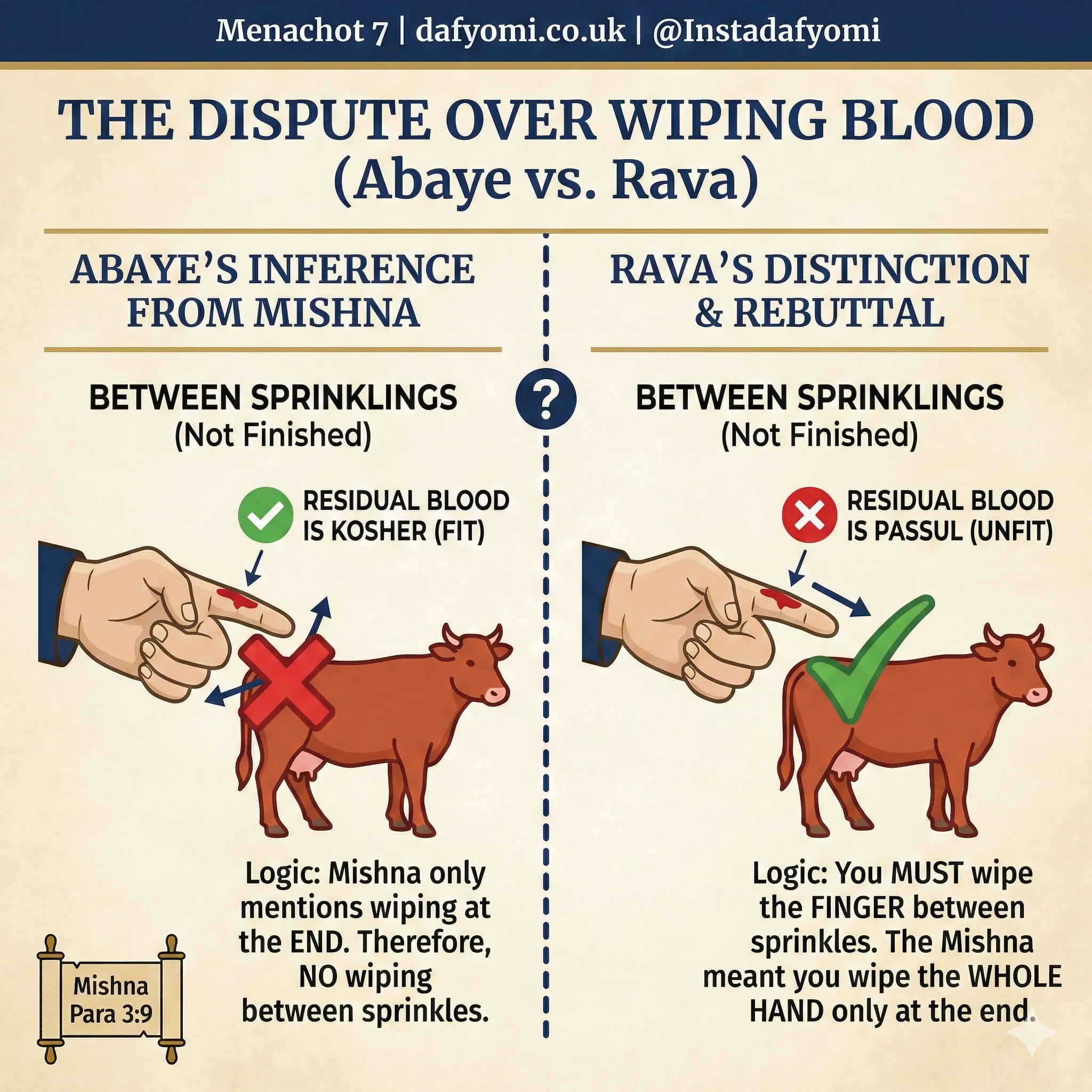
״מִן הַדָּם״ שֶׁבָּעִנְיָן, לְמַעוֹטֵי מַאי? אָמַר רָבָא: לְמַעוֹטֵי שִׁירַיִם שֶׁבָּאֶצְבַּע, מְסַיַּיע לֵיהּ לְרַבִּי אֶלְעָזָר, דְּאָמַר: שִׁירַיִם שֶׁבָּאֶצְבַּע פְּסוּלִין.
English Translation:
The verse says “from the blood”—to exclude what? Rava says: To exclude remnants remaining on the finger. This supports Rabbi Elazar, who said: Remnants on the finger are disqualified.
קלאוד על הדף:
New topic: when sprinkling blood, what about the remnants left on the priest’s finger? Rava derives from “from the blood” that finger remnants are disqualified—you can’t use leftover blood from a previous sprinkling. This supports Rabbi Elazar’s ruling. The Gemara then debates this through a baraita and Abaye’s challenges.
Key Terms:
- שִׁירַיִם שֶׁבָּאֶצְבַּע = Remnants remaining on the finger
Segment 22
TYPE: קושיא
Final challenge about partial sanctification
Hebrew/Aramaic:
וּמִי אָמַר רַבִּי אֶלְעָזָר הָכִי? וְהָא אִיתְּמַר: חֲבִיתֵּי כֹּהֵן גָּדוֹל – רַבִּי יוֹחָנָן אָמַר: אֵינָהּ קְדוֹשָׁה לַחֲצָאִין, רַבִּי אֶלְעָזָר אָמַר: מִתּוֹךְ שֶׁקְּרֵבָה לַחֲצָאִין, קְדוֹשָׁה לַחֲצָאִין.
English Translation:
The Gemara asks: And did Rabbi Elazar really say this? But it was stated regarding the High Priest’s griddle-cake offering: Rabbi Yochanan says it is not sanctified in halves, but Rabbi Elazar says: Since it is offered in halves (half in the morning, half in the evening), it may be sanctified in halves.
קלאוד על הדף:
The Gemara challenges Rabbi Elazar’s position. Elsewhere, regarding the High Priest’s daily griddle-cake (chavitei kohen gadol), Rabbi Elazar rules that since it’s offered in two parts, it can be sanctified in two parts! This seems to contradict his ruling about blood. The daf ends with this tension, to be resolved on the next page.
Key Terms:
- חֲבִיתֵּי כֹּהֵן גָּדוֹל = The High Priest’s daily griddle-cake meal offering