Menachot Daf 15 (מנחות דף ט״ו)
Daf: 15 | Amudim: 15a – 15b
📖 Breakdown
Amud Aleph (15a)
Segment 1
TYPE: גמרא
Continuation – dispute about the tzitz effecting acceptance
Hebrew/Aramaic:
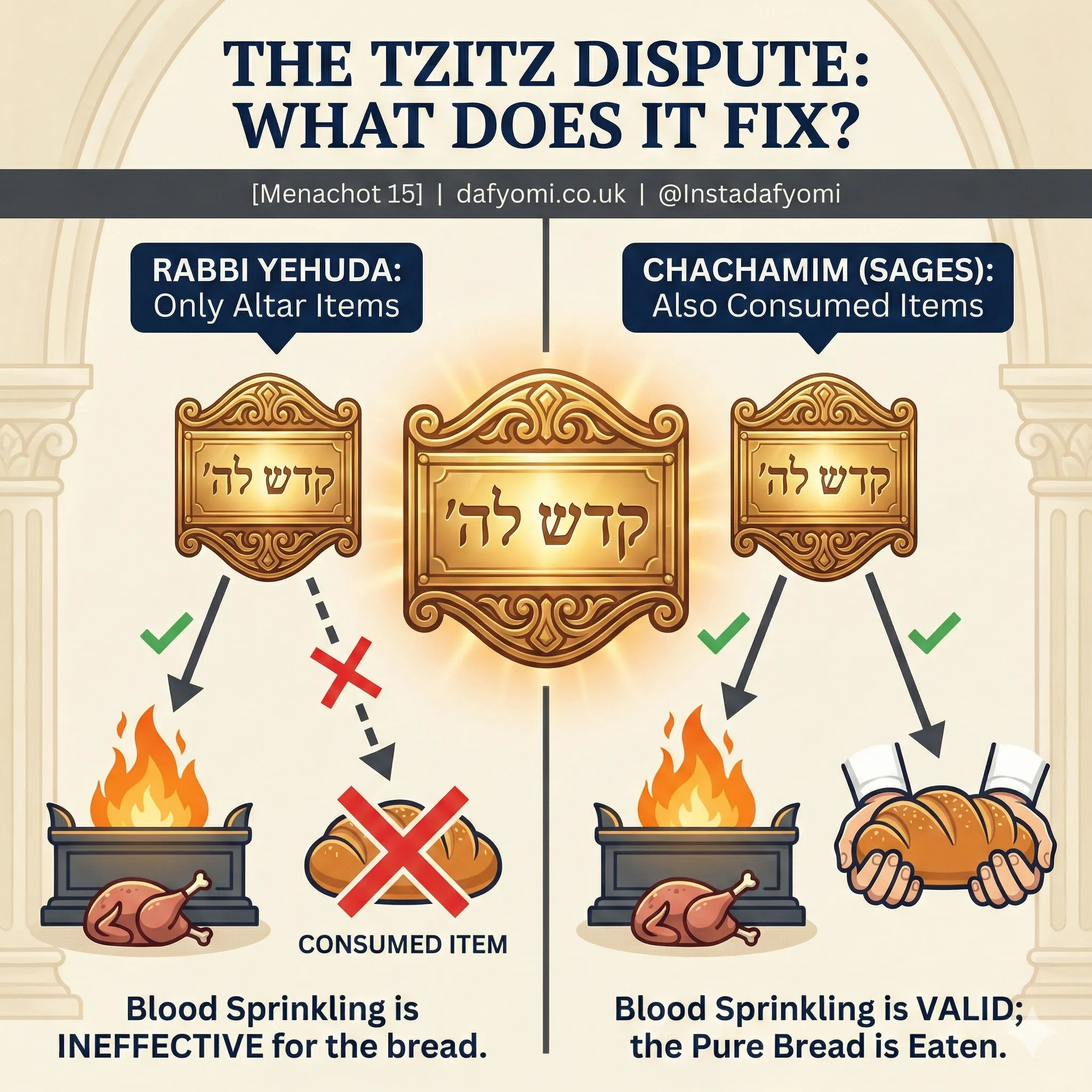
רַבָּנַן סָבְרִי: הַצִּיץ מְרַצֶּה עַל אֲכִילוֹת, וְרַבִּי יְהוּדָה סָבַר: אֵין הַצִּיץ מְרַצֶּה עַל אֲכִילוֹת.
English Translation:
The Rabbis hold that the frontplate effects acceptance for items that are normally consumed by the priests but have become ritually impure. Consequently, the sprinkling of the blood in this case is an entirely valid act that is capable of rendering the remaining pure loaf permitted for consumption. And Rabbi Yehuda holds that the frontplate does not effect acceptance for items that are consumed by the priests and have become impure. Accordingly, the sprinkling of the blood is ineffective in rendering the remaining pure loaf permitted for consumption.
קלאוד על הדף:
This segment continues from the previous daf discussing the dispute between the Rabbis and Rabbi Yehuda regarding the frontplate (tzitz) worn by the High Priest. The Rabbis hold that the tzitz can effect acceptance for items that have become impure, allowing the remaining pure portions to be offered. Rabbi Yehuda disagrees – without the tzitz’s acceptance, the impure portion disqualifies the sprinkling from permitting the pure portion.
Key Terms:
- צִּיץ = The golden frontplate worn by the High Priest
- מְרַצֶּה = Effects acceptance/appeasement
- אֲכִילוֹת = Items designated for consumption (by priests)
Segment 2
TYPE: גמרא – קושיא
Rav Huna bar Rav Natan’s challenge
Hebrew/Aramaic:
אֲמַר לֵיהּ רַב הוּנָא בְּרֵיהּ דְּרַב נָתָן לְרַב פָּפָּא: וְהָא עוֹלִין, דְּהַצִּיץ מְרַצֶּה עַל הָעוֹלִין, וּפְלִיגִי!
English Translation:
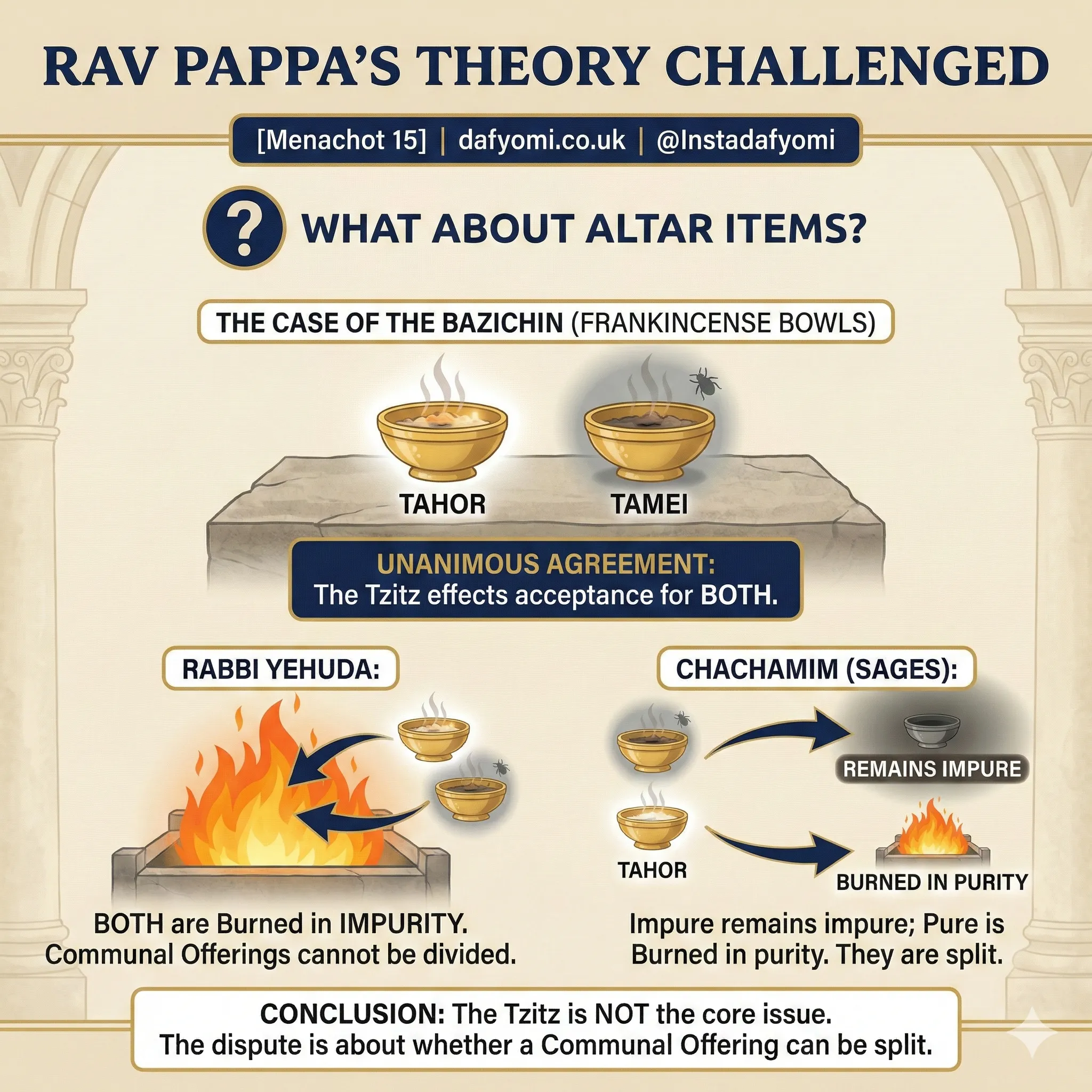
Rav Huna, son of Rav Natan, said to Rav Pappa: Can this be the dispute between Rabbi Yehuda and the Rabbis? But what about items that normally ascend upon the altar?
קלאוד על הדף:
Rav Huna challenges the characterization of the dispute. If the dispute is only about items consumed by priests (achilos), then surely both agree that the tzitz effects acceptance for items burned on the altar (olin). Yet we know they dispute even regarding altar items. This suggests the dispute must be based on something else entirely.
Key Terms:
- עוֹלִין = Items that ascend/are burned on the altar
- פְלִיגִי = They dispute
Segment 3
TYPE: גמרא – ראיה
Proof from the baraita about impure bowls of frankincense
Hebrew/Aramaic:
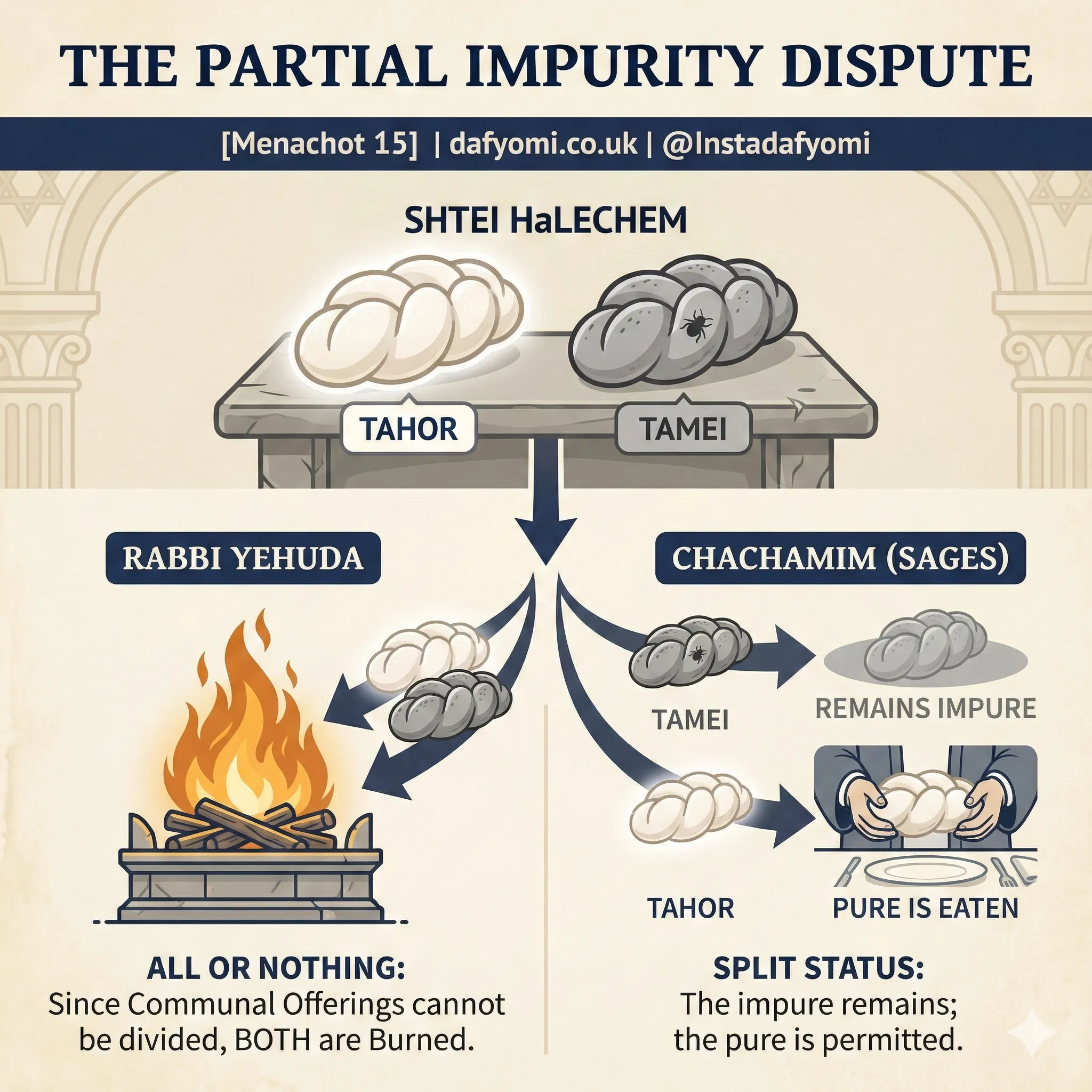
דְּתַנְיָא: נִטְמָא אֶחָד מִן הַבָּזִיכִין, רַבִּי יְהוּדָה אוֹמֵר: שְׁנֵיהֶם יֵעָשׂוּ בְּטוּמְאָה, לְפִי שֶׁאֵין קׇרְבַּן צִיבּוּר חָלוּק, וַחֲכָמִים אוֹמְרִים: הַטָּמֵא בְּטוּמְאָתוֹ וְהַטָּהוֹר בְּטׇהֳרָתוֹ.
English Translation:
The Gemara provides the source for this claim. As it is taught in a baraita: If one of the bowls of frankincense accompanying the shewbread, which are meant to be burned upon the altar, became impure, Rabbi Yehuda says that the rites of both of them may be performed in impurity, i.e., the priest may even render the second bowl impure and burn both of them together, as no communal offering is divided, and the mitzva to sacrifice communal offerings overrides the prohibition against rendering them impure. And the Rabbis say: The impure one remains in its state of impurity and the pure one remains in its state of purity. Evidently, their dispute does not depend on whether the frontplate effects acceptance.
קלאוד על הדף:
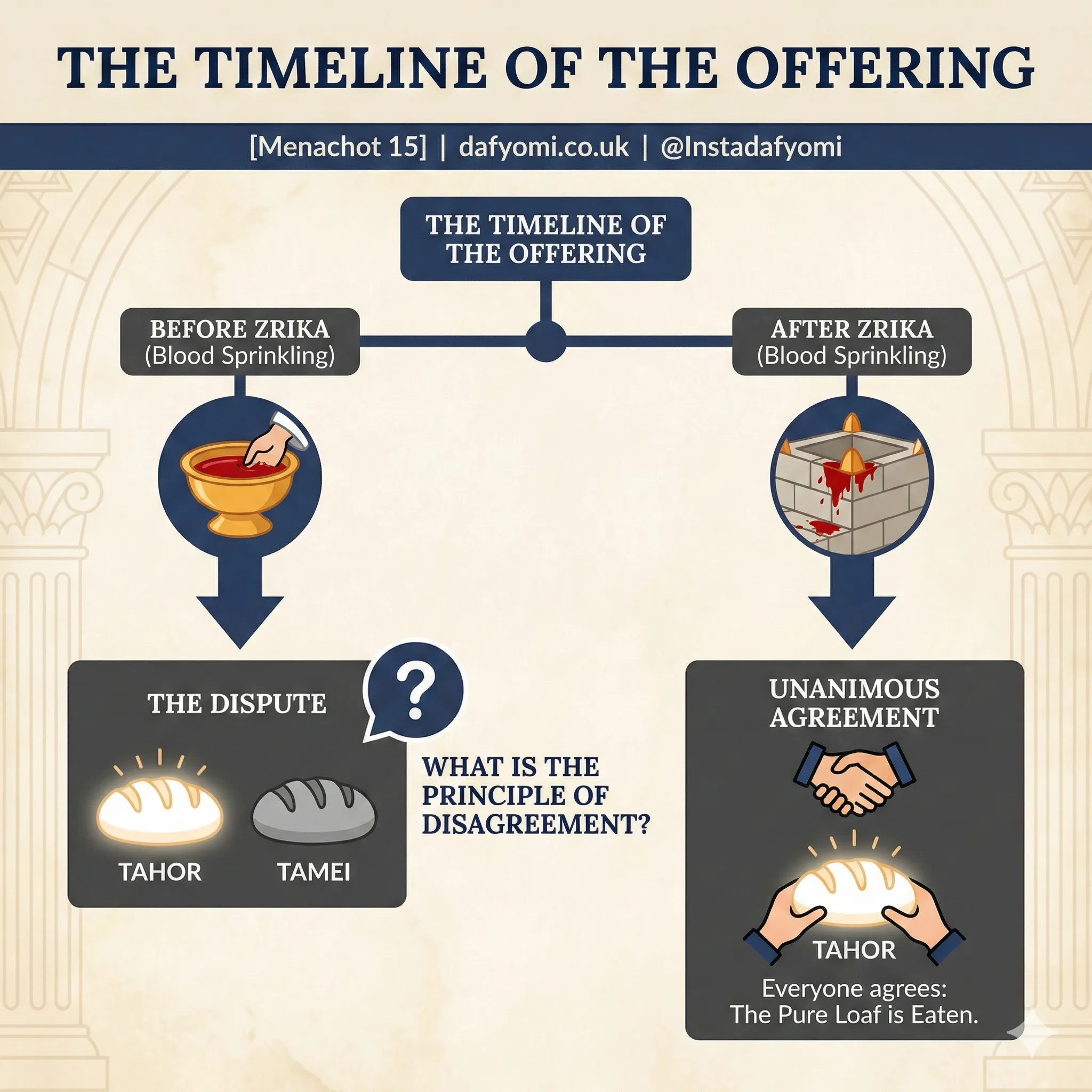
The Gemara brings proof from a baraita about the two bowls of frankincense that accompanied the showbread. Rabbi Yehuda maintains that if one bowl becomes impure, both should be offered in a state of impurity rather than splitting them – because “no communal offering is divided.” The Rabbis disagree: keep the impure separate and offer the pure one in purity. This shows the dispute is not about the tzitz but about the principle of not dividing communal offerings.
Key Terms:
- בָּזִיכִין = Bowls (of frankincense)
- לֶחֶם הַפָּנִים = Showbread
- אֵין קׇרְבַּן צִיבּוּר חָלוּק = No communal offering is divided
Segment 4
TYPE: גמרא – ראיה נוספת
Rav Ashi’s additional proof
Hebrew/Aramaic:
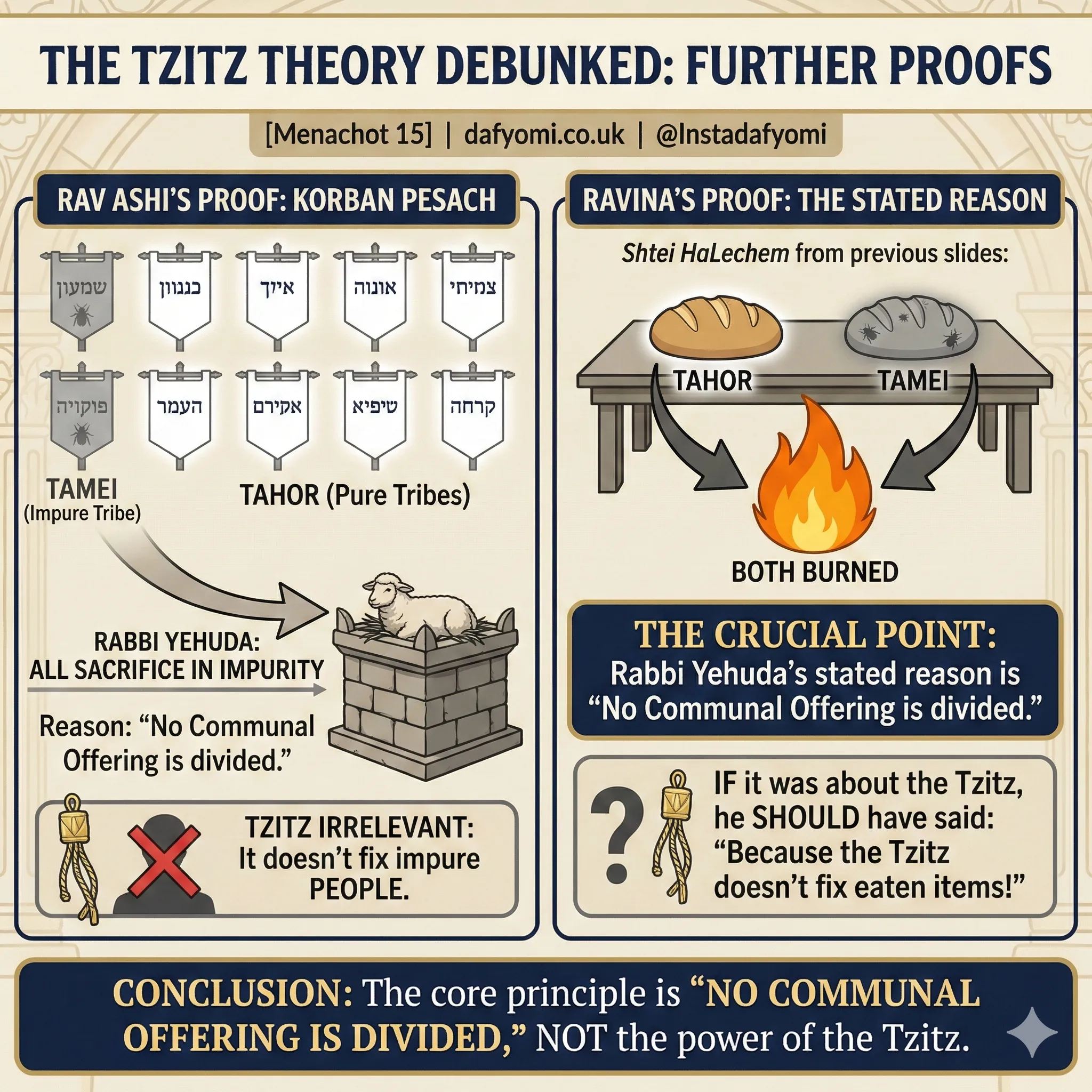
וְעוֹד, אָמַר רַב אָשֵׁי: תָּא שְׁמַע, רַבִּי יְהוּדָה אוֹמֵר: אֲפִילּוּ שֵׁבֶט אֶחָד טָמֵא וְכׇל הַשְּׁבָטִים טְהוֹרִין – יַעֲשׂוּ בְּטוּמְאָה, לְפִי שֶׁאֵין קׇרְבַּן צִיבּוּר חָלוּק, וְהָכָא מַאי הַצִּיץ מְרַצֶּה אִיכָּא?
English Translation:
And furthermore, Rav Ashi said: Come and hear an additional proof that the dispute between Rabbi Yehuda and the Rabbis does not concern the frontplate, as we learn in a mishna (Pesaḥim 80a) with regard to the consumption of the Paschal offering in a state of impurity, that Rabbi Yehuda says: Even if one tribe is ritually impure and all the rest of the tribes are pure, all the tribes may perform the rite of the Paschal offering in a state of impurity, as no communal offerings are divided. Rav Ashi explains: But here, what relevance is there to the question of whether the frontplate effects acceptance? The frontplate effects acceptance for offerings that have become impure; but it does not render it permitted for one who is ritually impure to sacrifice an offering.
קלאוד על הדף:
Rav Ashi adds another proof from Rabbi Yehuda’s position regarding the Paschal offering. Rabbi Yehuda holds that if even one tribe is impure while the majority is pure, the entire nation should offer the Paschal in impurity – because communal offerings cannot be divided. Rav Ashi’s key point: what does the tzitz have to do with this case? The tzitz helps with impure offerings, not impure people! This proves the dispute is about the principle of not dividing, not about the tzitz.
Key Terms:
- קרבן פסח = Paschal offering
- שֵׁבֶט = Tribe
- מַאי הַצִּיץ מְרַצֶּה אִיכָּא = What relevance does the frontplate have here?
Segment 5
TYPE: גמרא – ראיה נוספת
Ravina’s proof
Hebrew/Aramaic:
וְעוֹד, הָאָמַר רָבִינָא: תָּא שְׁמַע, נִטְמֵאת אַחַת מִן הַחַלּוֹת אוֹ אֶחָד מִן הַסְּדָרִין, רַבִּי יְהוּדָה אוֹמֵר: שְׁנֵיהֶם יֵצְאוּ לְבֵית הַשְּׂרֵיפָה, לְפִי שֶׁאֵין קׇרְבַּן צִיבּוּר חָלוּק, וַחֲכָמִים אוֹמְרִים: הַטָּמֵא בְּטוּמְאָתוֹ וְהַטָּהוֹר יֵאָכֵל.
English Translation:
And furthermore, doesn’t Ravina say: Come and hear a proof that the matter of the frontplate cannot be the subject of the dispute between Rabbi Yehuda and the Rabbis, as the mishna teaches: If one of the two loaves brought on Shavuot or one of the two arrangements of shewbread became ritually impure, Rabbi Yehuda says: Both must be taken to the place of burning, as no communal offering is divided. And the Rabbis say: The impure one remains in its impurity and the pure one may be eaten.
קלאוד על הדף:
Ravina brings yet another proof from the two loaves of Shavuot and the showbread. Rabbi Yehuda says if one becomes impure, both go to burning – because communal offerings cannot be divided. The Rabbis disagree: the impure burns while the pure may be eaten. This again shows the dispute is about division of offerings, not the tzitz.
Key Terms:
- חַלּוֹת = Loaves (the two loaves of Shavuot)
- סְּדָרִין = Rows (of showbread)
- בֵית הַשְּׂרֵיפָה = Place of burning
Segment 6
TYPE: גמרא – מסקנא
Rabbi Yochanan’s conclusion
Hebrew/Aramaic:
וְאִם אִיתָא, לְפִי שֶׁאֵין הַצִּיץ מְרַצֶּה עַל אֲכִילוֹת מִיבְּעֵי לֵיהּ! אֶלָּא אָמַר רַבִּי יוֹחָנָן: תַּלְמוּד עָרוּךְ הוּא בְּפִיו שֶׁל רַבִּי יְהוּדָה, שֶׁאֵין קׇרְבַּן צִיבּוּר חָלוּק.
English Translation:
The Gemara explains the difficulty: And if it is so, i.e., that the dispute between them concerns the frontplate, then Rabbi Yehuda should have said: They are both burned, because the frontplate does not effect acceptance for impure items that are consumed by the priests. Rather, Rabbi Yoḥanan says: It is a settled tradition in the mouth of Rabbi Yehuda that no communal offering is divided, and if one part of an offering becomes impure, the entire offering is disqualified.
קלאוד על הדף:
The Gemara points out: if the dispute were about the tzitz, Rabbi Yehuda should have given a different reason (“because the tzitz doesn’t help for items to be eaten”). Instead, he always says “because communal offerings cannot be divided.” Rabbi Yochanan concludes: Rabbi Yehuda holds this as a received tradition (talmud aruch) – it’s not derived from logic about the tzitz but is an independent principle he received from his teachers.
Key Terms:
- תַּלְמוּד עָרוּךְ = A settled/arranged teaching (received tradition)
- שֶׁאֵין קׇרְבַּן צִיבּוּר חָלוּק = That no communal offering is divided
Segment 7
TYPE: משנה
New Mishna – Piggul and accompanying items
Hebrew/Aramaic:
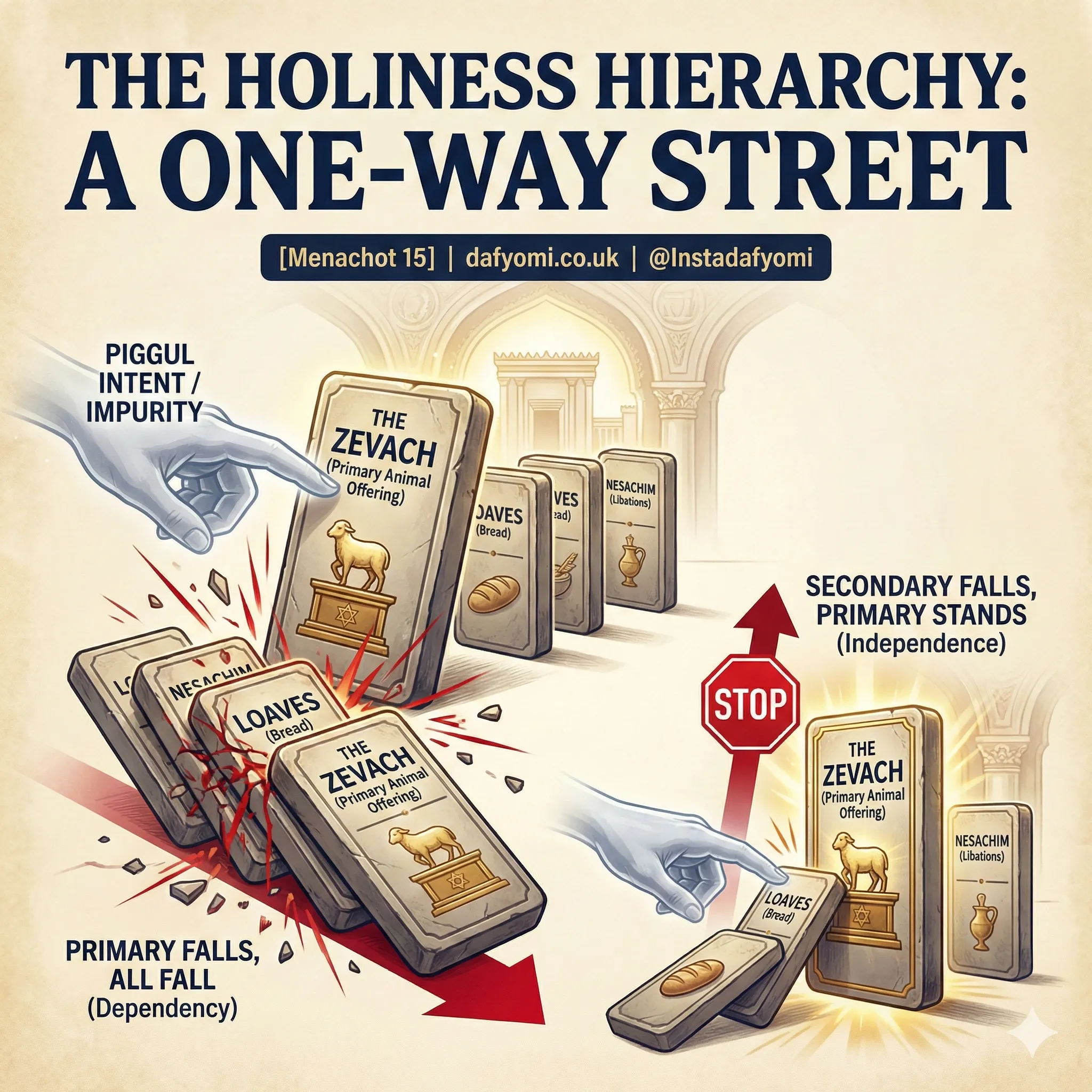
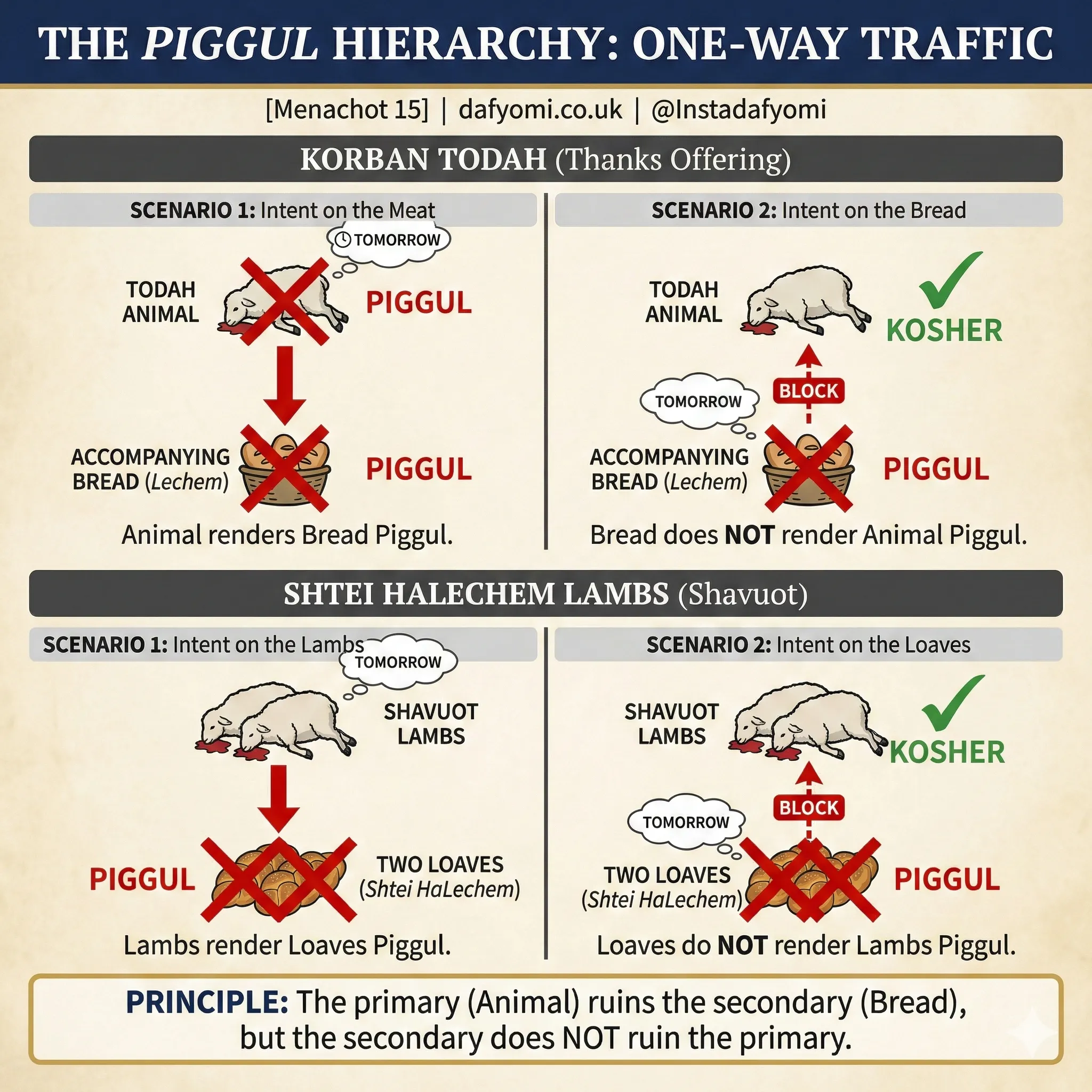
מַתְנִי׳ הַתּוֹדָה מְפַגֶּלֶת אֶת הַלֶּחֶם, וְהַלֶּחֶם אֵינוֹ מְפַגֵּל אֶת הַתּוֹדָה
English Translation:
MISHNA: The thanks offering renders the accompanying loaves piggul but the loaves do not render the thanks offering piggul.
קלאוד על הדף:
This Mishna introduces a new topic: the relationship between an offering and its accompanying items regarding piggul (improper intent regarding time). The thanks offering (todah) comes with forty loaves. If the priest slaughters the animal with improper intent, it affects the loaves too. However, improper intent regarding the loaves alone does not affect the animal.
Key Terms:
- תּוֹדָה = Thanks/thanksgiving offering
- מְפַגֶּלֶת = Renders piggul (through improper intent)
- לֶחֶם = Loaves (accompanying the thanks offering)
- פִּגּוּל = Offering made with intent to consume/burn outside proper time
Segment 8
TYPE: משנה – המשך
Continuation – intent to consume the thanks offering
Hebrew/Aramaic:
שָׁחַט אֶת הַתּוֹדָה לֶאֱכוֹל מִמֶּנָּה לְמָחָר – הִיא וְהַלֶּחֶם מְפוּגָּלִין
English Translation:
If one slaughtered the thanks offering with the intent to partake of it the next day, the offering and the accompanying loaves are rendered piggul.
קלאוד על הדף:
The Mishna provides the first case: when the priest’s improper intent is focused on the animal itself. Since the thanks offering is a “one day” sacrifice (must be consumed by morning), intent to eat it the next day constitutes piggul. This piggul status extends to the accompanying loaves as well – they are rendered piggul through the animal.
Key Terms:
- לֶאֱכוֹל מִמֶּנָּה לְמָחָר = To eat from it tomorrow
- מְפוּגָּלִין = Are rendered piggul
Segment 9
TYPE: משנה – המשך
Intent regarding the loaves only
Hebrew/Aramaic:
לֶאֱכוֹל מִן הַלֶּחֶם לְמָחָר – הַלֶּחֶם מְפוּגָּל וְהַתּוֹדָה אֵינָהּ מְפוּגֶּלֶת
English Translation:
If he slaughtered it with the intent to partake of the loaves the next day, the loaves are rendered piggul and the thanks offering is not piggul.
קלאוד על הדף:
The second case: when intent is focused only on the loaves. Here, only the loaves become piggul while the animal remains valid. This asymmetry exists because the loaves are brought on account of the animal (lechem ba bi-glal todah), not vice versa. The “main” item can affect the “secondary” item, but not the reverse.
Segment 10
TYPE: משנה – המשך
The lambs and two loaves of Shavuot
Hebrew/Aramaic:
הַכְּבָשִׂים מְפַגְּלִין אֶת הַלֶּחֶם, וְהַלֶּחֶם אֵינוֹ מְפַגֵּל אֶת הַכְּבָשִׂים
English Translation:
Likewise, the lambs sacrificed with the two loaves meal offering on Shavuot render the accompanying loaves piggul, but the loaves do not render the lambs piggul.
קלאוד על הדף:
The Mishna extends the same principle to the Shavuot offering. On Shavuot, two lambs are brought as shelamim along with two loaves of chametz bread. The same asymmetry applies: the lambs (the main offering) can render the loaves piggul, but the loaves cannot render the lambs piggul.
Key Terms:
- כְּבָשִׂים = Lambs
- שְׁתֵּי הַלֶּחֶם = Two loaves (of Shavuot)
Segment 11
TYPE: משנה – המשך
Intent to eat the lambs tomorrow
Hebrew/Aramaic:
הַשּׁוֹחֵט אֶת הַכְּבָשִׂים לֶאֱכוֹל מֵהֶן לְמָחָר – הֵם וְהַלֶּחֶם מְפוּגָּלִין
English Translation:
If one slaughtered the lambs with the intent to partake of them the next day, the lambs and the loaves are rendered piggul.
קלאוד על הדף:
Parallel to the thanks offering: improper intent regarding the lambs affects both the lambs and the two loaves. The lambs of Shavuot must also be consumed on the day they are offered, making intent for “tomorrow” a piggul-generating thought.
Segment 12
TYPE: משנה – המשך
Intent regarding the loaves only
Hebrew/Aramaic:
לֶאֱכוֹל אֶת הַלֶּחֶם לְמָחָר – הַלֶּחֶם מְפוּגָּל וְהַכְּבָשִׂים אֵינָן מְפוּגָּלִין
English Translation:
If he did so with the intent to partake of the loaves the next day, the loaves are rendered piggul and the lambs are not piggul.
קלאוד על הדף:
Again parallel to the thanks offering: intent regarding only the loaves affects only the loaves, not the lambs. This completes the Mishna’s presentation of the asymmetric relationship between main offerings and their accompanying items.
Segment 13
TYPE: גמרא
Why does the thanks offering render loaves piggul?
Hebrew/Aramaic:
גְּמָ׳ מַאי טַעְמָא? אִילֵּימָא מִשּׁוּם דְּרַב כָּהֲנָא
English Translation:
GEMARA: What is the reason that a thanks offering renders its accompanying loaves piggul? If we say it is due to that which Rav Kahana says, this is problematic.
קלאוד על הדף:
The Gemara begins analyzing the Mishna’s ruling. What is the mechanism by which the thanks offering renders the loaves piggul? The Gemara considers whether it might be based on Rav Kahana’s teaching but immediately signals this approach will be problematic.
Segment 14
TYPE: גמרא – ראיה
Rav Kahana’s teaching
Hebrew/Aramaic:
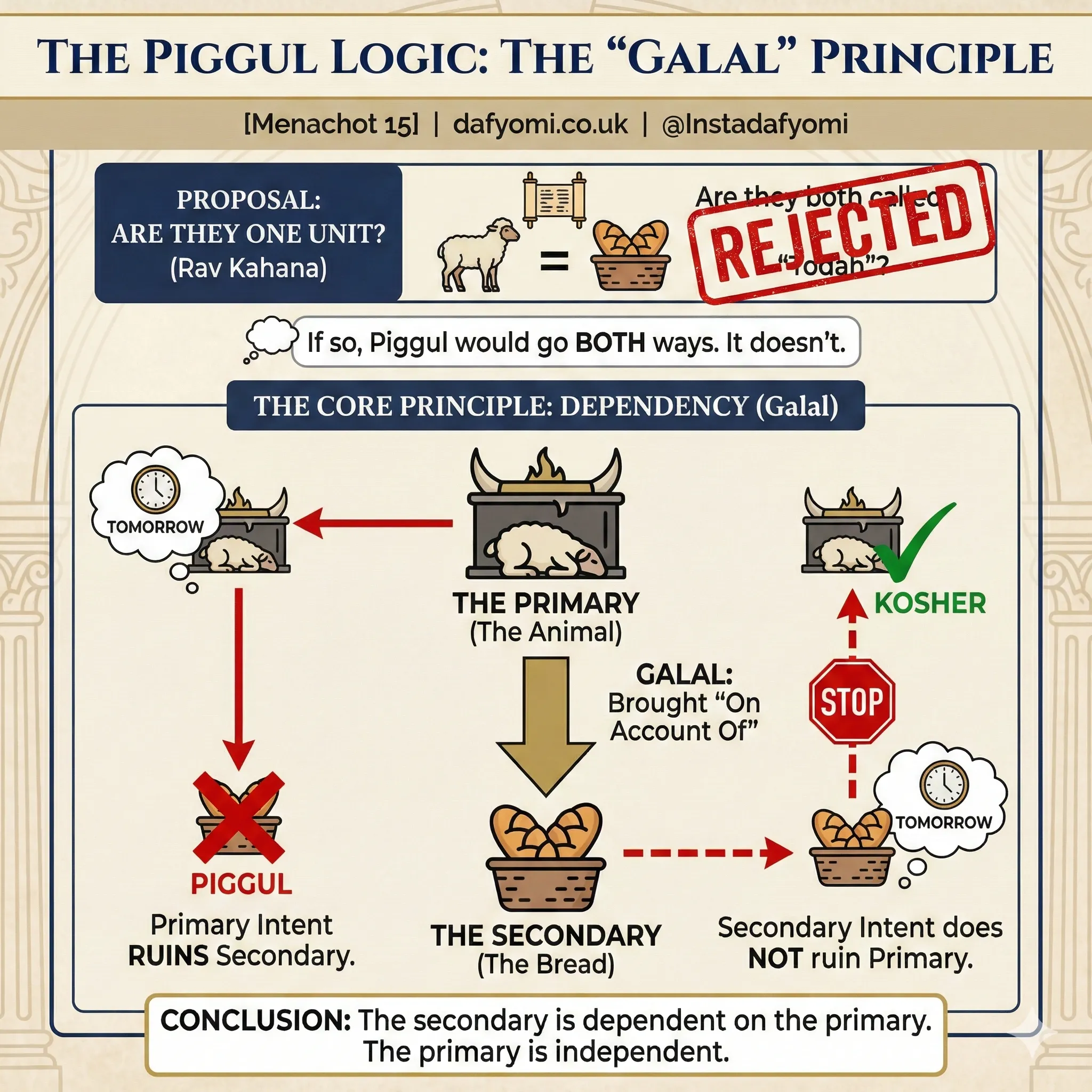
דְּאָמַר רַב כָּהֲנָא: מִנַּיִן לְלַחְמֵי תוֹדָה שֶׁנִּקְרְאוּ תּוֹדָה? שֶׁנֶּאֱמַר: ״וְהִקְרִיב עַל זֶבַח הַתּוֹדָה חַלּוֹת״
English Translation:
As Rav Kahana says: From where is it derived that the loaves of a thanks offering are themselves called a thanks offering? From the verse: “Then he shall offer with the sacrifice of thanks offering loaves.”
קלאוד על הדף:
Rav Kahana teaches that the Torah itself calls the loaves “todah” – they are part of the thanks offering’s identity. One might think this explains why piggul of the animal transfers to the loaves: they share the same name and identity.
Key Terms:
- נִקְרְאוּ תּוֹדָה = Are called “thanks offering”
Segment 15
TYPE: גמרא – פירכא ותירוץ
Challenge and response
Hebrew/Aramaic:
אִי הָכִי אִיפְּכָא נָמֵי, הָא לָא קַשְׁיָא: לֶחֶם אִיקְּרִי תּוֹדָה, תּוֹדָה לָא אִיקְּרִי לֶחֶם
English Translation:
If so, then the opposite should be the halakha as well. The Gemara rejects this: This is not difficult, as the loaves are called a thanks offering, but a thanks offering is not called loaves.
קלאוד על הדף:
The Gemara challenges: if shared nomenclature explains piggul transfer, it should work both ways! The resolution is elegant: the loaves are called “todah,” but the animal is never called “lechem.” The naming is asymmetric, explaining the asymmetric piggul relationship.
Segment 16
TYPE: גמרא – קושיא
But what about the Shavuot lambs?
Hebrew/Aramaic:
אֶלָּא הָא דְּקָתָנֵי: הַכְּבָשִׂים מְפַגְּלִין אֶת הַלֶּחֶם וְהַלֶּחֶם אֵינוֹ מְפַגֵּל אֶת הַכְּבָשִׂים, לֶחֶם הֵיכָא אַשְׁכְּחַן דְּאִיקְּרִי כְּבָשִׂים? אֶלָּא לָאו הַיְינוּ טַעְמָא: לֶחֶם גְּלַל תּוֹדָה, וְאֵין תּוֹדָה גְּלַל לֶחֶם, לֶחֶם גְּלַל כְבָשִׂים, וְאֵין כְּבָשִׂים גְּלַל לֶחֶם.
English Translation:
The Gemara asks: But with regard to that which the mishna teaches: The lambs sacrificed with the two loaves meal offering on Shavuot render the accompanying loaves piggul but the loaves do not render the lambs piggul, where do we find that the two loaves are called lambs? Rather, is it not correct that this is the reason why the thanks offering renders the loaves piggul but not vice versa: The bread is brought on account of the thanks offering, but the thanks offering is not brought on account of the bread, i.e., the thanks offering is the primary element of the sacrifice. Similarly, the two loaves of bread are brought on account of the lambs, and the lambs are not brought on account of the bread.
קלאוד על הדף:
The Gemara raises a difficulty: Rav Kahana’s explanation works for the thanks offering (loaves are called “todah”), but not for the Shavuot lambs – the two loaves are never called “lambs”! This forces a different explanation: the principle must be that the secondary item is brought “on account of” (bi-glal) the primary item. The bread comes because of the offering, not vice versa.
Key Terms:
- לֶחֶם הֵיכָא אַשְׁכְּחַן דְּאִיקְּרִי כְּבָשִׂים = Where do we find that loaves are called lambs?
- גְּלַל = On account of, because of
Segment 18
TYPE: גמרא – צריכותא
Why both cases are necessary
Hebrew/Aramaic:
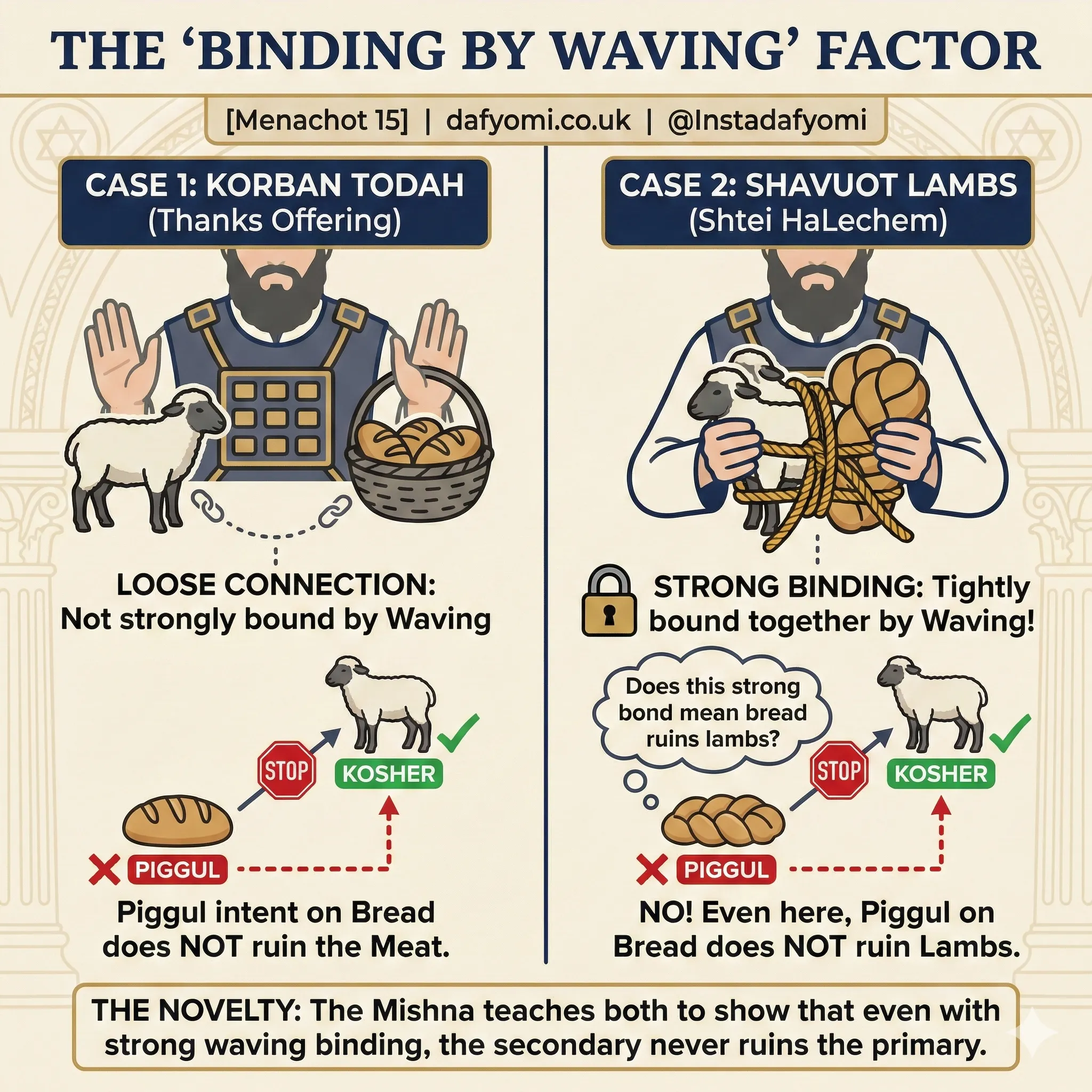
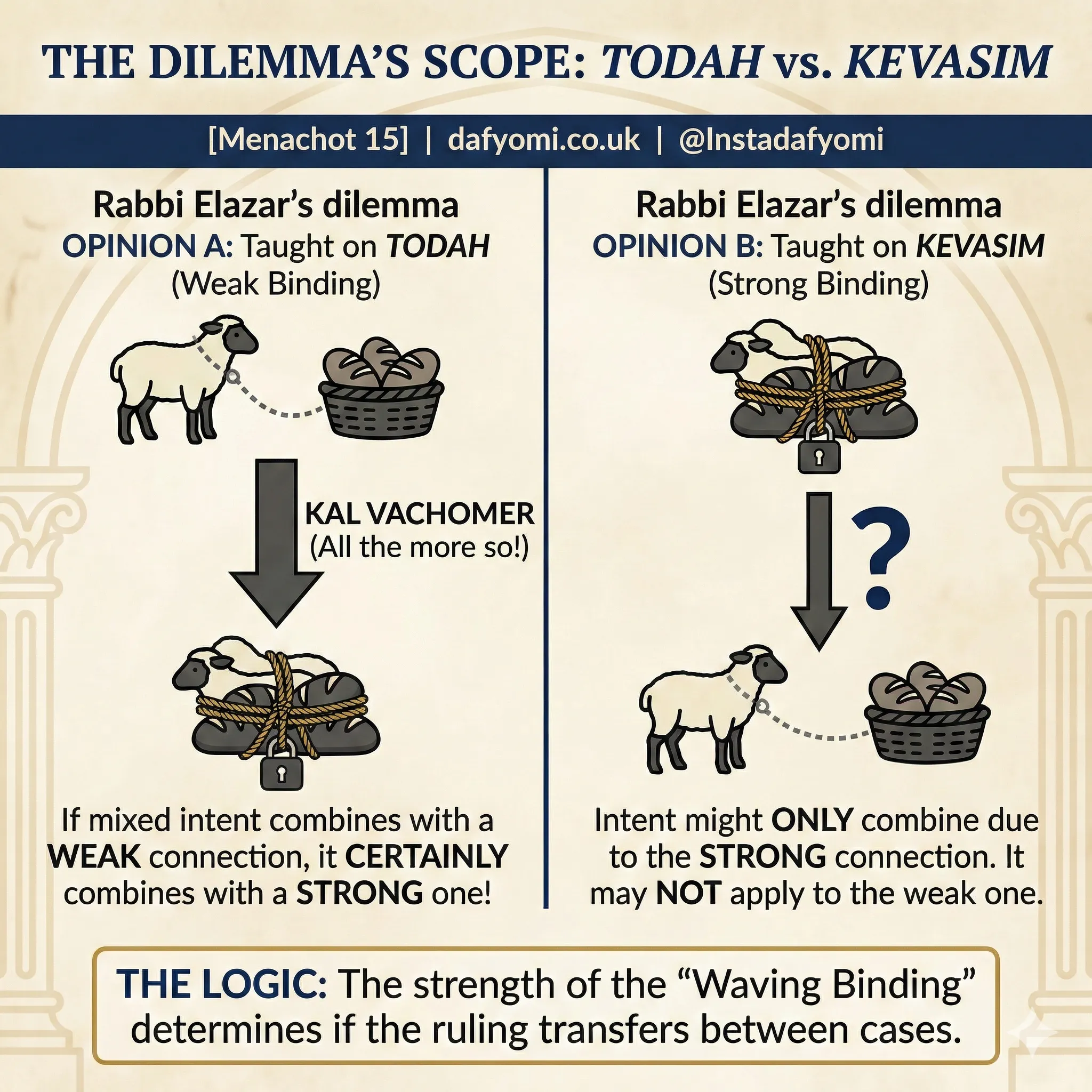
וּצְרִיכִי, דְּאִי אַשְׁמְעִינַן תּוֹדָה – הָתָם הוּא דְּכִי מְפַגֵּל בְּלֶחֶם לָא מִפַּגְּלָא תּוֹדָה, מִשּׁוּם דְּלָא הוּזְקְקוּ זֶה לָזֶה בִּתְנוּפָה, אֲבָל כְּבָשִׂים דְּהוּזְקְקוּ זֶה לָזֶה בִּתְנוּפָה – אֵימָא כִּי מְפַגֵּל בְּלֶחֶם לִיפַּגְּלִי נָמֵי כְּבָשִׂים, צְרִיכָא.
English Translation:
The Gemara notes: And both of these halakhot are necessary, as, had the mishna taught us the halakha only in the case of a thanks offering, then one might say: It is only there, with regard to a thanks offering, that when one renders the loaves piggul the thanks offering is not rendered piggul, because they were not bound to one another by waving, i.e., the mitzva of waving the thanks offering may be fulfilled without the bread. But with regard to the lambs, in which the two items were bound to one another by waving, as the two loaves are waved together with the lambs, one might say that when he renders the bread piggul, the lambs should be rendered piggul as well. Therefore, it was necessary for the mishna to teach this halakha also with regard to the case of the lambs.
קלאוד על הדף:
The Gemara explains why the Mishna needed to teach both cases (thanks offering and Shavuot lambs). The thanks offering and its loaves are not waved together, while the Shavuot lambs and loaves are waved together (tenufah). One might have thought the waving creates a stronger bond that would allow reverse piggul transfer – that piggul intent on the loaves would affect the lambs. The Mishna teaches that even so, the loaves cannot render the lambs piggul.
Key Terms:
- צְרִיכָא = It is necessary (both teachings are needed)
- הוּזְקְקוּ זֶה לָזֶה בִּתְנוּפָה = Were bound to one another by waving
- תְּנוּפָה = Waving
Segment 19
TYPE: גמרא – בעיא
Rabbi Elazar’s dilemma
Hebrew/Aramaic:
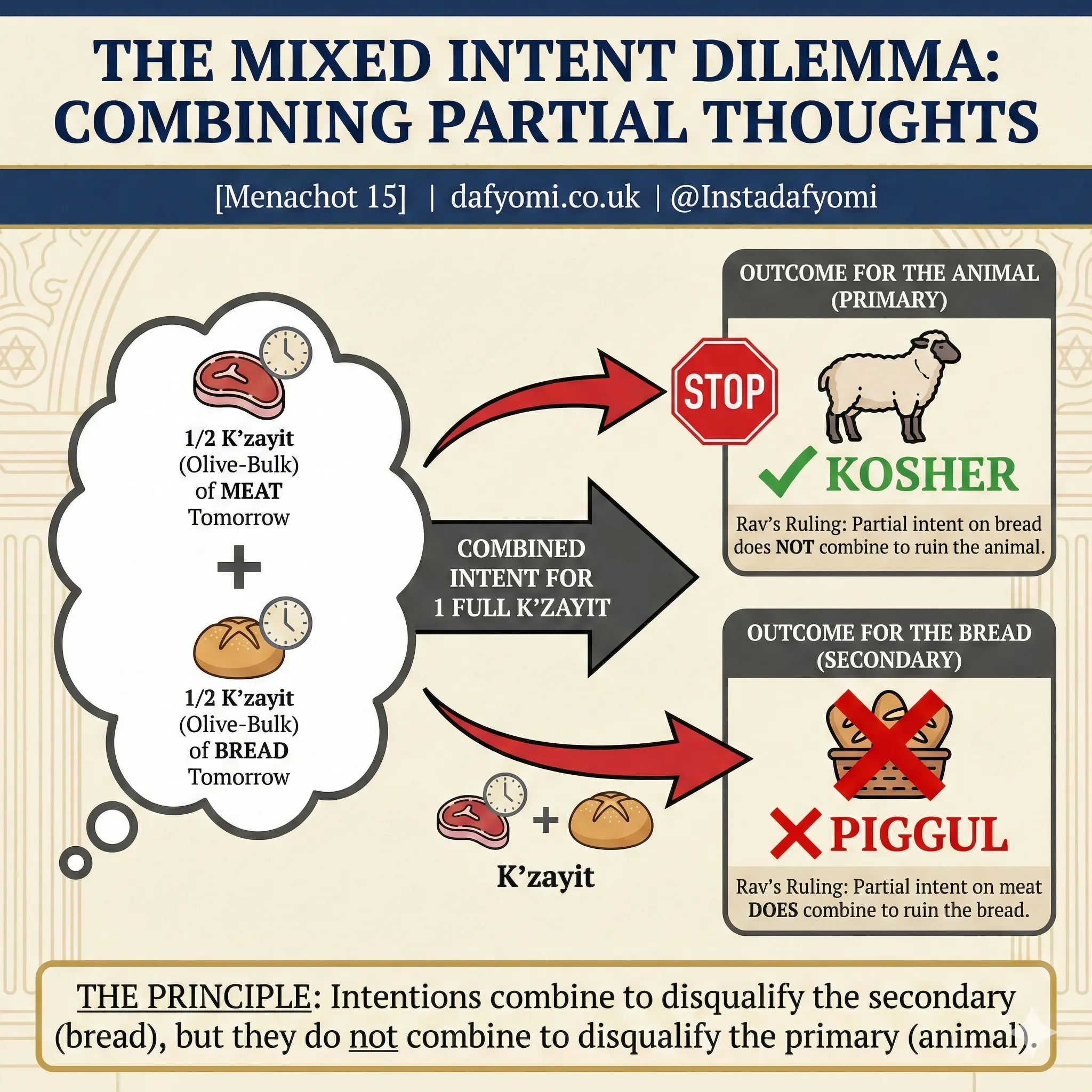
בְּעָא מִינֵּיהּ רַבִּי אֶלְעָזָר מֵרַב: הַשּׁוֹחֵט אֶת הַתּוֹדָה לֶאֱכוֹל כְּזַיִת מִמֶּנָּה וּמִלַּחְמָהּ לְמָחָר, מַהוּ לְאִיפַּגּוֹלֵי? תּוֹדָה לָא מִיבַּעְיָא לִי, הַשְׁתָּא כּוּלּוֹ מִלַּחְמָהּ לָא מִיפַּגְּלָא, מִמֶּנָּה וּמִלַּחְמָהּ מִיבַּעְיָא?
English Translation:
Rabbi Elazar raised a dilemma before Rav: If one slaughters the thanks offering with the intent to consume an olive-bulk from it and from its loaves the next day, what is the halakha? Rabbi Elazar elaborates: I do not raise the dilemma with regard to rendering the thanks offering piggul, for the following reason: Now that in a case where his intent was to consume the entire olive-bulk from its loaves alone, the thanks offering is not rendered piggul, in accordance with the mishna’s ruling that piggul intent with regard to the loaves does not render the thanks offering piggul, then in a case where his intent is to consume half an olive-bulk from the thanks offering and half an olive-bulk from its loaves, in which case the offering is rendered piggul only if the two intentions of less than a full measure are combined, is it necessary to teach that the thanks offering is not piggul?
קלאוד על הדף:
Rabbi Elazar poses a fascinating case: what if the priest’s improper intent was split – half an olive-bulk from the animal and half an olive-bulk from the loaves? He clarifies: the animal obviously won’t become piggul (if a full olive-bulk of loaves-intent doesn’t affect it, surely half won’t). His real question is about the loaves.
Key Terms:
- כְּזַיִת = Olive-bulk (minimum measure)
- מִמֶּנָּה וּמִלַּחְמָהּ = From it and from its loaves
Segment 20
TYPE: גמרא – בירור השאלה
Clarifying the dilemma
Hebrew/Aramaic:
כִּי קָא מִיבַּעְיָא לִי לְאִיפַּגּוֹלֵי לֶחֶם, מִי מִצְטָרְפָה תּוֹדָה לְאִיפַּגּוֹלֵי לְלֶחֶם אוֹ לָא?
English Translation:
Rather, when I raise the dilemma, it is with regard to rendering the loaves piggul, which can be rendered piggul via intent concerning the loaves alone. In this case, does the intention of the priest with regard to the thanks offering combine with his intention concerning the loaves to render the loaves piggul, or not?
קלאוד על הדף:
Rabbi Elazar clarifies the core of his question: since intent from the animal can transfer to the loaves, does half an olive-bulk from the animal plus half from the loaves combine to render the loaves piggul? The question is whether partial intent regarding the primary offering (todah) joins with partial intent regarding the secondary item (loaves).
Segment 21
TYPE: גמרא – תשובה
Rav’s answer
Hebrew/Aramaic:
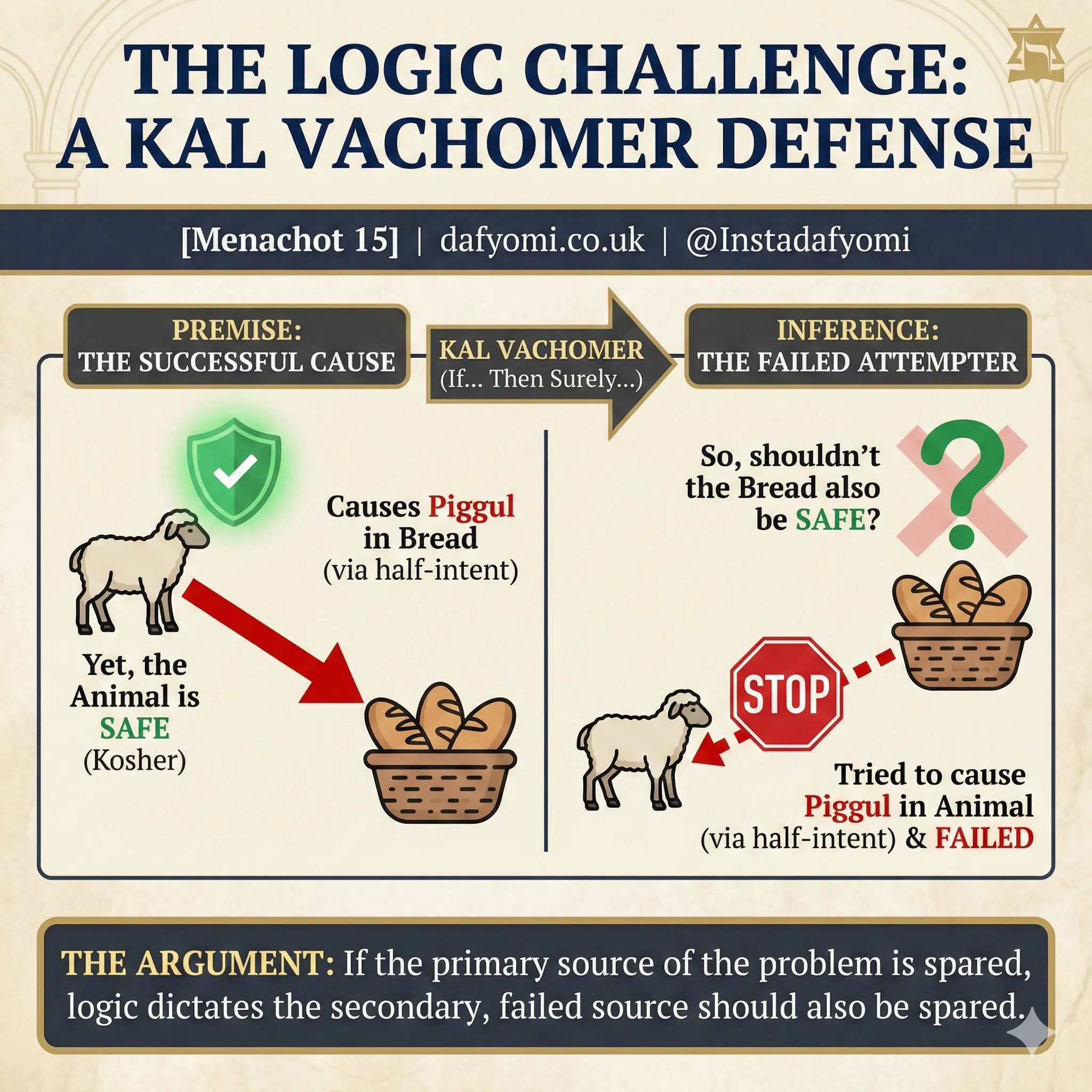
אֲמַר לֵיהּ: אַף בְּזוֹ, הַלֶּחֶם מְפוּגָּל וְהַתּוֹדָה אֵינָהּ מְפוּגֶּלֶת. וְאַמַּאי? לֵימָא קַל וָחוֹמֶר: וּמָה תּוֹדָה הַמְפַגֵּל אֵין מִתְפַּגֵּל, הַבָּא לְפַגֵּל וְלֹא פִּיגֵּל – אֵינוֹ דִּין שֶׁלֹּא יִתְפַּגֵּל?
English Translation:
Rav said to Rabbi Elazar: Even in this case, the loaves are rendered piggul and the thanks offering is not rendered piggul. The Gemara asks: But why should the loaves be rendered piggul? Let us say the following a fortiori inference: And if the thanks offering, which in this case serves to render the loaves piggul, is itself not rendered piggul, then the loaves, which come to render the thanks offering piggul, but do not render it piggul, as the intent to consume half an olive-bulk from the loaves does not combine with the intent to consume half an olive-bulk from the thanks offering to render the thanks offering piggul, is it not logical that the loaves themselves should not be rendered piggul?
קלאוד על הדף:
Rav rules that the loaves do become piggul while the todah does not. The Gemara challenges: use a kal vachomer! If the todah (which has the power to render loaves piggul) doesn’t become piggul, surely the loaves (which can’t even fully render the todah piggul) shouldn’t become piggul either! This challenge continues on the next amud.
Key Terms:
- קַל וָחוֹמֶר = A fortiori inference (from lenient to stringent)
- הַמְפַגֵּל אֵין מִתְפַּגֵּל = That which renders piggul is not itself rendered piggul
Amud Bet (15b)
Segment 1
TYPE: גמרא – ראיה מכלאים
Proof from diverse kinds in a vineyard
Hebrew/Aramaic:
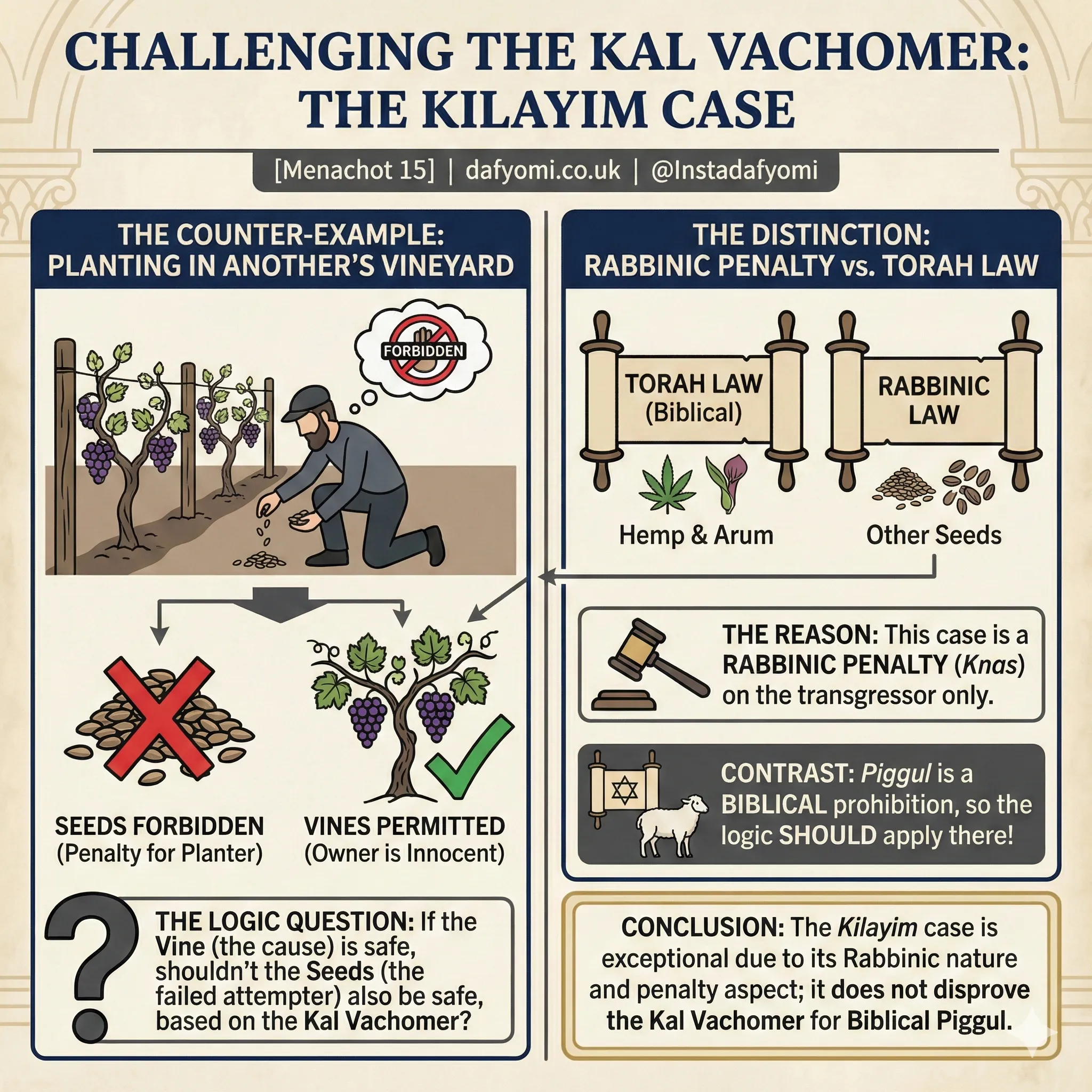
שֶׁזָּרַע כַּרְמוֹ שֶׁל חֲבֵירוֹ סְמָדַר, וּבָא מַעֲשֶׂה לִפְנֵי חֲכָמִים, וְאָסְרוּ אֶת הַזְּרָעִים וְהִתִּירוּ אֶת הַגְּפָנִים. וְאַמַּאי? לֵימָא קַל וָחוֹמֶר הוּא: וּמָה הָאוֹסֵר אֵינוֹ נֶאֱסָר, הַבָּא לֶאֱסוֹר וְלֹא אָסַר – אֵינוֹ דִּין שֶׁלֹּא יִתְאַסֵּר?
English Translation:
Who planted seeds in the vineyard of another when the grapes on the vines were budding, and the incident came before the Sages and they deemed the seeds prohibited due to the prohibition against planting diverse kinds in a vineyard, but they deemed the vines permitted. But why? Let us say through an a fortiori inference: If that which prohibits is not itself prohibited, then that which comes to prohibit but did not prohibit – is it not logical that it should not be prohibited?
קלאוד על הדף:
The Gemara brings a case from kilayim (diverse kinds). Someone planted seeds in another person’s vineyard when the grapes were budding. The Sages ruled the seeds became prohibited (as kilayim) but the vines remained permitted. The Gemara asks: why not apply a kal vachomer? If the vines (which could have prohibited the seeds) remain permitted, surely the seeds (which failed to prohibit the vines) should also be permitted!
Key Terms:
- כַּרְמוֹ = His vineyard
- סְמָדַר = Budding (early grape stage)
- כִּלְאַיִם = Diverse kinds
Segment 2
TYPE: גמרא – דחייה
Rejection of the comparison
Hebrew/Aramaic:
הָכִי הַשְׁתָּא? הָתָם קַנְבּוֹס וְלוּף אָסְרָה תּוֹרָה, דִּתְנַן: הָיְתָה שָׂדֵהוּ זְרוּעָה קַנְבּוֹס וְלוֹף לֹא יְהֵא זוֹרֵעַ עַל גַּבֵּיהֶם, שֶׁהֵן עוֹשׂוֹת לְשָׁלֹשׁ שָׁנִים – שְׁאָר זְרָעִים מִדְּרַבָּנַן הוּא דַּאֲסִירִי. הַאי דְּעָבֵיד אִיסּוּרָא – קַנְסוּהּ רַבָּנַן, הַאי דְּלָא עָבֵיד אִיסּוּרָא – לָא קַנְסוּהּ רַבָּנַן. אֲבָל הָכָא, לֵימָא קַל וָחוֹמֶר!
English Translation:
How can these cases be compared? There, in the baraita, only hemp and arum are prohibited by Torah law to be sown in a vineyard. Other seeds are prohibited by rabbinic law. Therefore, with regard to this person who committed a transgression by planting the seeds in the vineyard of another, the Sages penalized him and deemed his seeds prohibited, but as for that person who did not commit a transgression, the Sages did not penalize him. But here [regarding piggul], let us say an a fortiori inference!
קלאוד על הדף:
The Gemara rejects the comparison. In the vineyard case, most seeds are only rabbinically prohibited in a vineyard (only hemp and arum are biblically prohibited). The Sages imposed a penalty on the transgressor (his seeds are forbidden) but didn’t penalize the innocent vineyard owner. This is a rabbinic penalty, not a logical inference. So the kal vachomer question regarding piggul remains unanswered.
Key Terms:
- קַנְבּוֹס = Hemp
- לוּף = Arum (a plant)
- קַנְסוּהּ רַבָּנַן = The Sages penalized him
Segment 3
TYPE: גמרא – גירסא אחרת
Alternative version of Rabbi Elazar’s dilemma
Hebrew/Aramaic:
וְאִיכָּא דְּמַתְנֵי לַהּ אַכְּבָשִׂים, בְּעָא מִינֵּיהּ רַבִּי אֶלְעָזָר מֵרַב: הַשּׁוֹחֵט אֶת הַכְּבָשִׂים לֶאֱכוֹל כְּזַיִת מֵהֶן וּמִלַּחְמָן, מַהוּ?
English Translation:
And there are those who teach the dilemma of Rabbi Elazar with regard to the lambs brought with the two loaves, and not with regard to a thanks offering. Rabbi Elazar raised a dilemma before Rav: In a case where one slaughters the lambs with the intent to consume an olive-bulk from them and from their loaves the next day, what is the halakha?
קלאוד על הדף:
The Gemara presents an alternative version. Some taught that Rabbi Elazar’s dilemma was about the Shavuot lambs and two loaves, not the thanks offering. The question is the same: if intent is split between the lambs and loaves, do they combine?
Segment 4
TYPE: גמרא – בירור השאלה
Clarifying the alternative dilemma
Hebrew/Aramaic:
לְאִיפַּגּוֹלֵי כְּבָשִׂים לָא קָא מִיבַּעְיָא לִי, הַשְׁתָּא כּוּלּוֹ מִלֶּחֶם לָא מִפַּגְּלִי, מֵהֶן וּמִלַּחְמָן מִיבַּעְיָא? כִּי קָא מִיבַּעְיָא לִי לְאִיפַּגּוֹלֵי לֶחֶם, מִי מִצְטָרְפִי כְּבָשִׂים לְאִיפַּגּוֹלֵי לְלֶחֶם אוֹ לָא?
English Translation:
Rabbi Elazar elaborated: I do not raise the dilemma with regard to rendering the lambs piggul for the following reason: Now that in a case where his intent was to consume an entire olive-bulk from the loaves alone, the lambs are not rendered piggul, then in a case where his intent is to consume half an olive-bulk from them and half an olive-bulk from their loaves, is it necessary to teach that the lambs are not piggul? When I raise the dilemma, it is with regard to rendering the loaves piggul – does intent from the lambs combine with intent from the loaves to render the loaves piggul?
קלאוד על הדף:
Rabbi Elazar clarifies: the lambs obviously won’t become piggul (a kal vachomer – if a full olive-bulk of loaves intent doesn’t affect the lambs, surely half won’t). The question is whether the lamb-intent and loaves-intent combine to render the loaves themselves piggul.
Segment 5
TYPE: גמרא – תשובה
Rav’s answer and the kal vachomer challenge
Hebrew/Aramaic:
אֲמַר לֵיהּ: אַף בְּזוֹ, הַלֶּחֶם מְפוּגָּל וְהַכְּבָשִׂים אֵינָן מְפוּגָּלִין. וְאַמַּאי? לֵימָא קַל וָחוֹמֶר: וּמָה הַמְפַגֵּל אֵינוֹ מִתְפַּגֵּל, הַבָּא לְפַגֵּל וְלֹא פִּיגֵּל – אֵינוֹ דִּין שֶׁלֹּא יִתְפַּגֵּל?
English Translation:
Rav said to Rabbi Elazar: Even in this case, the loaves are rendered piggul and the lambs are not rendered piggul. The Gemara asks: But why should the loaves be rendered piggul? Let us say the following a fortiori inference: And if that which renders an item piggul, i.e., the lambs, is itself not rendered piggul, then with regard to the loaves, which come to render the lambs piggul but do not render them piggul, is it not logical that the loaves themselves should not be rendered piggul?
קלאוד על הדף:
Rav rules that the loaves become piggul but the lambs do not. The Gemara challenges: use a kal vachomer! If the lambs (which have the power to create piggul) don’t become piggul, surely the loaves (which lack that power regarding the lambs) shouldn’t become piggul either!
Segment 6
TYPE: גמרא – קושיא מכלאים
Challenge from the vineyard case
Hebrew/Aramaic:
וּמִי אָמְרִינַן קַל וָחוֹמֶר כִּי הַאי גַּוְנָא? וְהָתַנְיָא: מַעֲשֶׂה בְּאֶחָד שֶׁזָּרַע כַּרְמוֹ שֶׁל חֲבֵירוֹ סְמָדַר וְכוּ׳. וְאַמַּאי? לֵימָא קַל וָחוֹמֶר: מָה הָאוֹסֵר אֵינוֹ נֶאֱסָר, הַבָּא לֶאֱסוֹר וְלָא אָסַר – אֵינוֹ דִּין שֶׁלֹּא יִתְאַסֵּר?
English Translation:
The Gemara asks: And do we say an a fortiori inference of this kind? But isn’t it taught in a baraita that there was an incident involving one who planted seeds in the vineyard of his friend when the grapes on the vines were budding, and the incident came before the Sages and they deemed the seeds prohibited but they deemed the vines permitted. The Gemara continues: But why did they deem the seeds prohibited? Let the Sages say through an analogous a fortiori inference that the seeds should be permitted.
קלאוד על הדף:
The Gemara asks: do we actually apply such a kal vachomer? In the vineyard case, the same logic would have permitted the seeds – yet they were prohibited! This suggests the kal vachomer isn’t valid, supporting Rav’s ruling.
Segment 7
TYPE: גמרא – דחייה
Rejection again
Hebrew/Aramaic:
הָכִי הַשְׁתָּא? הָתָם קַנְבּוֹס וָלוּף אָסְרָה תּוֹרָה, שְׁאָר זְרָעִים מִדְּרַבָּנַן הוּא דַּאֲסִירִי, הַאי דְּעָבֵד אִיסּוּרָא – קַנְסוּהּ רַבָּנַן, דְּלָא עָבֵיד אִיסּוּרָא – לָא קַנְסוּהּ רַבָּנַן, אֲבָל הָכָא לֵימָא קַל וָחוֹמֶר!
English Translation:
The Gemara rejects the comparison: How can these cases be compared? There, in the baraita, only hemp and arum are prohibited by Torah law to be sown in a vineyard. Other seeds are prohibited by rabbinic law. Therefore, with regard to this person who committed a transgression by planting the seeds in the vineyard of another, the Sages penalized him, but as for this person who did not commit a transgression, i.e., the owner of the vineyard, the Sages did not penalize him. But here [regarding piggul] let us say an a fortiori inference!
קלאוד על הדף:
The Gemara again rejects the comparison – the vineyard case involves rabbinic penalties, not Torah-level logic. The kal vachomer challenge regarding piggul remains valid. The Gemara leaves the question unresolved.
Segment 8
TYPE: גמרא – סיכום הגירסאות
Summary of the two versions
Hebrew/Aramaic:
מַאן דְּמַתְנֵי לַהּ אַתּוֹדָה – כׇּל שֶׁכֵּן אַכְּבָשִׂים, וּמַאן דְּמַתְנֵי לַהּ אַכְּבָשִׂים – כְּבָשִׂים הוּא דְּהוּזְקְקוּ זֶה לָזֶה לִתְנוּפָה, אֲבָל תּוֹדָה דְּלֹא הוּזְקְקָה זֶה לָזֶה בִּתְנוּפָה – לָא.
English Translation:
The Gemara notes: The one who teaches that the dilemma of Rabbi Elazar was raised with regard to the thanks offering and the accompanying loaves, all the more so will hold that the dilemma may be raised with regard to the case of the lambs brought with the two loaves on Shavuot. But the one who teaches that Rabbi Elazar’s dilemma was raised with regard to the lambs and the two loaves, it is possible that he holds that the dilemma was raised only with regard to the lambs and the two loaves, as they were bound to one another by waving. But regarding the thanks offering, which is not bound to its loaves by waving – no.
קלאוד על הדף:
The Gemara compares the two versions of the dilemma. If the dilemma applies to the thanks offering (which isn’t waved with its loaves), it certainly applies to the Shavuot lambs (which are waved with the loaves). But if the dilemma was specifically about the Shavuot lambs, perhaps it only applies there because of the waving connection, not to the thanks offering.
Segment 9
TYPE: גמרא – גירסא שלישית
Rabbi Abba the Small’s version
Hebrew/Aramaic:
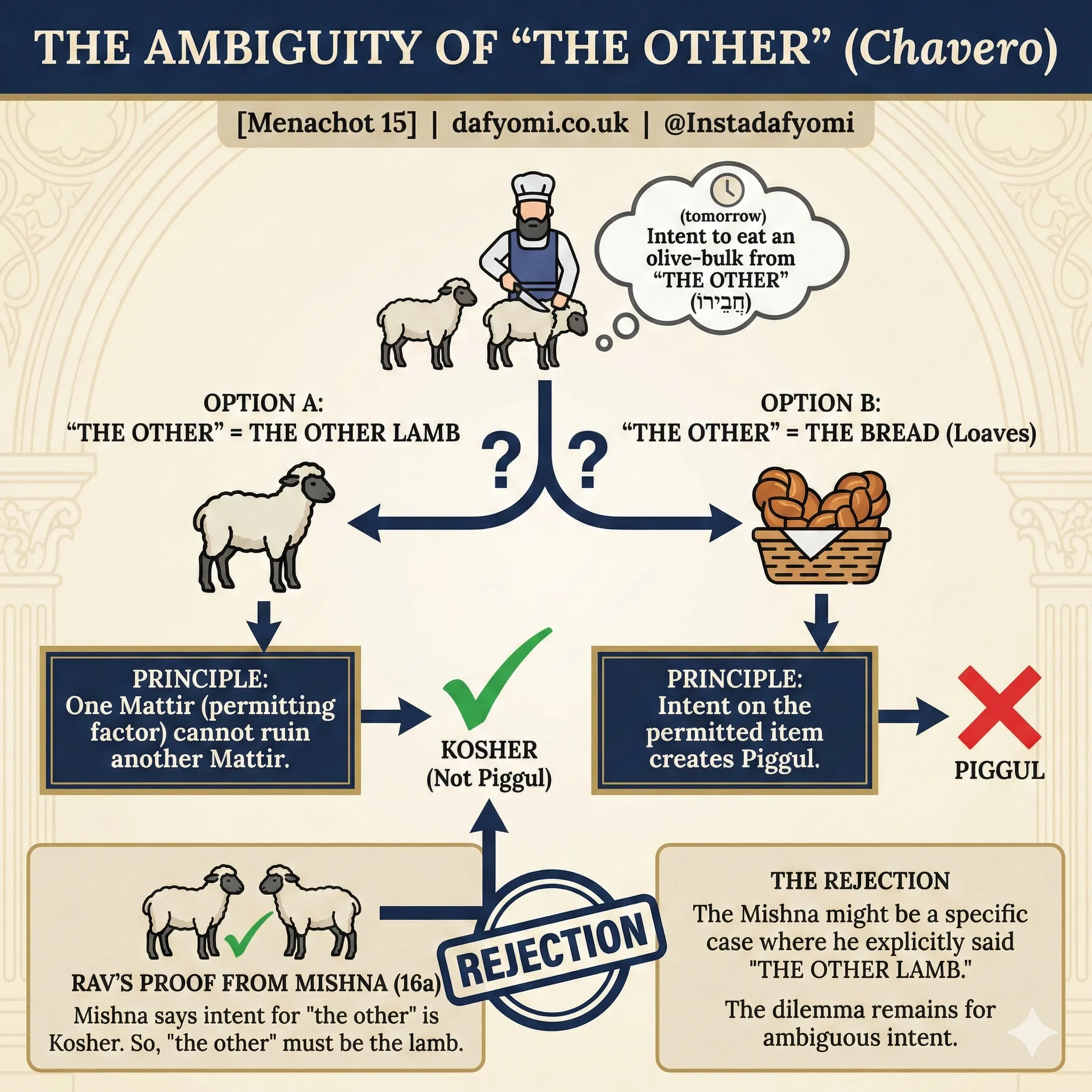
רַבִּי אַבָּא זוּטֵי בָּעֵי לַהּ הָכִי, בְּעָא מִינֵּיהּ רַבִּי אֶלְעָזָר מֵרַב: הַשּׁוֹחֵט אֶת הַכֶּבֶשׂ לֶאֱכוֹל כְּזַיִת מֵחֲבֵירוֹ לְמָחָר, מַהוּ? ״חֲבֵירוֹ״ כֶּבֶשׂ מַשְׁמַע, וְלָא מְפַגֵּל, אוֹ דִלְמָא ״לֶחֶם״ מַשְׁמַע, וּמְפַגֵּל לֵיהּ.
English Translation:
Rabbi Abba the small taught that Rabbi Elazar raises the dilemma in this manner: Rabbi Elazar raised a dilemma before Rav: If one slaughters one of the lambs brought on Shavuot with the two loaves intending to consume an olive-bulk from “the other” the next day, what is the halakha? When this individual thinks of “the other,” does he mean the other lamb, and if so, the lamb is not rendered piggul, as one permitting factor does not render another permitting factor piggul? Or perhaps when this individual thinks of “the other” he means the other part of the offering, i.e., the two loaves, and if so his intention renders it piggul.
קלאוד על הדף:
Rabbi Abba Zuti presents a different version of the dilemma. The question is about ambiguous intent: if someone says “the other” while slaughtering one lamb, does he mean the other lamb (which wouldn’t cause piggul – one matir doesn’t render another matir piggul) or does he mean the loaves (which would become piggul)?
Key Terms:
- מֵחֲבֵירוֹ = From its companion/the other
- מַתִּיר = Permitting factor
Segment 10
TYPE: גמרא – תשובה ודחייה
Rav’s answer and rejection
Hebrew/Aramaic:
אֲמַר לֵיהּ: תְּנֵיתוּהָ, שָׁחַט אֶחָד מִן הַכְּבָשִׂים לֶאֱכוֹל מִמֶּנּוּ לְמָחָר – הוּא פִּיגּוּל וַחֲבֵירוֹ כָּשֵׁר, לֶאֱכוֹל מֵחֲבֵירוֹ לְמָחָר – שְׁנֵיהֶם כְּשֵׁרִים, אַלְמָא ״חֲבֵירוֹ״ כֶּבֶשׂ מַשְׁמַע! דִּלְמָא דְּפָרֵישׁ וְאָמַר ״חֲבֵירוֹ כֶּבֶשׂ״.
English Translation:
Rav said to Rabbi Elazar: You learned in a mishna (16a): If one slaughtered one of the lambs with the intent to partake of it the next day, that lamb is piggul and the other is fit. If he slaughtered one lamb with the intent to partake of the other the next day, both lambs are fit, as one permitting factor does not render another permitting factor piggul. Rav concludes: Evidently, in this context the term “the other” means the other lamb. The Gemara rejects this proof: Perhaps the mishna is discussing a case where he clarifies and says: The other lamb, but the mishna is not referring to a case where he merely thought “the other.”
קלאוד על הדף:
Rav attempts to answer from a later Mishna (16a) which discusses “chaveiro” and clearly means the other lamb. But the Gemara rejects this: perhaps that Mishna speaks of explicit clarification (“the other lamb”), while Rabbi Elazar’s dilemma is about unstated ambiguous intent.
Segment 11
TYPE: משנה
New Mishna – Libations and piggul
Hebrew/Aramaic:
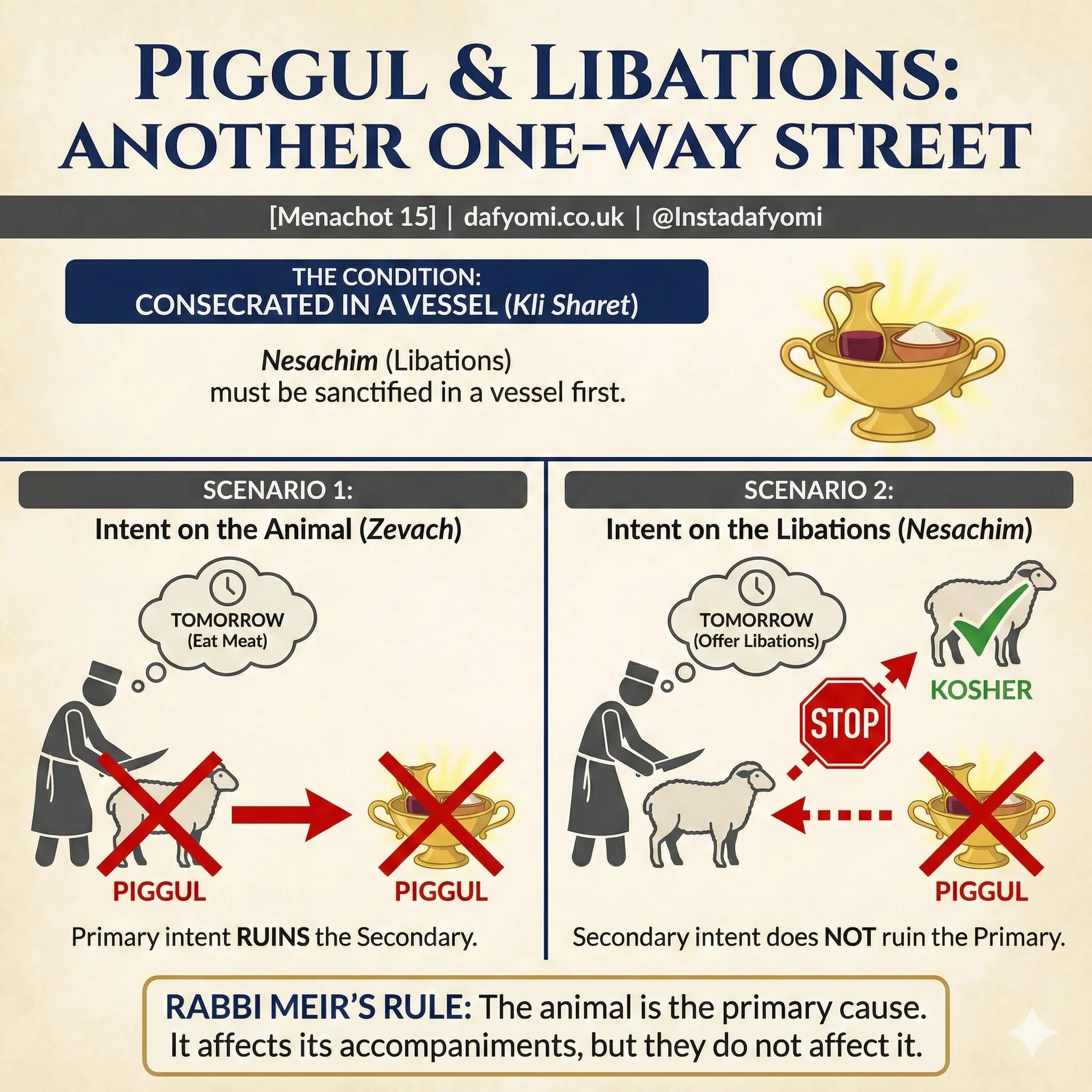
הַזֶּבַח מְפַגֵּל אֶת הַנְּסָכִים, מִשֶּׁקָּדְשׁוּ בִּכְלִי, דִּבְרֵי רַבִּי מֵאִיר. הַנְּסָכִים אֵינָן מְפַגְּלִים אֶת הַזֶּבַח. כֵּיצַד? הַשּׁוֹחֵט אֶת הַזֶּבַח לֶאֱכוֹל מִמֶּנּוּ לְמָחָר – הוּא וּנְסָכָיו מְפוּגָּלִין, לְהַקְרִיב נְסָכָיו לְמָחָר – הַנְּסָכִים מְפוּגָּלִין, הַזֶּבַח אֵינוֹ מְפוּגָּל.
English Translation:
MISHNA: The animal offering renders the accompanying libations and meal offerings piggul from the moment that they were consecrated in the vessel, but not before; this is the statement of Rabbi Meir. The libations do not render the offering piggul. How so? In the case of one who slaughters the offering with the intent to partake of it the next day, the offering and its libations are rendered piggul. But if one slaughters the offering with the intent to sacrifice its libations the next day, the libations are rendered piggul, while the offering is not piggul.
קלאוד על הדף:
A new Mishna extends the principle to libations (nesachim). According to Rabbi Meir, once libations are sanctified in a vessel, they become connected to the offering. Piggul intent regarding the animal affects the libations, but not vice versa – the same asymmetric relationship we saw with loaves.
Key Terms:
- נְסָכִים = Libations (wine and flour accompaniments)
- מִשֶּׁקָּדְשׁוּ בִּכְלִי = From when they were sanctified in a vessel
Segment 12
TYPE: גמרא
Baraita about libations and piggul
Hebrew/Aramaic:
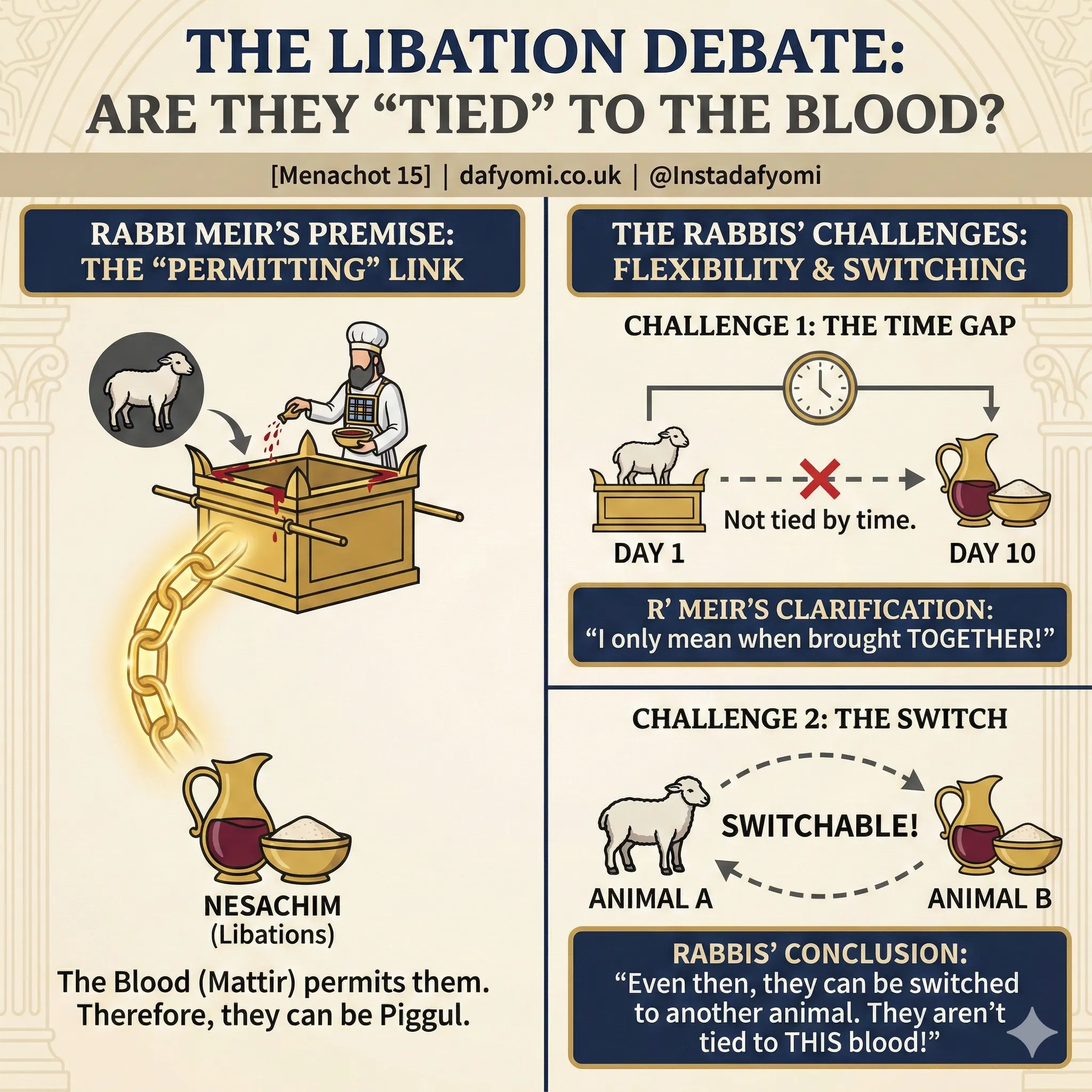
תָּנוּ רַבָּנַן: נִסְכֵי בְּהֵמָה חַיָּיבִין עֲלֵיהֶן מִשּׁוּם פִּיגּוּל, מִפְּנֵי שֶׁדַּם הַזֶּבַח מַתִּירָן לִקְרַב, דִּבְרֵי רַבִּי מֵאִיר.
English Translation:
GEMARA: The Sages taught in a baraita: With regard to the libations of an animal offering, one is liable for eating them due to violation of the prohibition of piggul, as the blood of the offering permits them to be offered on the altar, and any item that becomes permitted for consumption or for sacrifice through a permitting factor can be rendered piggul. This is the statement of Rabbi Meir.
קלאוד על הדף:
The Gemara cites a baraita explaining Rabbi Meir’s reasoning. The blood of the offering serves as the “matir” (permitting factor) for the libations – it allows them to be offered. Since they have a matir, they can become piggul.
Key Terms:
- מַתִּירָן = Permits them
- לִקְרַב = To be offered
Segment 13
TYPE: גמרא – קושיא ותשובה
Challenge to Rabbi Meir
Hebrew/Aramaic:
אָמְרוּ לוֹ לְרַבִּי מֵאִיר: וַהֲלֹא אָדָם מֵבִיא זִבְחוֹ הַיּוֹם וּנְסָכָיו עַד עֲשָׂרָה יָמִים! אָמַר לָהֶן: אַף אֲנִי לֹא אָמַרְתִּי אֶלָּא בְּבָאִים עִם הַזֶּבַח. אָמְרוּ לוֹ: אֶפְשָׁר לְשַׁנּוֹתוֹ לְזֶבַח אַחֵר!
English Translation:
The Rabbis said to Rabbi Meir: But a person may bring his offering today and the accompanying libations from now until even ten days later. Evidently, then, the blood of the offering does not render the libations permitted. Rabbi Meir said to them: I, too, spoke only about libations that come to be sacrificed together with the offering and were already sanctified in a service vessel for that purpose. The Rabbis said to him: But it is possible to switch the libations for use with another offering. Clearly, then, they are not considered an indispensable part of that offering.
קלאוד על הדף:
The Rabbis challenge Rabbi Meir: libations can be brought up to ten days after the offering! This shows they’re not intrinsically connected. Rabbi Meir responds: I only mean libations brought with the offering on the same day. The Rabbis counter: even so, those libations could be switched to another offering!
Segment 14
TYPE: גמרא – הסבר
Rava’s explanation
Hebrew/Aramaic:
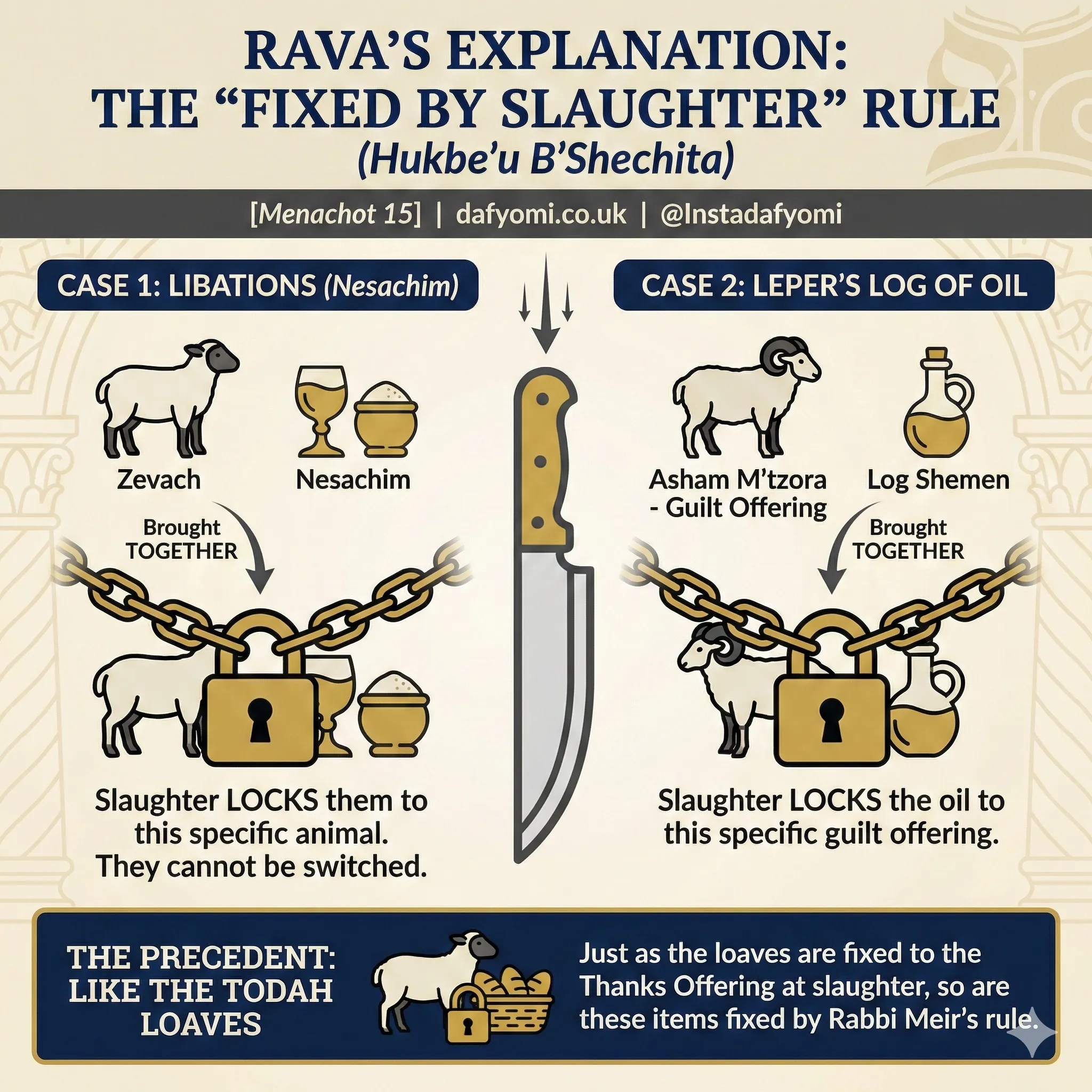
אָמַר רָבָא: קָסָבַר רַבִּי מֵאִיר, הוּקְבְּעוּ בִּשְׁחִיטָה, כְּלַחְמֵי תוֹדָה.
English Translation:
Rava said: Rabbi Meir holds that the libations are fixed to this particular offering at the time of its slaughter, and one may not use them with another offering. Accordingly, these libations are rendered piggul on account of intent during the slaughter of the offering, just like the loaves of a thanks offering, which are fixed to a particular thanks offering upon its slaughter.
קלאוד על הדף:
Rava explains Rabbi Meir’s position. Once the offering is slaughtered, the libations become permanently attached to that specific offering – they cannot be switched. This is analogous to the loaves of the thanks offering, which become fixed to their animal at slaughter.
Key Terms:
- הוּקְבְּעוּ = Were fixed/established
- בִּשְׁחִיטָה = At slaughter
Segment 15
TYPE: גמרא
Baraita about the leper’s log of oil
Hebrew/Aramaic:
תָּנוּ רַבָּנַן: לוֹג שֶׁמֶן שֶׁל מְצוֹרָע חַיָּיבִין עָלָיו מִשּׁוּם פִּיגּוּל, מִפְּנֵי שֶׁדַּם אָשָׁם מַתִּירוֹ לַבְּהוֹנוֹת, דִּבְרֵי רַבִּי מֵאִיר. אָמְרוּ לוֹ לְרַבִּי מֵאִיר: וַהֲלֹא אָדָם מֵבִיא אֲשָׁמוֹ הַיּוֹם, וְלוּגּוֹ מִיכָּן וְעַד עֲשָׂרָה יָמִים.
English Translation:
In a similar vein, the Sages taught: With regard to the log of oil of the leper (see Leviticus 14:10–20), one is liable for eating it due to violation of the prohibition of piggul if the guilt offering that this oil accompanied became piggul, as the blood of the guilt offering permits it to be placed on the right thumb and big toe of the leper. This is the statement of Rabbi Meir. The Rabbis said to Rabbi Meir: But a person may bring his guilt offering today and the accompanying log of oil from now until even ten days later.
קלאוד על הדף:
The same dispute applies to the metzora’s (leper’s) log of oil. Rabbi Meir says it can become piggul through the guilt offering’s blood. The Rabbis challenge: the oil can be brought separately from the offering!
Key Terms:
- לוֹג שֶׁמֶן = Log (measure) of oil
- מְצוֹרָע = Leper
- אָשָׁם = Guilt offering
- בְּהוֹנוֹת = Thumbs/big toes
Segment 16
TYPE: גמרא – תשובה והסבר
Rabbi Meir’s response and Rava’s explanation
Hebrew/Aramaic:
אָמַר לָהֶן: אַף אֲנִי לֹא אָמַרְתִּי אֶלָּא בְּבָא עִם הָאָשָׁם, אֶפְשָׁר לְשַׁנּוֹתוֹ לְאָשָׁם אַחֵר. אָמַר רָבָא: קָסָבַר רַבִּי מֵאִיר הוּקְבְּעוּ בִּשְׁחִיטָה, כְּלַחְמֵי תוֹדָה.
English Translation:
Rabbi Meir said to them: I, too, spoke only about a log of oil that comes with the guilt offering. The Rabbis said to him: But even in this case, the oil should not be considered part of the offering, as it is possible to switch the oil for use with another guilt offering. Rava said: Rabbi Meir holds that the log of oil is fixed to this particular guilt offering at the time of its slaughter and is therefore rendered piggul on account of it, just like the loaves of a thanks offering.
קלאוד על הדף:
The same back-and-forth occurs. Rabbi Meir limits his ruling to oil brought with the guilt offering. The Rabbis note it could still be switched. Rava again explains: Rabbi Meir holds the oil becomes fixed at slaughter, just like thanks offering loaves.