Menachot Daf 12 (מנחות דף י״ב)
Daf: 12 | Amudim: 12a – 12b | Date: January 24, 2026
📖 Breakdown
Amud Aleph (12a)
Segment 1
TYPE: משנה
Conclusion of the piggul principle
Hebrew/Aramaic:
פִּיגּוּל, וְחַיָּיבִין עָלָיו כָּרֵת
English Translation:
The offering is piggul, and one is liable to receive karet for partaking of the remainder.
קלאוד על הדף:
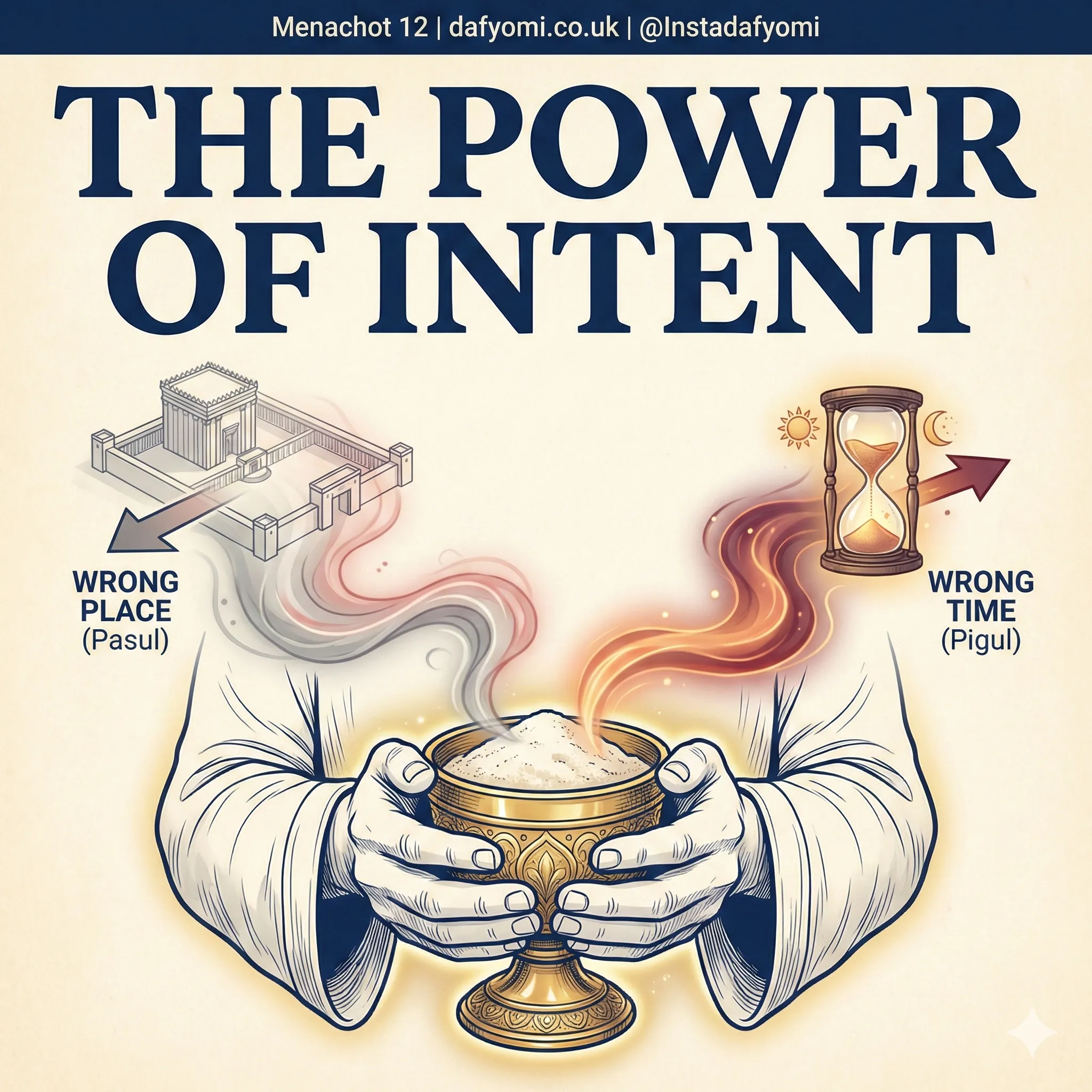
This segment concludes the Mishna from the previous daf, stating the consequence of improper intent regarding time: the offering becomes piggul and anyone who eats it is liable to karet (divine excision). This is the most severe category of sacrificial disqualification.
Key Terms:
- פִּיגּוּל (Piggul) = An offering rendered abhorrent through improper time-related intent
- כָּרֵת (Karet) = Divine excision — the penalty for eating piggul
Segment 2
TYPE: משנה
The comprehensive principle restated
Hebrew/Aramaic:
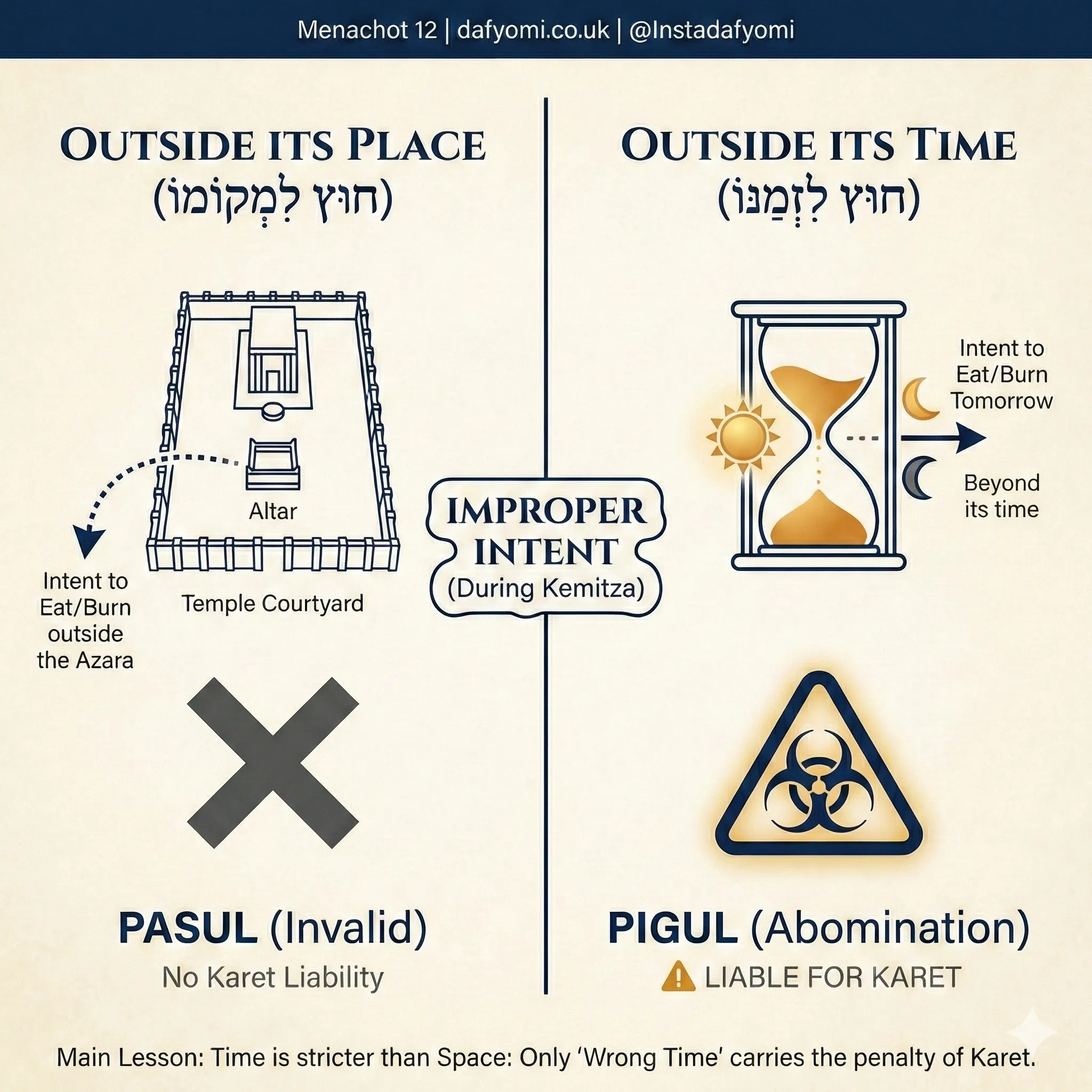
זֶה הַכְּלָל: כׇּל הַקּוֹמֵץ אוֹ נוֹתֵן בִּכְלִי, הַמּוֹלִיךְ, הַמַּקְטִיר, לֶאֱכוֹל דָּבָר שֶׁדַּרְכּוֹ לֶאֱכוֹל אוֹ לְהַקְטִיר דָּבָר שֶׁדַּרְכּוֹ לְהַקְטִיר, חוּץ לִמְקוֹמוֹ – פָּסוּל וְאֵין בּוֹ כָּרֵת, חוּץ לִזְמַנּוֹ – פִּיגּוּל וְחַיָּיבִין עָלָיו כָּרֵת
English Translation:
This is the principle: In the case of anyone who removes the handful, or places the handful in the vessel, or who conveys the vessel to the altar, or who burns the handful — with intent to eat an item whose manner is to be eaten, or to burn an item whose manner is to be burned, outside its designated place — it is disqualified but there is no karet; outside its designated time — it is piggul and one is liable to karet.
קלאוד על הדף:
The Mishna provides a comprehensive restatement of the principle: the four services of meal offerings (kemitza, placing in vessel, carrying, burning) can all be affected by improper intent. The distinction between place-related intent (invalidates without karet) and time-related intent (creates piggul with karet) is the central organizing principle.
Key Terms:
- הַמּוֹלִיךְ (HaMolich) = The one who conveys/carries
- הַמַּקְטִיר (HaMaktir) = The one who burns
Segment 3
TYPE: משנה
Condition for piggul to apply
Hebrew/Aramaic:
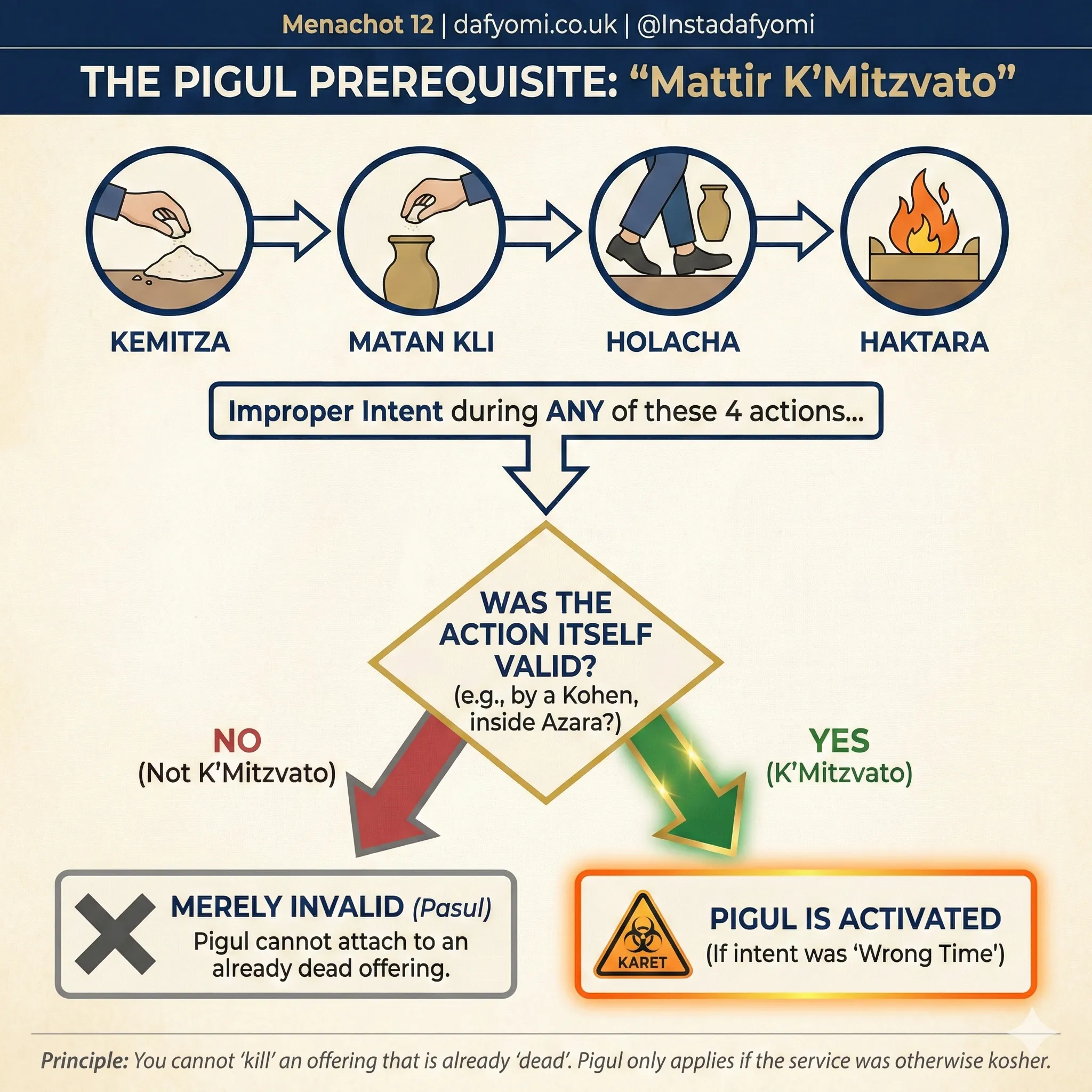
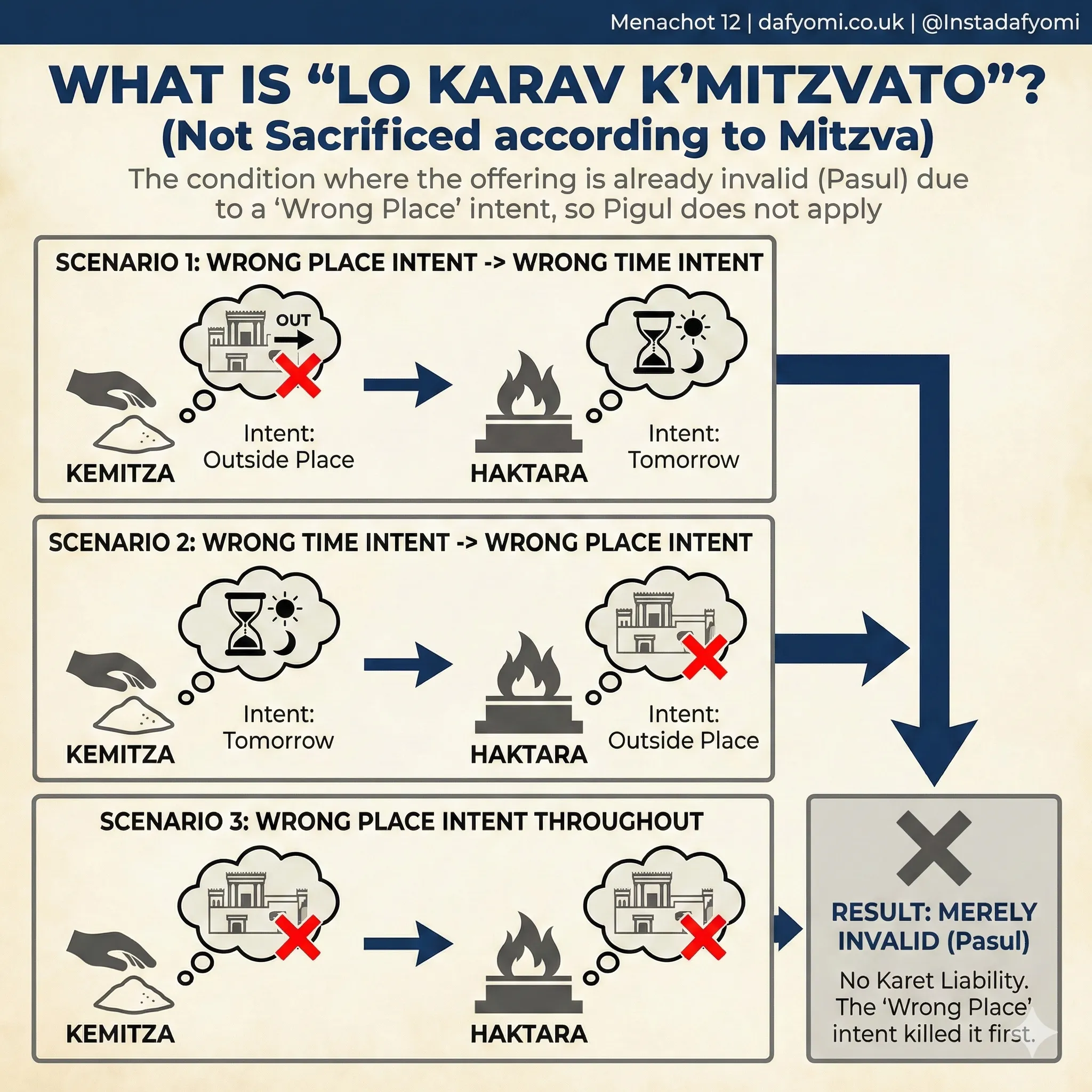
וּבִלְבַד שֶׁיִּקְרַב הַמַּתִּיר כְּמִצְוָתוֹ
English Translation:
Provided that the permitting factor is offered in accordance with its mitzva.
קלאוד על הדף:
This crucial condition limits when piggul applies: the “mattir” (permitting factor — the kometz) must be offered properly in all other respects. If there are other disqualifications (like improper place intent, or technical errors), the offering doesn’t achieve piggul status. This prevents “double punishment” — an already-invalid offering cannot also carry karet liability.
Segment 4
TYPE: משנה
Explanation of proper performance
Hebrew/Aramaic:
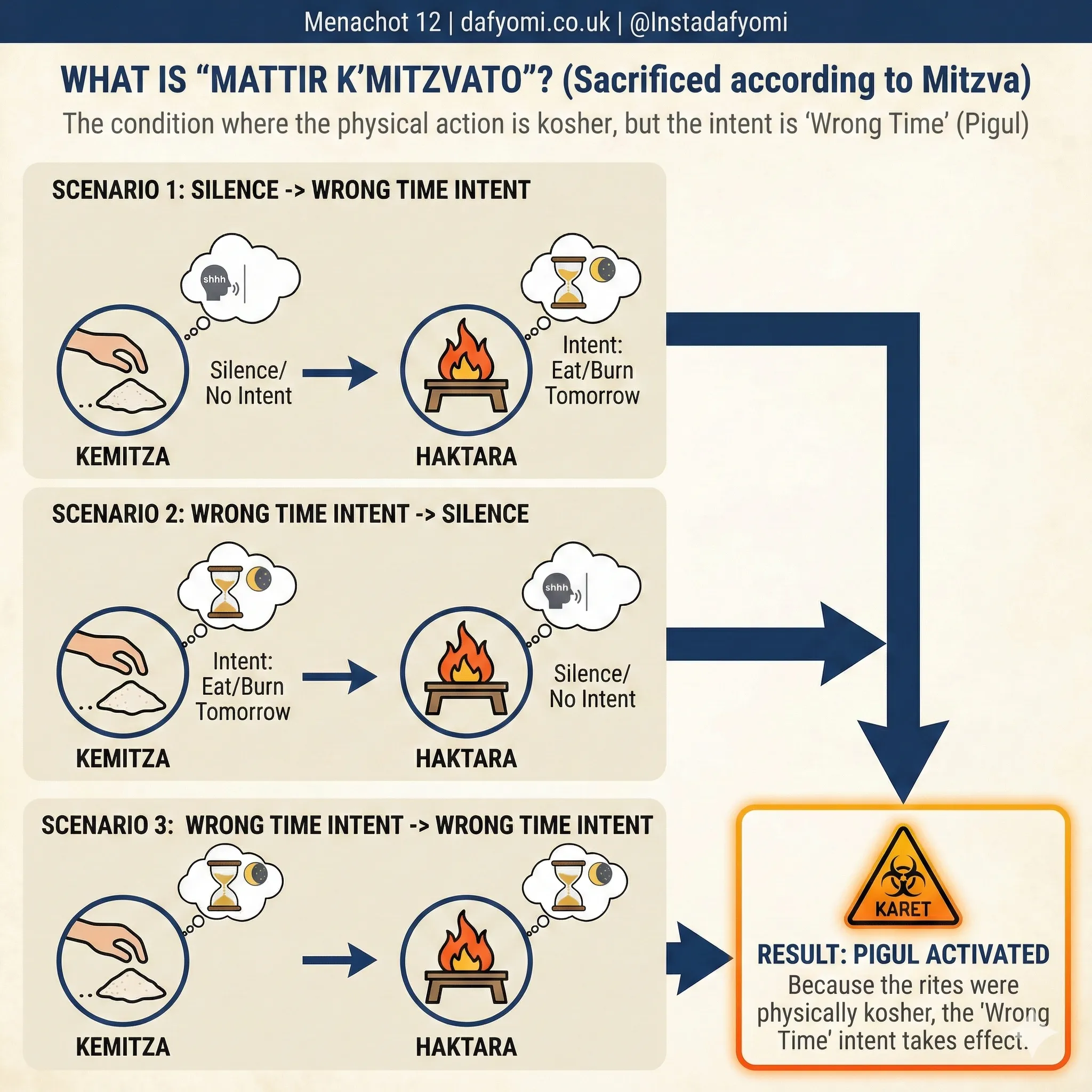
כֵּיצַד קָרֵב הַמַּתִּיר כְּמִצְוָתוֹ? קָמַץ בִּשְׁתִיקָה, נָתַן בִּכְלִי בִּשְׁתִיקָה, הוֹלִיךְ בִּשְׁתִיקָה, הִקְטִיר בִּשְׁתִיקָה
English Translation:
How is the permitting factor considered sacrificed in accordance with its mitzva? If one removed the handful in silence, placed it in the vessel in silence, conveyed it in silence, and burned it in silence.
קלאוד על הדף:
The Mishna defines proper performance: when three of the four services are done “in silence” (without any improper intent), the piggul status can take effect from the fourth service where improper time intent was expressed. “Silence” here means the absence of any disqualifying verbalization or thought.
Segment 5
TYPE: משנה
Alternative proper performance
Hebrew/Aramaic:
אוֹ שֶׁקָּמַץ בִּשְׁתִיקָה, נָתַן בִּכְלִי בִּשְׁתִיקָה, הוֹלִיךְ בִּשְׁתִיקָה, וְהִקְטִיר חוּץ לִזְמַנּוֹ
English Translation:
Or if one removed the handful in silence, placed it in the vessel in silence, conveyed it in silence, and burned it with intent outside its designated time.
קלאוד על הדף:
The Mishna provides a specific example: if the first three services were performed silently (properly) and only the burning (haktara) was done with improper time intent, that creates piggul. The improper intent can occur at any single service as long as the others are done properly.
Segment 6
TYPE: משנה
Improper performance that prevents piggul
Hebrew/Aramaic:
כֵּיצַד לֹא קָרַב הַמַּתִּיר כְּמִצְוָתוֹ? קָמַץ חוּץ לִמְקוֹמוֹ, נָתַן בִּכְלִי חוּץ לִמְקוֹמוֹ, הוֹלִיךְ חוּץ לִמְקוֹמוֹ, הִקְטִיר חוּץ לִמְקוֹמוֹ
English Translation:
How is the permitting factor not sacrificed in accordance with its mitzva? If one removed the handful with intent outside its place, placed it in the vessel with intent outside its place, conveyed it with intent outside its place, and burned it with intent outside its place.
קלאוד על הדף:
When improper place intent is expressed during any service, the offering is invalidated but doesn’t become piggul. Even if time intent was also expressed, the prior place-disqualification “shields” the offering from piggul status. This is an important principle: you can’t have piggul if the offering was already invalid for another reason.
Segment 7
TYPE: משנה
Special cases: sinner’s and jealousy offerings
Hebrew/Aramaic:
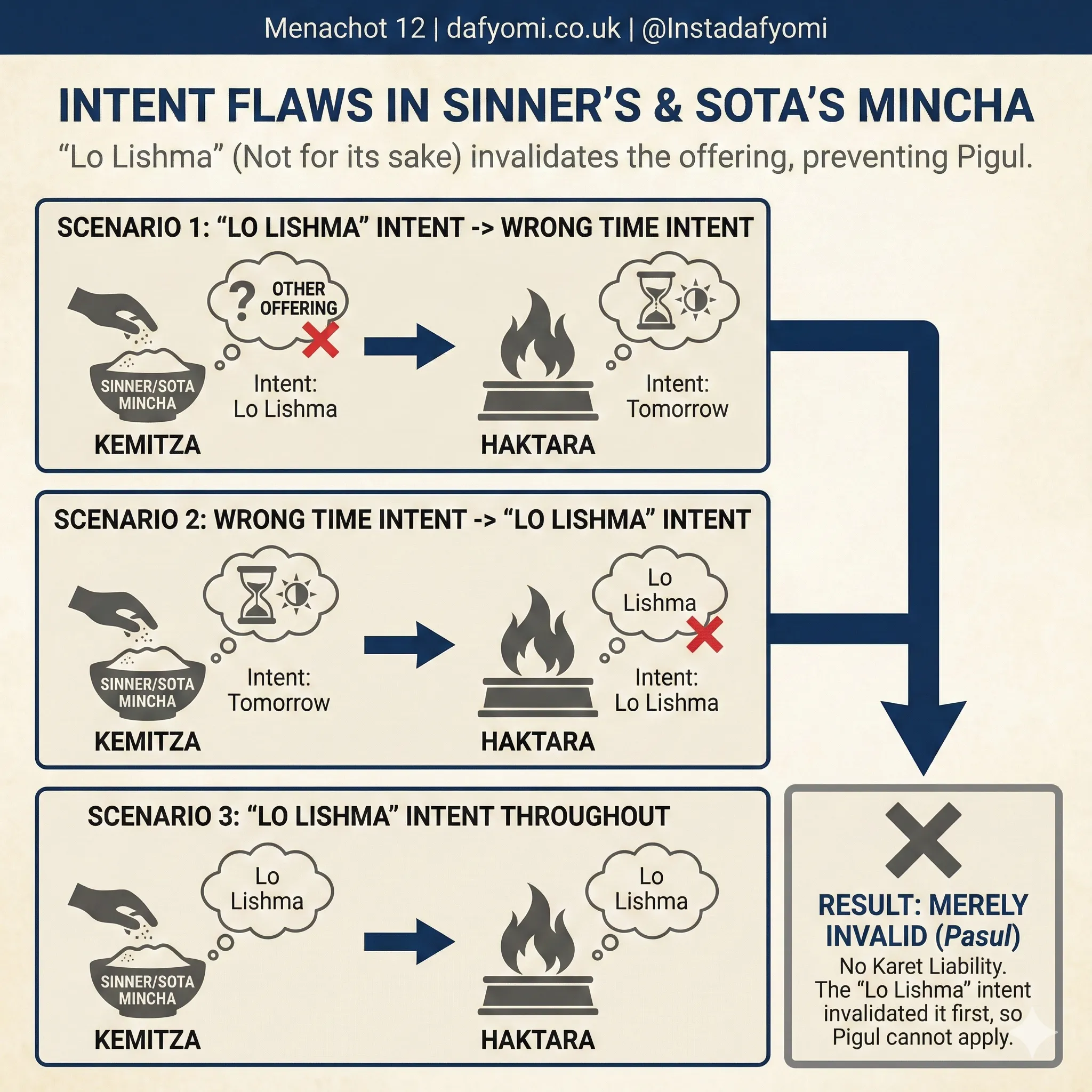
מִנְחַת חוֹטֵא וּמִנְחַת קְנָאוֹת שֶׁקְּמָצָן שֶׁלֹּא לִשְׁמָן, נָתַן בִּכְלִי, וְהוֹלִיךְ, וְהִקְטִיר חוּץ לִזְמַנָּן – פָּסוּל וְאֵין בּוֹ כָּרֵת
English Translation:
The meal offering of a sinner and the meal offering of jealousy — if one removed the handful not for their sake, then placed it in the vessel, conveyed it, and burned it with intent outside their time — they are disqualified but there is no karet.
קלאוד על הדף:
Two special meal offerings — the sinner’s meal offering and the sotah’s jealousy offering — require proper intent (“lishmah”) for the owner. If the kemitza was done without this required intent, subsequent time intent doesn’t create piggul because the mattir wasn’t offered properly. These offerings, unlike regular meal offerings, lose their validity entirely when not performed for the correct person.
Key Terms:
- מִנְחַת חוֹטֵא (Minchat Chotet) = The sinner’s meal offering — brought by one too poor to afford an animal sin-offering
- מִנְחַת קְנָאוֹת (Minchat Kena’ot) = The jealousy offering — brought by a sotah (suspected adulteress)
Segment 8
TYPE: משנה
Combining intents for half-measures
Hebrew/Aramaic:
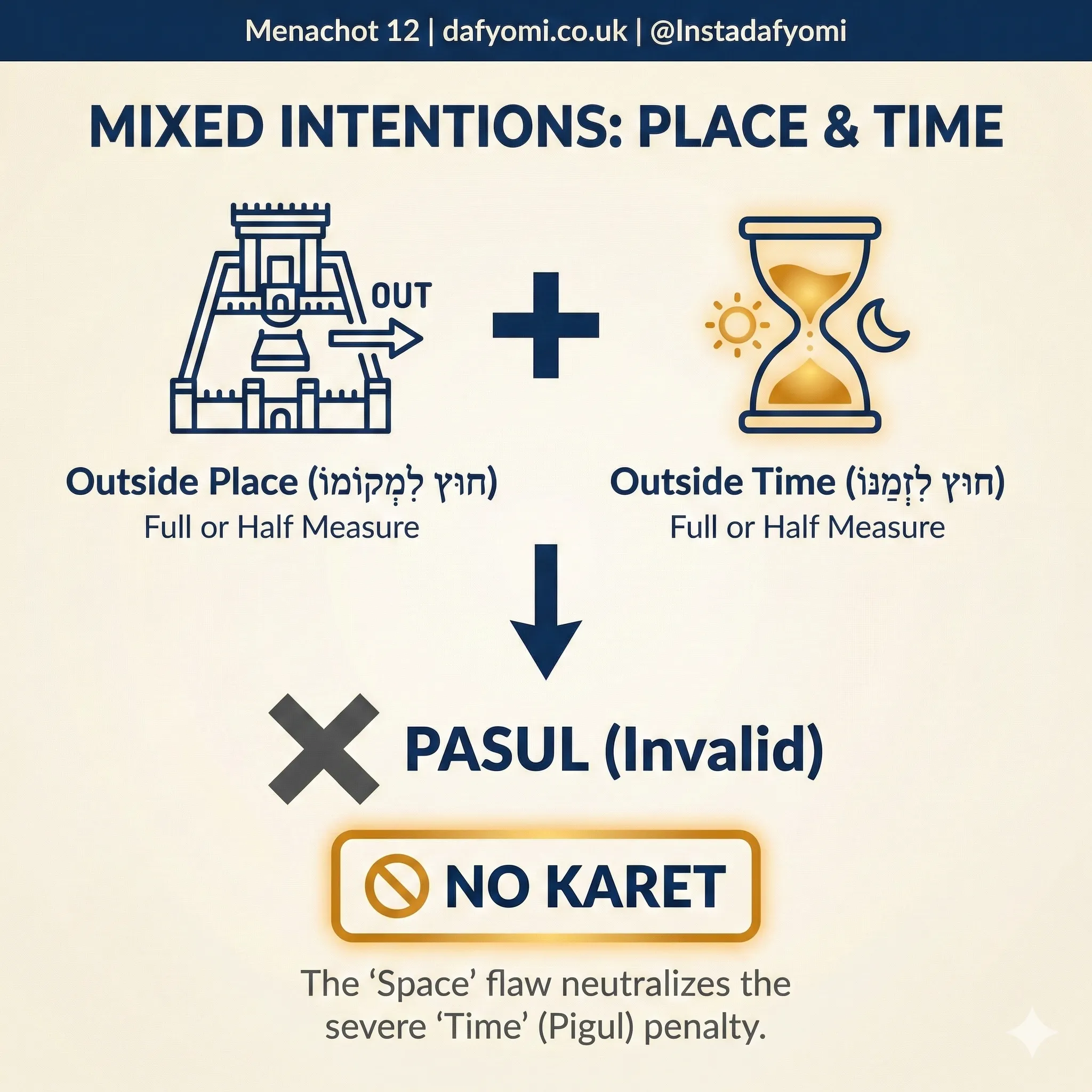
לֶאֱכוֹל כְּזַיִת בַּחוּץ וּכְזַיִת לְמָחָר, כְּזַיִת לְמָחָר וּכְזַיִת בַּחוּץ, כַּחֲצִי זַיִת בַּחוּץ וְכַחֲצִי זַיִת לְמָחָר, כַּחֲצִי זַיִת לְמָחָר וְכַחֲצִי זַיִת בַּחוּץ – פָּסוּל וְאֵין בּוֹ כָּרֵת
English Translation:
If one’s intent was to eat an olive-bulk outside and an olive-bulk tomorrow, or an olive-bulk tomorrow and an olive-bulk outside, or half an olive-bulk outside and half an olive-bulk tomorrow, or half an olive-bulk tomorrow and half an olive-bulk outside — it is disqualified but there is no karet.
קלאוד על הדף:
When place intent and time intent are combined in the same service, they cancel each other out for piggul purposes. Even full olive-bulk amounts of each don’t create piggul because neither type of intent is “complete” — they’re mixed. This applies whether the amounts are full or partial.
Segment 9
TYPE: משנה
Rabbi Yehuda’s principle about competing intents
Hebrew/Aramaic:
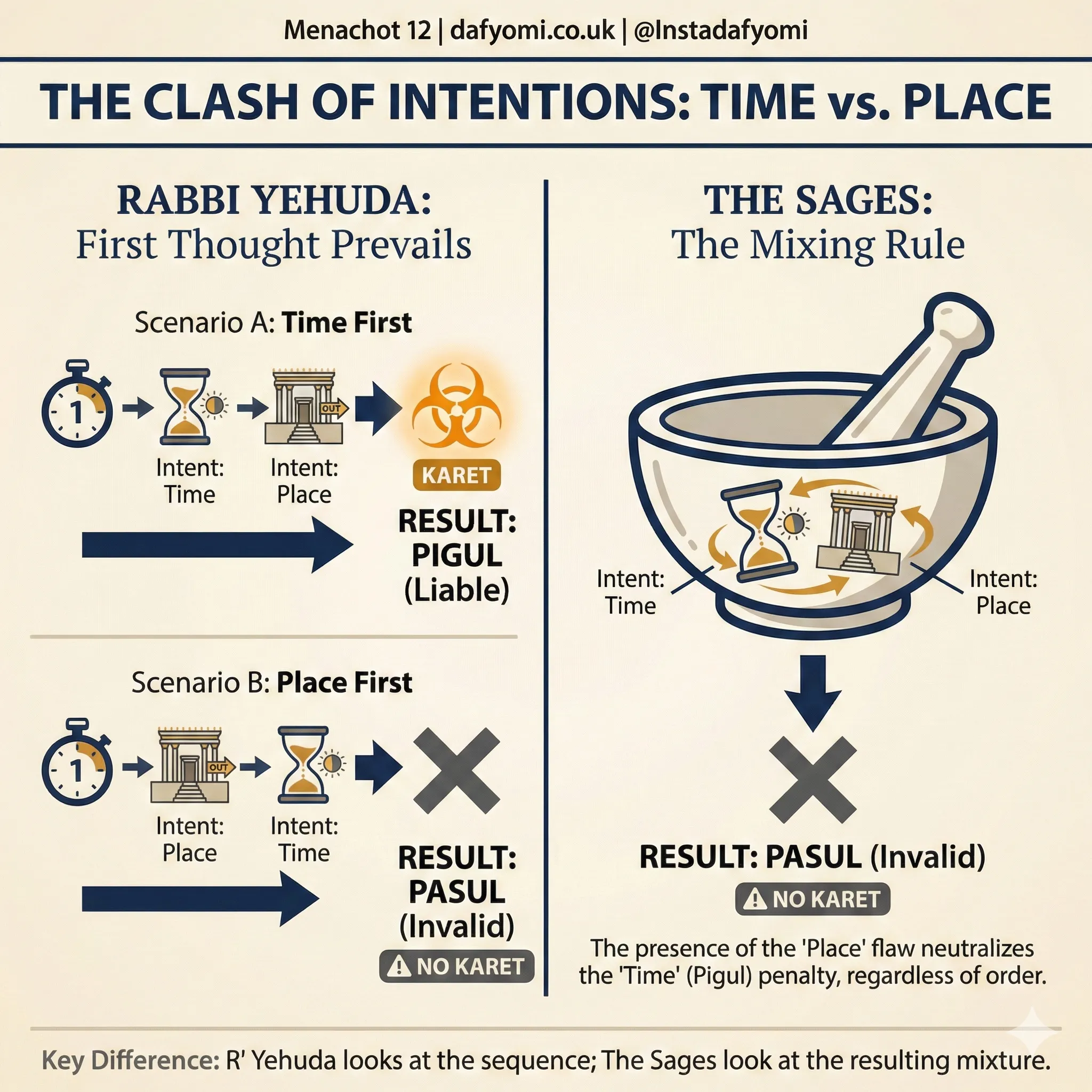
אָמַר רַבִּי יְהוּדָה: זֶה הַכְּלָל: אִם מַחְשֶׁבֶת הַזְּמַן קָדְמָה לְמַחְשֶׁבֶת הַמָּקוֹם – פִּיגּוּל וְחַיָּיבִין עָלָיו כָּרֵת, וְאִם מַחְשֶׁבֶת הַמָּקוֹם קָדְמָה לְמַחְשֶׁבֶת הַזְּמַן – פָּסוּל וְאֵין בּוֹ כָּרֵת
English Translation:
Rabbi Yehuda says: This is the principle: If the intent regarding time preceded the intent regarding place — it is piggul and one is liable to karet. And if the intent regarding place preceded the intent regarding time — it is disqualified but there is no karet.
קלאוד על הדף:
Rabbi Yehuda disagrees with the previous ruling. He holds that whichever intent comes FIRST determines the status. If time intent is expressed first, piggul takes effect before place intent can “shield” the offering. This creates a different dynamic where sequence matters, not just the presence of mixed intents.
Segment 10
TYPE: משנה
The Sages’ response to Rabbi Yehuda
Hebrew/Aramaic:
וַחֲכָמִים אוֹמְרִים: זֶה וָזֶה פָּסוּל וְאֵין בּוֹ כָּרֵת
English Translation:
And the Sages say: In both this case and that case, it is disqualified but there is no karet.
קלאוד על הדף:
The Sages (Chakhamim) reject Rabbi Yehuda’s sequence principle. They maintain that any mixture of place and time intent results in mere invalidation without karet, regardless of which came first. The competing intents inherently undermine each other.
Segment 11
TYPE: גמרא
The Gemara’s opening question
Hebrew/Aramaic:
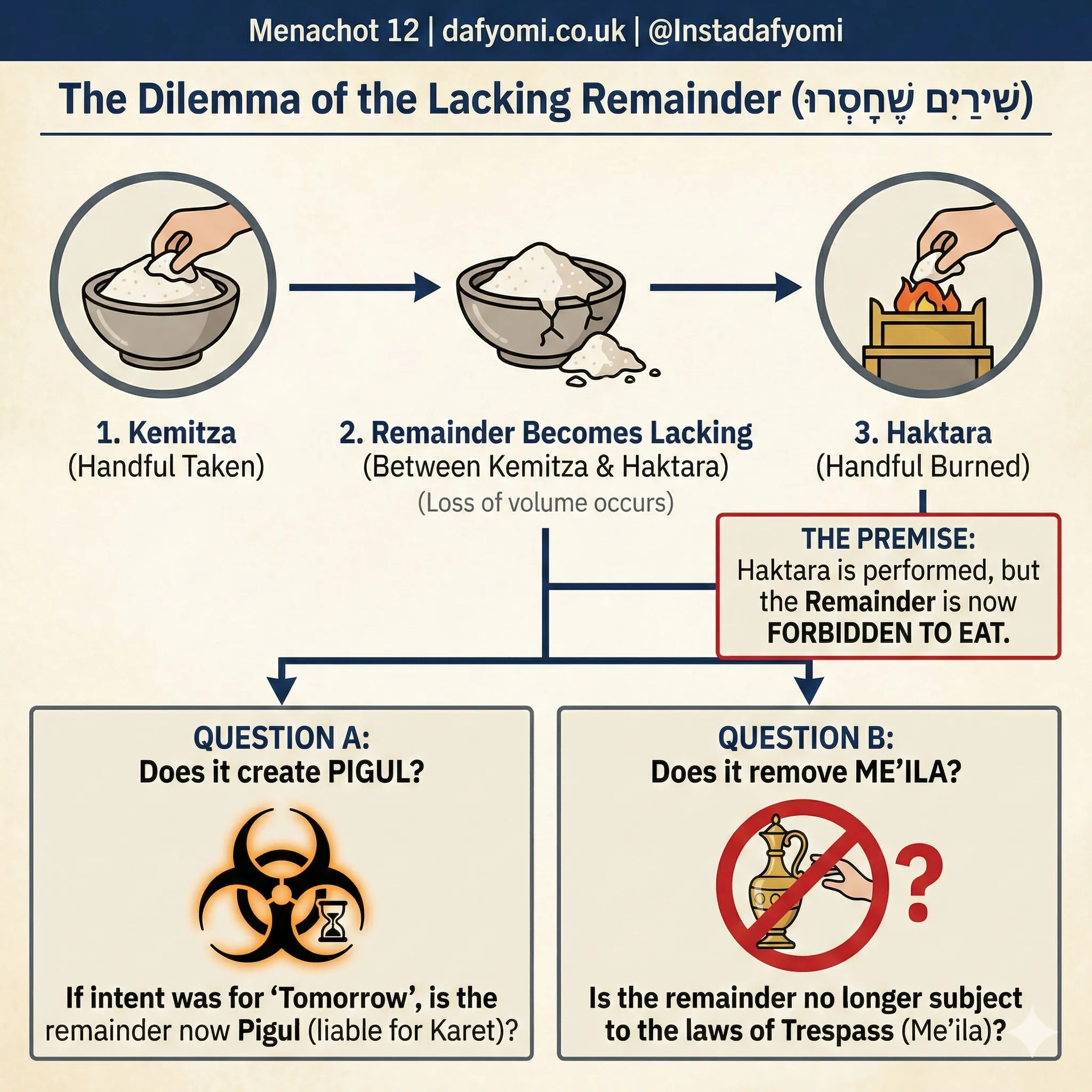
גְּמָ׳ אִיבַּעְיָא לְהוּ: שִׁירַיִם שֶׁחָסְרוּ בֵּין קְמִיצָה לְהַקְטָרָה, מַהוּ לְפַגְּלָן?
English Translation:
GEMARA: A dilemma was raised before the Sages: In the case of remainder that became lacking between the kemitza and the burning, what is the law with regard to rendering them piggul?
קלאוד על הדף:
The Gemara poses a fundamental question: if the remainder (the portion eaten by priests) became diminished after the kemitza but before the burning, can piggul still apply? This tests whether piggul requires a complete offering at the time of the improper intent or whether partial remainders can also become piggul.
Key Terms:
- שִׁירַיִם שֶׁחָסְרוּ (Shirayim Shechasseru) = Remainder that became lacking/diminished
Segment 12
TYPE: גמרא
Reformulation of the question
Hebrew/Aramaic:
וּלְאַפֹּקִינְהוּ מִידֵי מְעִילָה?
English Translation:
And can improper intent remove such a remainder from being subject to misuse of consecrated property?
קלאוד על הדף:
The Gemara refines the question: normally, remainders are subject to me’ilah (misuse of consecrated property) until the kometz is burned. If piggul can apply to diminished remainders, does that remove them from me’ilah status? This connects sacrificial disqualification to property law.
Key Terms:
- מְעִילָה (Me’ilah) = Misuse of consecrated property — a prohibition with its own liability
Segment 13
TYPE: גמרא
Rav Huna’s position
Hebrew/Aramaic:
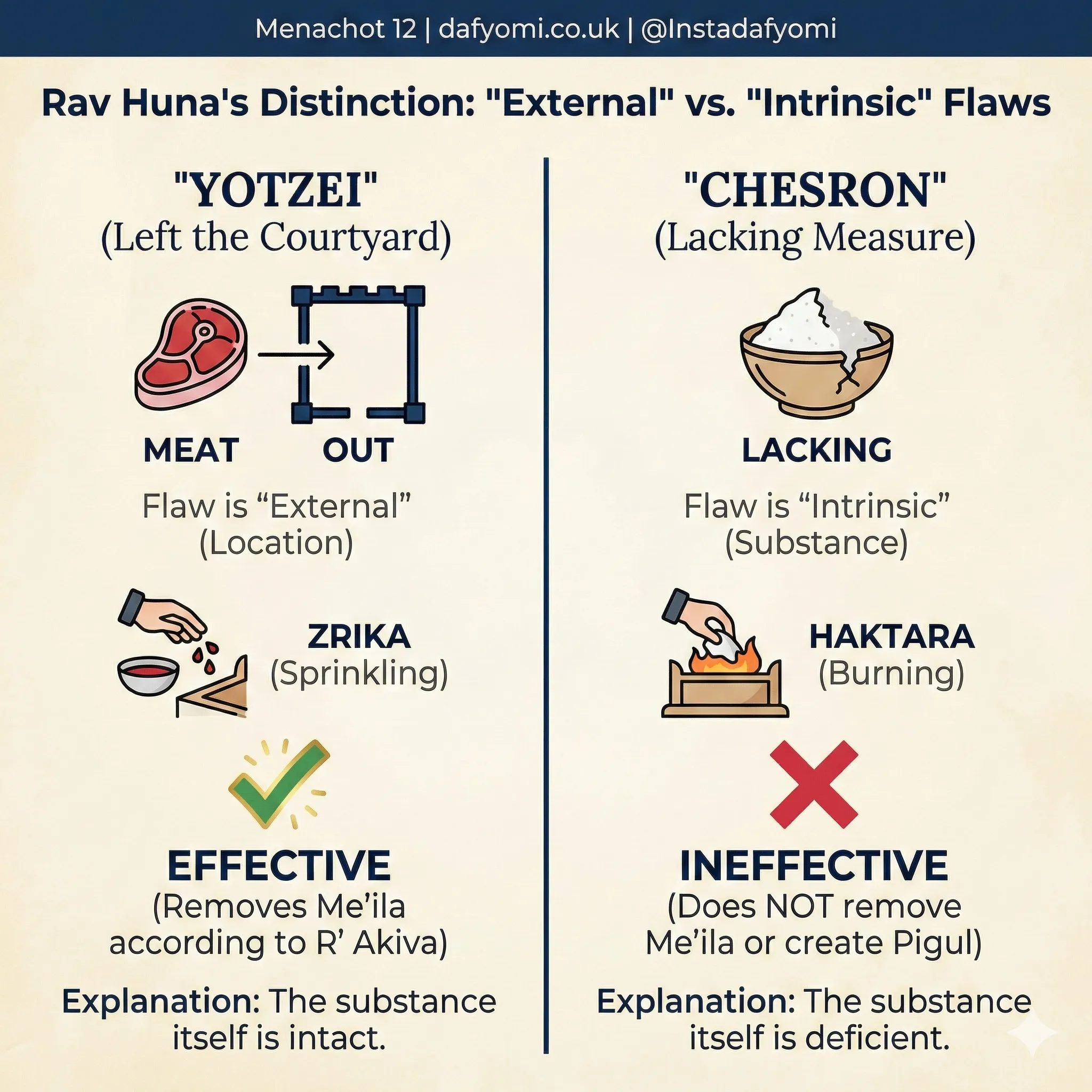
אָמַר רַב הוּנָא: אֲפִילּוּ לְרַבִּי עֲקִיבָא דְּאָמַר פִּיגּוּל מוֹעִיל בְּשִׁירַיִם, הָנֵי מִילֵּי דְּאִיתֵיהּ בְּעֵינֵיהּ וּפָסוּל מֵחֲמַת דָּבָר אַחֵר
English Translation:
Rav Huna said: Even according to the opinion of Rabbi Akiva, who said that piggul is effective for remainders, that statement applies specifically where the remainder exists in its original form and is disqualified on account of something else.
קלאוד על הדף:
Rav Huna argues that even Rabbi Akiva, who has a broader view of piggul’s applicability, would limit it to cases where the remainder still exists “as is.” A diminished remainder that physically changed cannot receive piggul status. The disqualification must be external to the physical substance.
Segment 14
TYPE: גמרא
Rava’s counterargument
Hebrew/Aramaic:
אֲמַר לֵיהּ רָבָא: אַדְּרַבָּה, אֲפִילּוּ לְרַבִּי אֱלִיעֶזֶר דְּאָמַר אֵין פִּיגּוּל מוֹעִיל בְּשִׁירַיִם, הָנֵי מִילֵּי הֵיכָא דְּחָסֵר – אֲבָל הֵיכָא דְּאִיתֵיהּ בְּעֵינֵיהּ, מוֹדֶה רַבִּי אֱלִיעֶזֶר
English Translation:
Rava said to Rav Huna: On the contrary; even according to the opinion of Rabbi Eliezer, who said that piggul is not effective for remainders, that statement applies specifically where the remainder is lacking — but where it exists in its original form, Rabbi Eliezer concedes.
קלאוד על הדף:
Rava takes the opposite approach: even the restrictive Rabbi Eliezer would agree that piggul applies when the remainder is complete. His limitation only concerns diminished portions. This creates an interesting symmetry — both Tannaim might agree on the case of complete remainders.
Amud Bet (12b)
Segment 1
TYPE: גמרא
Question about the Mishna’s terminology
Hebrew/Aramaic:
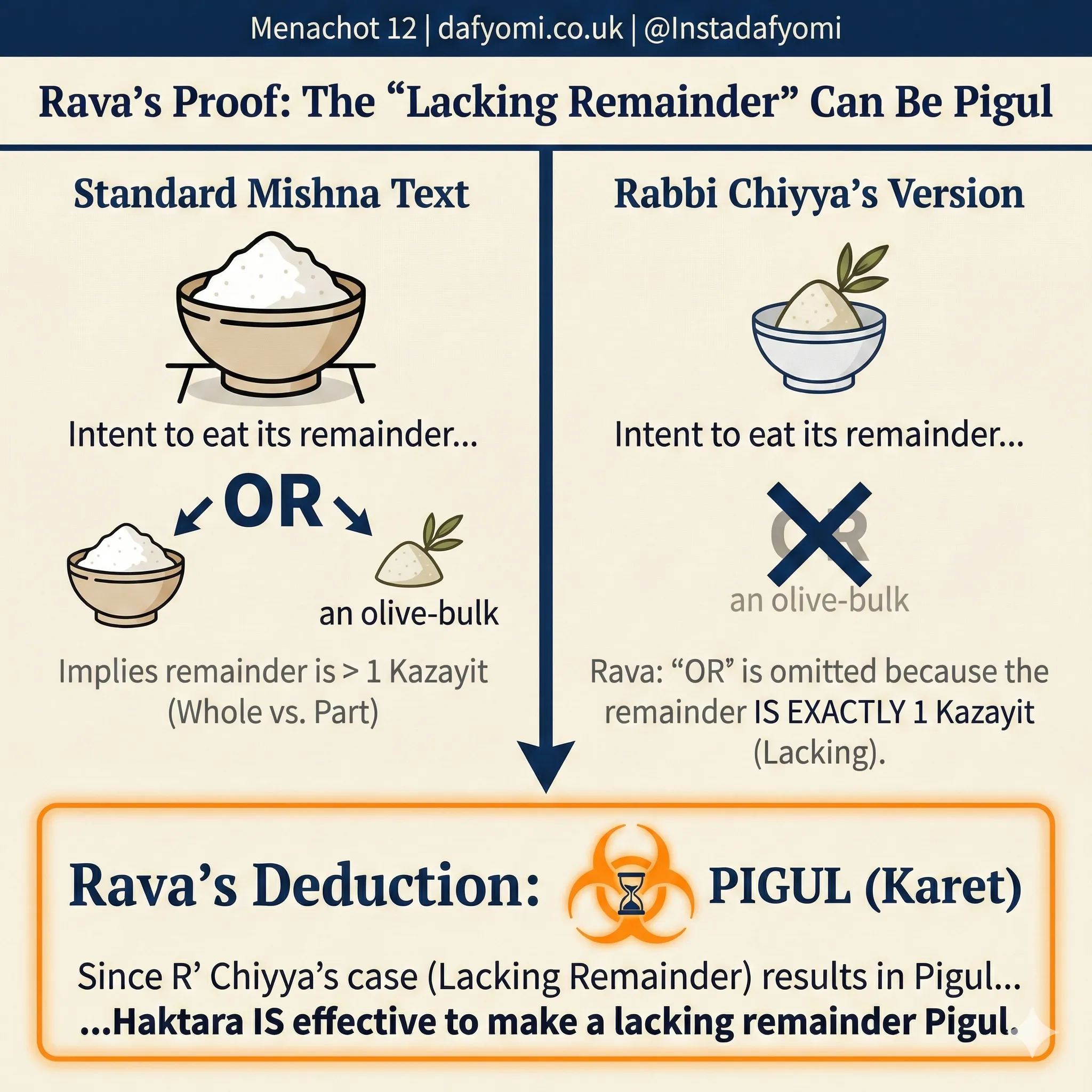
״אוֹ כְּזַיִת״ אַשִּׁירַיִם, בִּקְמִיצָה נָמֵי לֶאֱכוֹל שִׁירַיִם לָא תָּנֵי ״אוֹ כְּזַיִת״
English Translation:
The phrase “or an olive-bulk” regarding the remainder — in the context of kemitza also, regarding intent to eat the remainder, the Mishna does not teach “or an olive-bulk.”
קלאוד על הדף:
The Gemara notes a textual peculiarity: in certain contexts the Mishna says “or an olive-bulk” and in others it doesn’t. This linguistic analysis leads to deeper halakhic questions about what quantities create piggul liability.
Segment 2
TYPE: גמרא
Abaye’s response
Hebrew/Aramaic:
אֲמַר לֵיהּ אַבָּיֵי: לָא, הָא מַנִּי? רַבִּי אֶלְעָזָר הִיא, דְּאָמַר: אֵין פִּיגּוּל מוֹעִיל בְּשִׁירַיִם
English Translation:
Abaye said to Rava: No, one cannot prove from here that the Mishna is discussing the case of a remainder that became lacking. In accordance with whose opinion is this Mishna? It is in accordance with the opinion of Rabbi Elazar, who says: Piggul is not effective for remainders.
קלאוד על הדף:
Abaye offers an alternative explanation: the Mishna might follow Rabbi Elazar’s restrictive view that piggul doesn’t apply to remainders at all. This would explain the textual variation without requiring the “diminished remainder” interpretation.
Segment 3
TYPE: גמרא
Clarification about burning the handful
Hebrew/Aramaic:
כֵּיוָן דִּבְהַקְטָרַת קְמִיצָה לָא מִתְּנֵי לֵיהּ ״אוֹ כְּזַיִת״, בֶּאֱכִילַת שִׁירַיִם נָמֵי לָא מִתְּנֵי ״אוֹ כְּזַיִת״
English Translation:
Since with regard to the burning of the handful he could not teach: “Or burn an olive-bulk,” regarding eating of the remainder also he did not teach: “Or an olive-bulk.”
קלאוד על הדף:
The Gemara explains the textual consistency: since one cannot have intent to burn only part of the handful (it must be burned complete), the Mishna maintains parallel language when discussing eating the remainder. This is a matter of textual symmetry rather than halakhic substance.
Segment 4
TYPE: גמרא
Challenge to the Rabbi Elazar attribution
Hebrew/Aramaic:
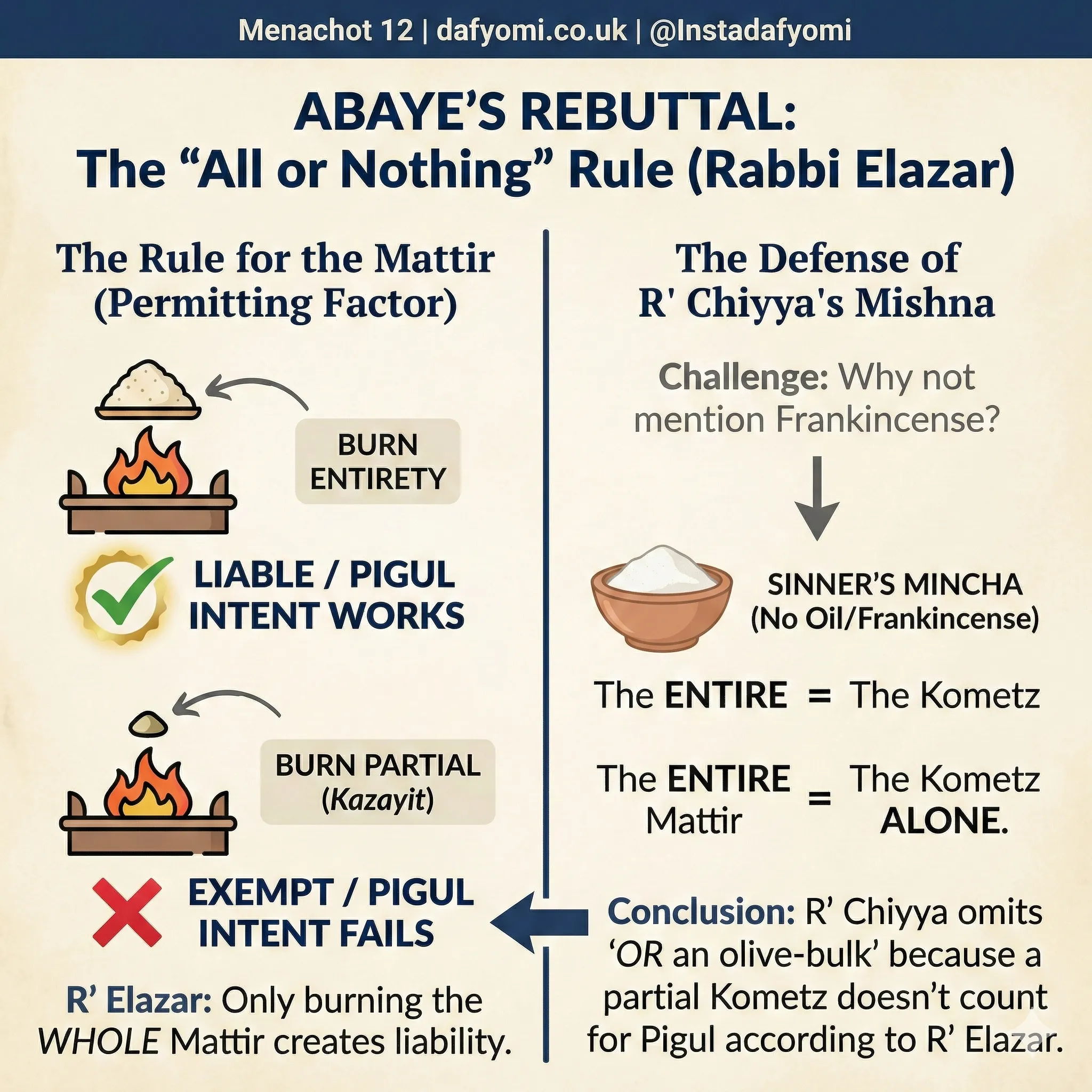
אִי רַבִּי אֶלְעָזָר, הַאי ״לְהַקְטִיר קוּמְצָהּ״ ״לְהַקְטִיר לְבוֹנָתָהּ״ מִיבְּעֵי לֵיהּ
English Translation:
If the Mishna is really in accordance with the opinion of Rabbi Elazar, then this statement “to burn its handful” should have been phrased: “To burn its frankincense.”
קלאוד על הדף:
The Gemara challenges Abaye’s attribution: if the Mishna follows Rabbi Elazar, the language should reflect his view that only frankincense (not the kometz itself) creates piggul. The current wording suggests a different opinion.
Segment 5
TYPE: גמרא
Resolution: the sinner’s meal offering
Hebrew/Aramaic:
לֹא נִצְרְכָא אֶלָּא לְקוֹמֶץ דְּמִנְחַת חוֹטֵא
English Translation:
The Mishna is necessary only for the handful of the meal offering of a sinner.
קלאוד על הדף:
The Gemara resolves the difficulty: the Mishna specifically addresses the sinner’s meal offering, which has no frankincense. In this unique case, even Rabbi Elazar would agree that piggul applies to the kometz itself since there’s no frankincense to serve as the permitting factor.
Segment 6
TYPE: גמרא
Confirmation of this interpretation
Hebrew/Aramaic:
וְאִיכְּפֵל תַּנָּא לְאַשְׁמוֹעִינַן קוֹמֶץ דְּמִנְחַת חוֹטֵא? אִין
English Translation:
Did the Tanna go to all that trouble just to teach us this halakha about the handful of the sinner’s meal offering? Yes, he did.
קלאוד על הדף:
The Gemara confirms that the Mishna would indeed include a special case just for the sinner’s meal offering. This offering is unique enough to warrant specific treatment in the general principles of piggul.
Segment 7
TYPE: גמרא
Rava retracts
Hebrew/Aramaic:
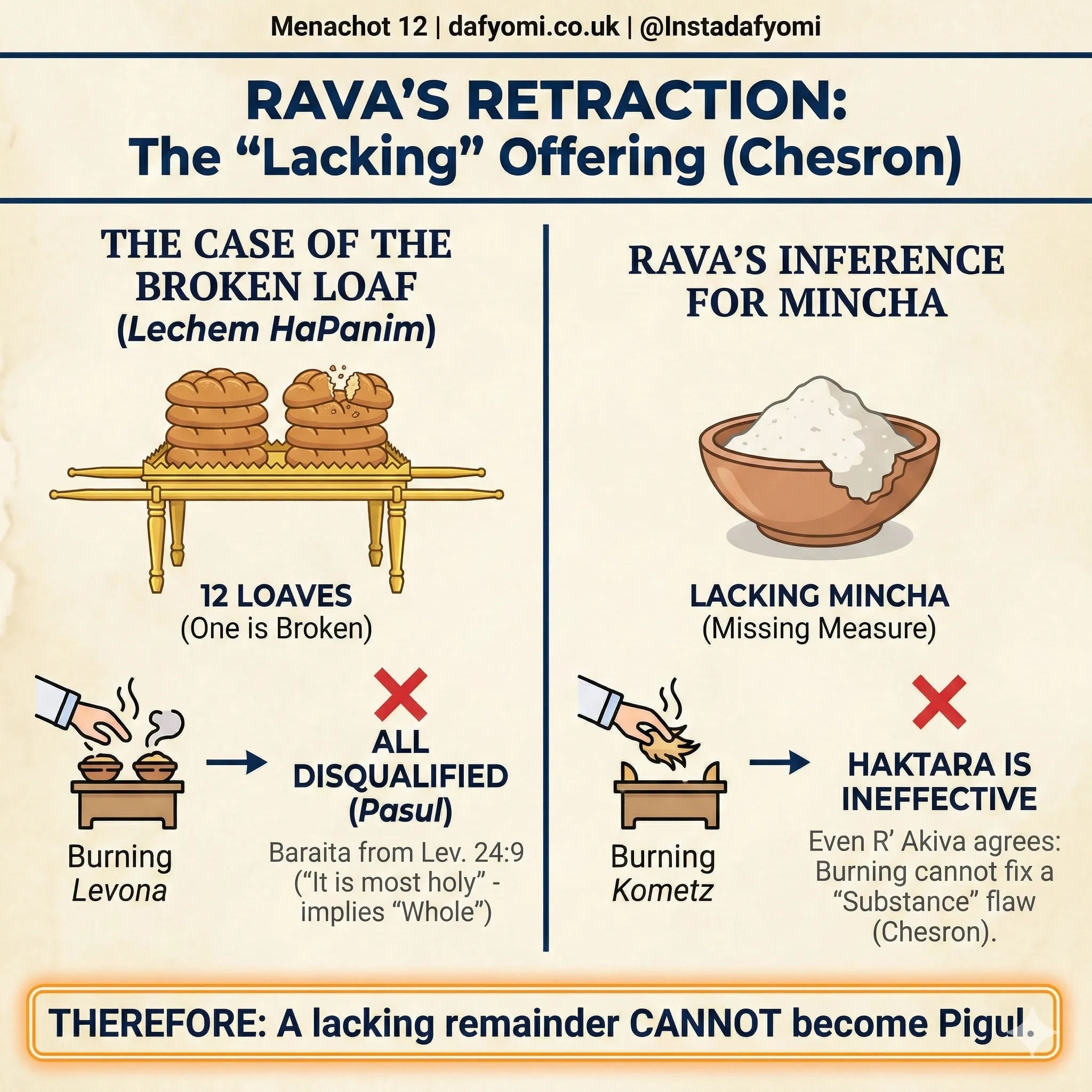
הֲדַר אָמַר רָבָא: לָאו מִילְּתָא הִיא דַּאֲמַרִי
English Translation:
Rava then said: That which I said is nothing.
קלאוד על הדף:
Rava acknowledges that his earlier argument was flawed. This honest retraction is characteristic of Talmudic discourse — Amoraim freely admit when their reasoning doesn’t hold up to scrutiny.
Segment 8
TYPE: גמרא
Evidence from a Baraita about loaves
Hebrew/Aramaic:
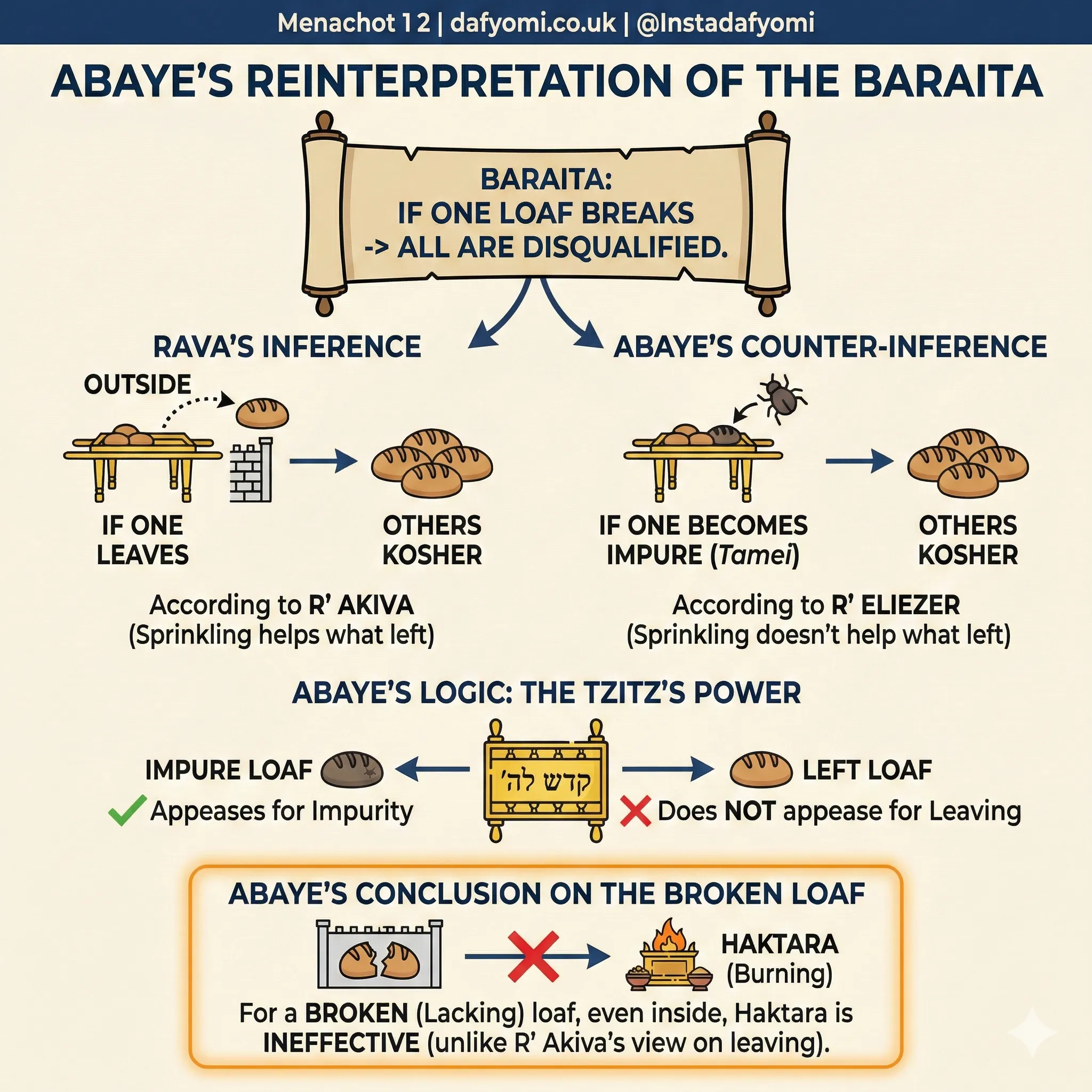
דִּתַּנְיָא: שְׁתֵּי הַלֶּחֶם שֶׁנִּתְמַעֲטוּ וְיָצָאת אַחַת מֵהֶן – הַשְּׁנִיָּה פְּסוּלָה
English Translation:
As it is taught in a Baraita: In the case of the two loaves that became diminished and one of them left the Temple — the second one is disqualified.
קלאוד על הדף:
Rava brings evidence from a Baraita about the Two Loaves (Shtei HaLechem) of Shavuot. If both loaves are diminished and one leaves the Temple, the remaining one is also disqualified. This demonstrates how physical changes affect sacrificial status.
Segment 9
TYPE: גמרא
Abaye’s challenge to the inference
Hebrew/Aramaic:
אֲמַר לֵיהּ אַבָּיֵי: מִי קָתָנֵי הָא יָצָאת? נִתְמַעֲטוּ וְיָצָאת קָתָנֵי
English Translation:
Abaye said to Rava: How can you cite a proof from this Baraita? Does it teach “if one left”? It teaches “if they became diminished AND one left.”
קלאוד על הדף:
Abaye argues that Rava’s proof is flawed: the Baraita specifically requires BOTH diminishment AND leaving the Temple. You can’t derive a rule about diminishment alone from this case.
Segment 10
TYPE: גמרא
Explanation about the High Priest’s frontplate
Hebrew/Aramaic:
מַאי טַעְמָא? דִּמְרַצֵּה צִיץ עַל הַיּוֹצֵא
English Translation:
What is the reason? The frontplate of the High Priest effects acceptance for offerings that left the Temple.
קלאוד על הדף:
The Gemara explains a related principle: the Tzitz (High Priest’s golden frontplate) can “atone” for certain disqualifications, including when an offering leaves the Temple. However, it doesn’t atone for diminishment. This distinction explains the Baraita’s combined condition.
Key Terms:
- צִיץ (Tzitz) = The High Priest’s golden frontplate, inscribed “Holy to God”
- מְרַצֵּה (Meratzeh) = Effects acceptance/atonement
Segment 11
TYPE: גמרא
Why the Baraita didn’t teach a simpler case
Hebrew/Aramaic:
וּבְדִין הוּא דְּאִיבְּעִי לֵיהּ לְמִיתְנֵי נָמֵי יָצָאת, וּמִשּׁוּם דִּבְעֵי לְמִיתְנֵי נִתְמַעֲטוּ תְּנָא נָמֵי יָצָאת
English Translation:
And by right the Baraita should have also taught that if one of the loaves left the Temple alone it would be disqualified. But since it wanted to teach about diminishment, it also mentioned leaving.
קלאוד על הדף:
The Gemara explains the Baraita’s structure: the real novel teaching is about diminishment. The “leaving” component is added because that’s how diminishment practically manifests, but the core principle concerns the physical change to the offering.
Segment 12
TYPE: משנה
Half-measures that don’t combine
Hebrew/Aramaic:
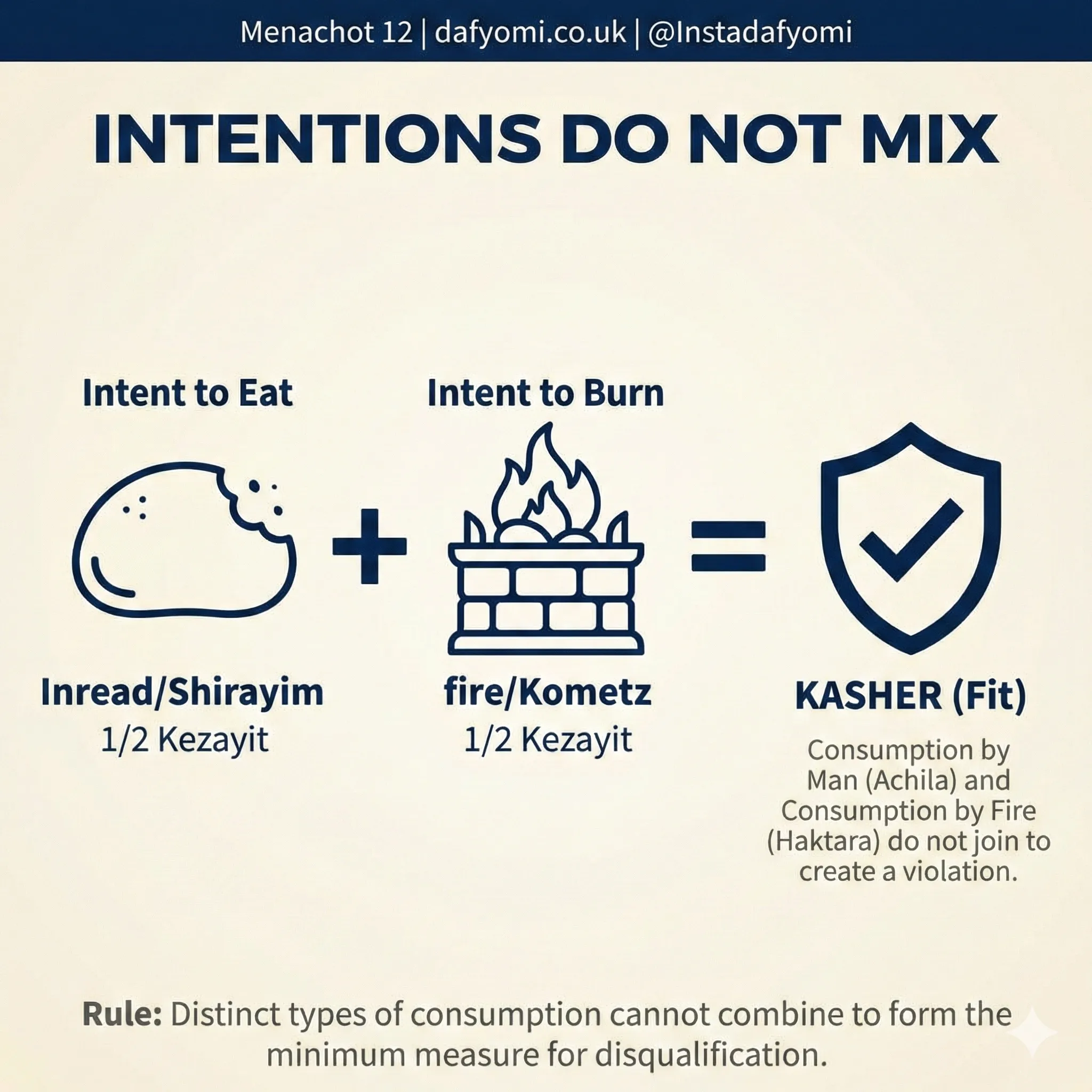
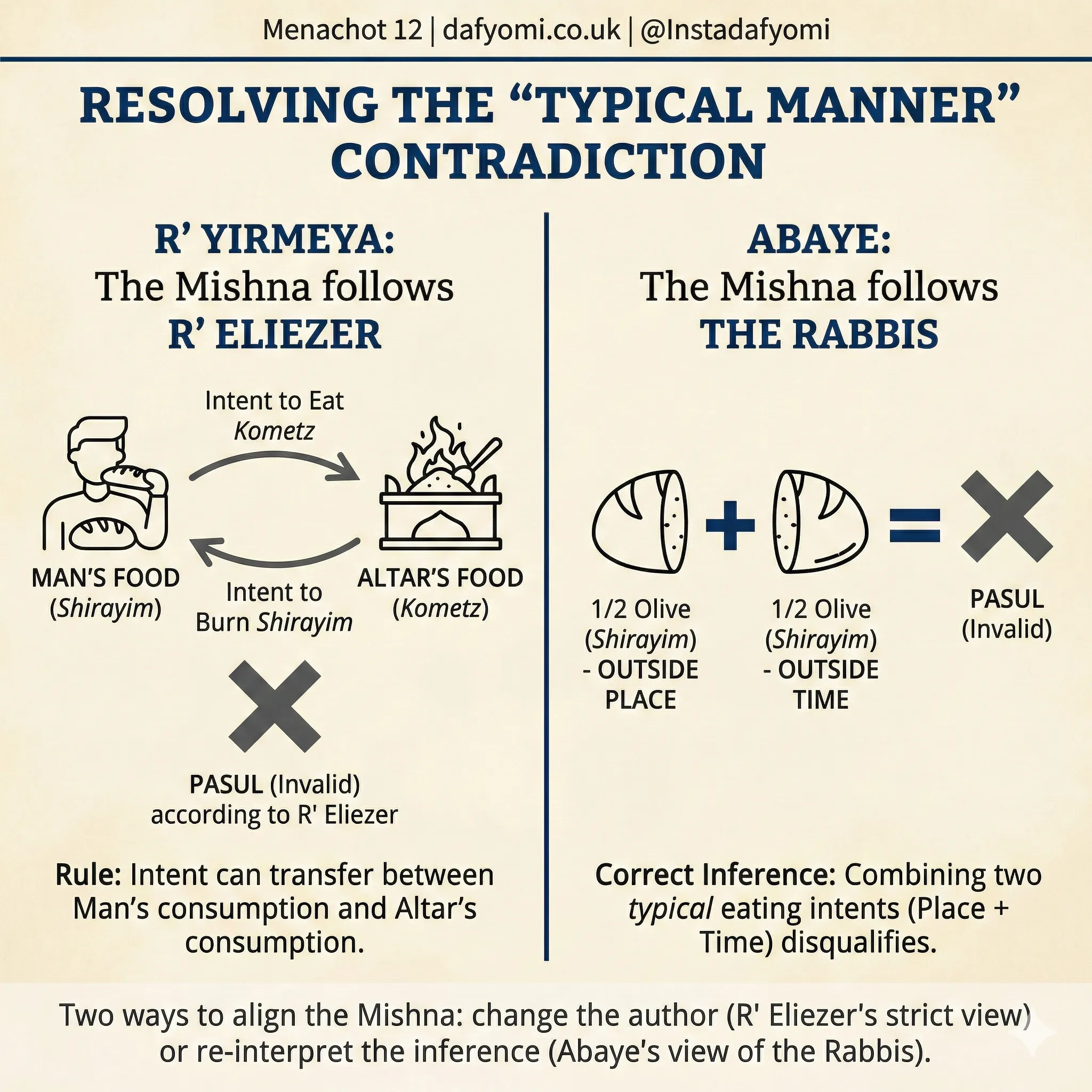
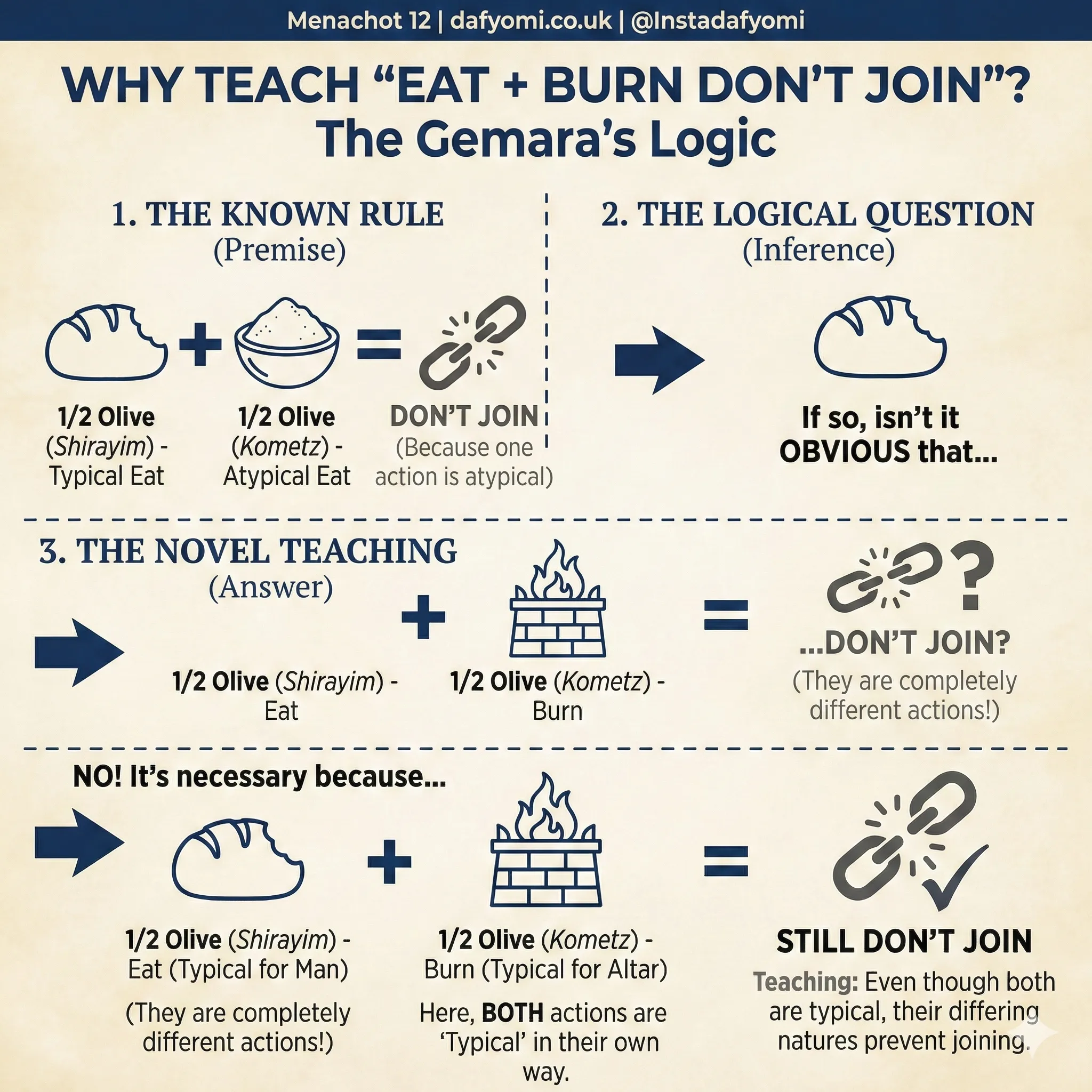
לֶאֱכוֹל כַּחֲצִי זַיִת וּלְהַקְטִיר כַּחֲצִי זַיִת – כָּשֵׁר, שֶׁאֵין אֲכִילָה וְהַקְטָרָה מִצְטָרְפִין
English Translation:
If one’s intent was to partake of half an olive-bulk and to burn half an olive-bulk — the offering is fit, because eating and burning do not combine.
קלאוד על הדף:
A new Mishna teaches that intent regarding eating and intent regarding burning don’t combine to create a disqualifying measure. Each type of intent is measured independently. Half-measures of different categories remain half-measures.
Segment 13
TYPE: גמרא
Analysis of the Mishna’s implication
Hebrew/Aramaic:
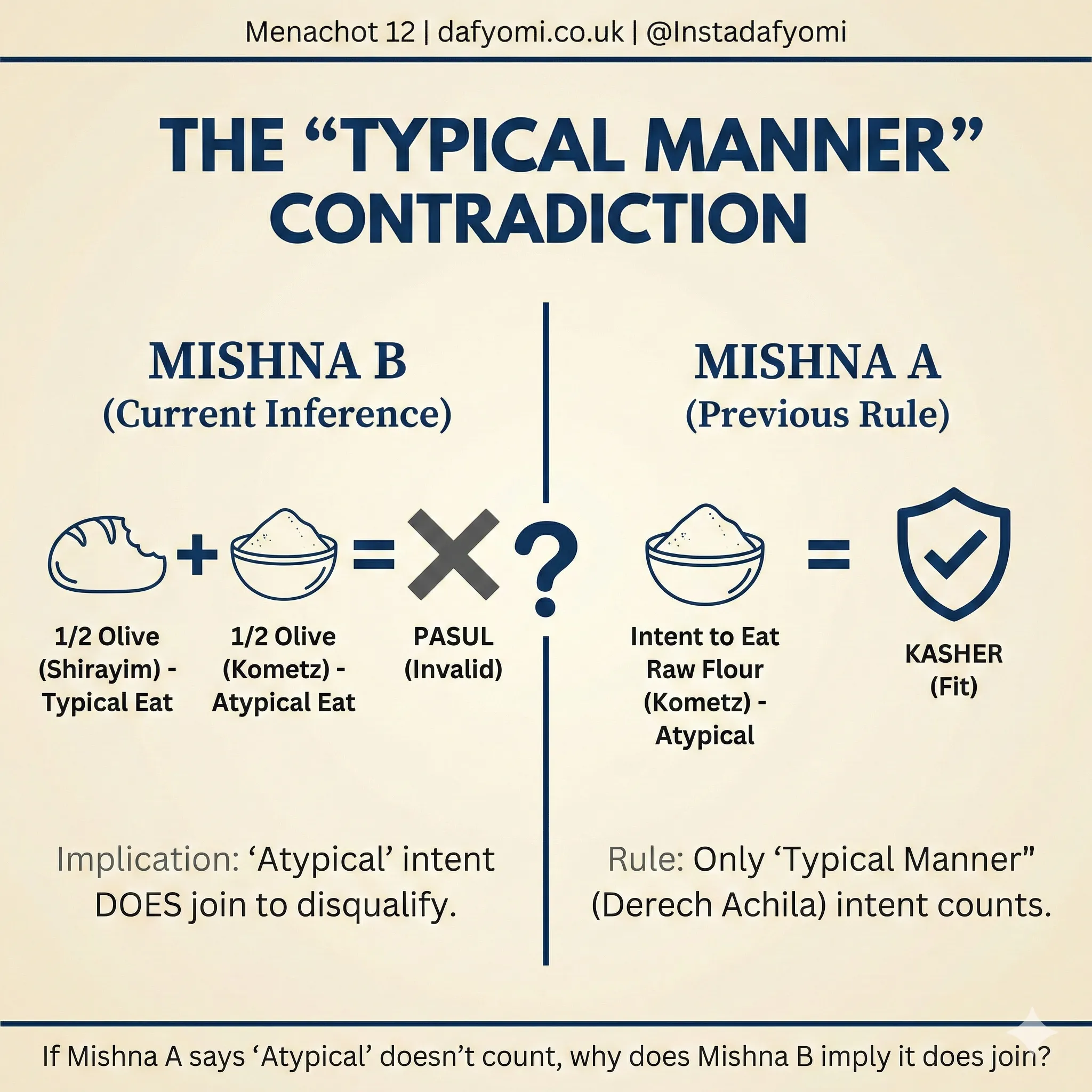
טַעְמָא דְּלֶאֱכוֹל וּלְהַקְטִיר, הָא לֶאֱכוֹל וְלֶאֱכוֹל, אוֹ לְהַקְטִיר וּלְהַקְטִיר – מִצְטָרְפִין
English Translation:
The reason the two halves do not join together is because his intent was to partake and to burn. This implies that if his intent was to partake and to partake, or to burn and to burn — they do combine.
קלאוד על הדף:
The Gemara derives an implication: the Mishna’s language suggests that matching categories DO combine. Two half-olive-bulk intents to eat would combine to create a full disqualifying measure, as would two half intents to burn.
Segment 14
TYPE: גמרא
Connection to the earlier Mishna
Hebrew/Aramaic:
וְהָקָתָנֵי רֵישָׁא: לֶאֱכוֹל דָּבָר שֶׁדַּרְכּוֹ לֶאֱכוֹל, וּלְהַקְטִיר דָּבָר שֶׁדַּרְכּוֹ לְהַקְטִיר
English Translation:
But the first clause teaches: If one’s intent was to partake of an item whose manner is to be partaken, or to burn an item whose manner is to be burned.
קלאוד על הדף:
The Gemara notes that the earlier Mishna already established the principle of eating items meant for eating and burning items meant for burning. This seems to be the same rule stated differently.
Segment 15
TYPE: גמרא
Rabbi Yirmeya’s attribution
Hebrew/Aramaic:
אָמַר רַבִּי יִרְמְיָה: הָא מַנִּי? רַבִּי אֱלִיעֶזֶר הִיא
English Translation:
Rabbi Yirmeya said: In accordance with whose opinion is this Mishna? It is Rabbi Eliezer’s opinion.
קלאוד על הדף:
Rabbi Yirmeya attributes the Mishna to Rabbi Eliezer, who has distinctive views about what categories can combine for piggul purposes. This attribution helps explain the Mishna’s precise formulation.
Segment 16
TYPE: גמרא
Source for Rabbi Eliezer’s view
Hebrew/Aramaic:
דִּתְנַן: הַקּוֹמֵץ אֶת הַמִּנְחָה לֶאֱכוֹל דָּבָר שֶׁאֵין דַּרְכּוֹ לֶאֱכוֹל, וּלְהַקְטִיר דָּבָר שֶׁאֵין דַּרְכּוֹ לְהַקְטִיר – כָּשֵׁר
English Translation:
As we learned in a Mishna: One who removes a handful with intent to consume an item not meant for consumption, or to burn an item not meant for burning — the offering is fit.
קלאוד על הדף:
The Gemara cites the source for Rabbi Eliezer’s view: intent regarding items in the “wrong” category (eating what’s meant for burning, or burning what’s meant for eating) doesn’t create disqualification. Only proper categorical intent counts.
Segment 17
TYPE: גמרא
Abaye’s alternative explanation
Hebrew/Aramaic:
אַבָּיֵי אָמַר: אֲפִילּוּ תֵּימָא רַבָּנַן, שָׁאנֵי הָכָא דְּקָתָנֵי ״שֶׁאֵין אֲכִילָה וְהַקְטָרָה מִצְטָרְפִין״
English Translation:
Abaye said: You may even say the Mishna accords with the Rabbis’ opinion. Here it is different, because it specifically teaches: “Eating and burning do not combine.”
קלאוד על הדף:
Abaye offers an alternative: the Mishna might follow the Rabbis (not just Rabbi Eliezer) because it explicitly states the non-combination principle. This explicit statement would be unnecessary if following Rabbi Eliezer, whose view already implies it.
Segment 18
TYPE: גמרא
Question about the Mishna’s novelty
Hebrew/Aramaic:
וּמַאי קָא מַשְׁמַע לַן? הָא בְּהֶדְיָא קָתָנֵי לָהּ
English Translation:
The Gemara asks: What is this teaching us? The previous Mishna already teaches this principle explicitly.
קלאוד על הדף:
The Gemara questions what new information this Mishna provides, since the earlier Mishna already established these principles. This leads to further analysis of the subtle differences between the two teachings.